Ulster have the opportunity to lift European silverware tonight, as the Belfast side takes on Montpellier in the 2026 EPCR Challenge Cup Final.
Join the RUCK’s WhatsApp community here and get the latest news sent straight to your messages.
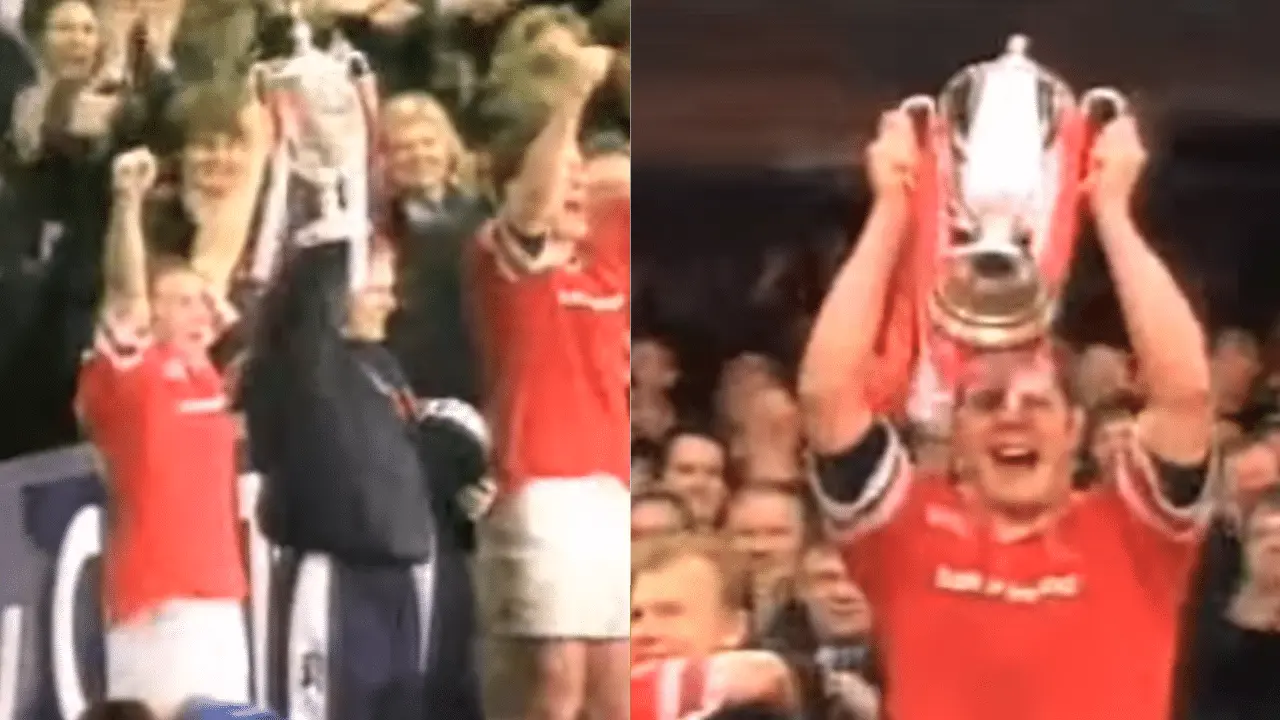
The last time the Irish province got their hands on a European title, was all the way back in the finale of the 1998/1999 Heineken Cup. Ulster battled to a 21-6 win over Union Sportif Colomiers, with the French side spear-headed by current Les Bleus head coach Fabien Galthie at fly half.
It's been 27 seasons since the boys from Belfast have added to their European trophy collection, and take on another French outift this evening in the Basque Country. Richie Murphy's men can also secure their place in the Champions Cup for next season, should they win tonight's showpiece in Bilbao, after their late drop out of the URC top eight saw Connacht sneek into the play-offs last weekend.
For this next entry into RUCK's 'Where are they Now' series, we have taken a look back at the starting XV from Ulster's 1999 Heineken Cup title triumph some 27 years later.
15. Simon Mason
Simon Mason was a key figure in Ulster’s 1999 European Cup-winning side, providing calm authority from fullback and a reliable kicking game that proved crucial throughout the campaign. Born on the Wirral in England, he qualified for Ireland through his grandparents and earned three caps in 1996, making an immediate impact with a composed debut against Wales.
At Ulster, Mason became the province’s primary points scorer during their historic run, tallying 144 points in the 1998–99 Heineken Cup. His accuracy under pressure helped steer Ulster through tight knockout matches on their way to becoming the first Irish side to win Europe’s top club prize, earning him Ulster Player of the Year honours. After leaving Belfast, he played for Stade Français and Benetton Treviso, surpassing 3,000 career points before retiring in 2006.
14. Sheldon Coulter
Sheldon Coulter was part of Ulster’s 1999 European Cup-winning squad, offering pace and finishing threat on the wing during the province’s historic run. A steady presence in the wider professional group, he remained with Ulster until 2003 as the club transitioned deeper into the professional era. While not always the central figure, Coulter contributed to the squad depth that underpinned Ulster’s European success, providing reliability in both attack and defence when called upon.
He also continued to feature prominently in the domestic club game with Belfast Harlequins, CIYMS and Portadown, staying closely connected to Ulster rugby at grassroots level. After retiring from professional rugby, he moved into financial services and now works as a financial advisor with Don Robinson Financial Services, specialising in retirement and investment planning. He remains a committed Ulster supporter and season ticket holder, still closely linked to the province he helped bring to European glory.
13. Jan Cunningham
Jan Cunningham was a versatile and intelligent back, capable of operating at centre, wing or fullback. Educated at Bangor Grammar and Trinity College Dublin, he combined academic pedigree with a strong rugby education, captaining Ireland Schools and progressing through Ireland age-grade teams before making his Ulster debut in 1995. By the 1998–99 season, Cunningham was a regular feature in Ulster’s backline and contributed three tries during their historic European campaign.
His adaptability and tactical awareness made him a valuable squad member in a side built on structure and resilience. He started the final against Colomiers, though his match ended early after suffering a serious facial injury. Cunningham continued with Ulster until 2002, later balancing rugby with a legal career. After retiring, he became a solicitor and eventually a partner at Millar McCall Wylie, maintaining a strong connection to the sport through his family’s ongoing involvement in Ulster rugby.
12. Jonny Bell
Jonny Bell is one of Ulster’s most influential modern-era centres, combining a playing career spanning over a decade with a long coaching journey that kept him deeply embedded in the province. A Coleraine Academical Institution product, he earned Ireland honours at Test level while playing a key role in Ulster’s 1999 Heineken Cup triumph after returning from a spell with Northampton Saints.
Bell won 36 Ireland caps and featured at multiple Rugby World Cups before retiring in 2006 due to injury. His post-playing career saw him move into coaching, progressing from Ulster’s academy system into senior roles across Gloucester, Glasgow Warriors and Worcester Warriors. He eventually returned to Ulster as defence coach, shaping the next generation before departing in 2025. His legacy bridges both eras of Ulster rugby — as a European champion on the field and a long-serving coach off it.
11. Andy Park
Andy Park was one of the youngest members of Ulster’s 1999 Heineken Cup-winning squad, emerging as an exciting winger with pace and attacking instinct. A product of the Ulster set-up, he was known for his energy on and off the pitch, quickly earning a reputation as the “life and soul” of the dressing room during the province’s historic European run. Although he remained with Ulster until 2000, he struggled to fully cement a long-term starting place in the professional era and later continued his rugby career in the local game with Belfast Harlequins.
Beyond Ulster, Park also featured for Belfast Harlequins at club level, contributing to the strong domestic rugby culture in Northern Ireland at the time. After stepping away from elite professional rugby, he transitioned into the commercial world, founding and running INC Advertising. Today, Park has built a successful career in marketing and advertising, while his connection to rugby remains part of his identity, reflecting on a memorable European campaign that helped define Ulster’s history.
10. David Humphreys
David Humphreys was the heartbeat of Ulster’s 1999 European Cup triumph, captaining the side from fly-half and dictating games with control, precision and leadership. A Belfast-born playmaker developed at Ballymena Academy and Queen’s University, he became one of Ireland’s leading out-halves, earning 72 caps and multiple captaincies at international level. Humphreys’ influence on Ulster’s European campaign was decisive, steering the province through tight knockout matches before lifting the trophy after victory over Colomiers in 1999.
His game management and kicking under pressure defined Ulster’s style during their breakthrough season. After retiring in 2008, he moved into coaching and management, becoming Ulster Director of Rugby before similar roles at Gloucester. He later worked in elite performance across rugby and cricket and is now IRFU Performance Director, remaining one of the most influential figures in Irish sport and a key architect of modern Irish rugby structures.
9. Andy Matchett (Scrum-half)
Andy Matchett was as a lively scrum-half option during a defining era for Irish provincial rugby. Known for his sharp service and energetic support play, Matchett contributed to the depth and tempo of an Ulster side built on discipline and resilience throughout their historic run. Following his time with Ulster, he continued to play locally with Belfast Harlequins, remaining active in the domestic game and helping sustain the club rugby structure in Northern Ireland during the early professional years.
While he did not pursue a long-term career in top-level professional rugby, his involvement at both provincial and club level reflected the transitional nature of the era. After retiring from playing, Matchett moved into the financial sector and now works in insurance with Clerical Medical, building a professional career away from rugby while remaining part of Ulster’s wider rugby community.
1. Justin Fitzpatrick
Justin Fitzpatrick was a cornerstone of Ulster’s front row during their 1999 European Cup-winning campaign, bringing power, durability and technical scrummaging excellence at loosehead prop. Born in Chichester, England but Irish-qualified through his mother, he developed at London Irish before moving into Irish rugby with Dungannon, a key step that enabled his Ulster career and international rise.
Fitzpatrick earned 26 Ireland caps between 1998 and 2003. His physical presence in the tight exchanges helped lay the platform for Ulster’s backline to flourish, making him an essential piece of the pack in a historic season. After more than 150 appearances for Ulster across two spells, he moved into coaching following retirement. Fitzpatrick went on to work internationally with Seattle Saracens, the USA national setup, and later became head coach of the Houston SaberCats, building a reputation as a forward specialist and modern professional-era coach.
2. Allen Clarke
Allen Clarke was the experienced hooker within Ulster’s squad providing set-piece stability and leadership in the tight exchanges during the province’s breakthrough European campaign. A Dungannon-born front-row forward, he developed through Royal School Dungannon before building his professional career across Ulster and Northampton Saints.
Clarke earned eight Ireland caps between 1995 and 1998, and although he was not always the headline name in the Ulster side, his role in the pack was crucial in a team built on cohesion and physical dominance. After retiring in 2001 due to injury, Clarke moved into coaching, eventually becoming a key figure in Irish player development structures. He held senior roles with Ulster, the IRFU, Ospreys and later Major League Rugby, and is currently head coach of the Seattle Seawolves, continuing his long influence on the game.
3. Rab Irwin
Rab Irwin was a veteran presence in Ulster’s front row during the province’s iconic 1999 Heineken Cup-winning season, anchoring the scrum as a reliable tighthead prop in a pack that laid the foundation for European success. A no-nonsense forward, he was valued for his experience and set-piece strength during the early years of professionalism.
Irwin made his Ulster debut in the late 1990s and quickly became a trusted squad member despite being one of the older players in the group when professionalism fully took hold. His contribution in the scrum during the 1998–99 campaign helped Ulster compete physically with Europe’s elite and ultimately secure their first major continental title. After the triumph, he stepped away from professional rugby and returned to civilian life as a self-employed builder. He continued playing locally with CIYMS and remains active in the amateur game with Ards RFC.
4. Mark Blair
Mark Blair was a key second-row option in Ulster’s 1999 Heineken Cup-winning squad, providing physicality and work-rate in the engine room during the province’s historic European breakthrough. Educated at the Royal School Armagh and developed through Ulster age-grade rugby, he combined academic experience in Edinburgh with a varied early career that included spells in New Zealand with Counties Manukau alongside Jonah Lomu, before returning to the professional game.
Blair eventually established himself at Ulster after initially battling for a starting place, going on to feature prominently in the second row alongside Gary Longwell during the unbeaten European run that culminated in victory over Colomiers. His athleticism and adaptability made him a valuable squad member across multiple competitions, and he went on to make over 50 appearances for the province.
After leaving Ulster in 2003, he played in France and Scotland before injury and structural changes in the Border Reivers setup led to his retirement. He later moved into property development and rugby administration roles within the IRFU Exiles programme.
5. Gary Longwell
Gary Longwell was one of the cornerstone second-rows of the Ulster side, a towering presence in the engine room throughout the province’s historic Heineken Cup run. A one-club man at provincial level, he made his Ulster debut in 1991 as a teenager and went on to become one of their most reliable forwards over more than a decade of service.
By the time of the 1998–99 campaign, Longwell was an established leader in the pack, combining physicality in the tight with strong set-piece work. He later earned 26 Ireland caps and went on to serve in coaching and academy roles at Ulster after retirement, helping develop the next generation of forwards at the province he helped put on the map.
6. Stephen McKinty
Stephen McKinty was one of the workhorse back-rowers in Ulster’s 1999 Heineken Cup-winning squad, combining part-time rugby commitments with a career at FG Wilson during the professional era’s early years. A product of Bangor Grammar School, he was deeply rooted in local club rugby and remained closely linked with Bangor RFC throughout and after his professional career.
A natural leader in the pack, McKinty captained Ulster during the 1997–98 season, helping guide the province through the early stages of European competition before the breakthrough year that followed. Although not always the headline name, his physicality and consistency made him an important squad member in the build-up to the 1999 European triumph over Colomiers. After leaving Ulster, he continued playing and moved into player-coach roles with Bedford and Cambridge. He later returned to Belfast, working in fitness and staying active in coaching and grassroots rugby.
7. Andy Ward
New Zealand-born powerhouse Andy Ward was a standout name from the back row of Ulster’s 1999 Heineken Cup-winning squad. After developing in Waikato rugby and moving to Ireland in 1994, he joined Ballynahinch RFC, quickly becoming captain and helping the club rise through the ranks of the Irish domestic divisions. Ward made his debut in 1997, immediately establishing himself as a high-energy, physical presence on the flank. He was named Ulster Player and Personality of the Year in 1998 and became a central figure in the province’s European breakthrough, including the famous 1998–99 Heineken Cup triumph.
He went on to earn 28 Ireland caps after qualifying through residency, and featured at the 1999 Rugby World Cup. Later in his Ulster career, he captained the side and lifted the 2004 Celtic Cup before retiring in 2005 after 119 appearances. Ward later moved into coaching and strength work, including roles in rugby and Gaelic football, while his sons Zac and Bryn have continued the family’s rugby legacy at Ulster.
8. Tony McWhirter
Tony McWhirter played both lock and number eight for Ulster during the province’s rise to European prominence. A Ballymoney native, he was educated at Dalriada School before studying dentistry at the University of Dundee, balancing his academic career with rugby at Dundee HSFP. He progressed through Ulster age-grade sides and captained Ireland U21 to a Triple Crown in 1995–96.
McWhirter joined Ulster on a part-time basis in 1997 before signing fully for the 1998–99 season, where he shifted to his preferred position at number eight. After the Heineken Cup triumph, he moved to Dungannon, where he was named Ulster Player of the Year and helped the club win the All-Ireland League in 2001. He later retired in 2004 due to injury after 94 appearances, returning to dentistry while also coaching at school level.
LATEST RUGBY NEWS
- EPCR Challenge Cup Final: Ulster and Montpellier Team News for Tonight
- “Davidson returns” – Leinster vs Bordeaux-Begles Champions Cup final referee confirmed
- “Remember the Name” – French sensation wins U20 Six Nations Player of the Championship
- Ban confirmed for Bath and England player after dangerous tackle
TRENDING

LATEST NEWS
LATEST COMMENTS
Loading

