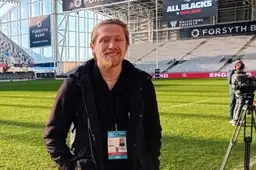
Locks are the giants of rugby, but the greatest second-rows have always offered far more than size and power.
Don't miss out. Pick up your tickets for the next Ultimate Sevens event now!
They are the architects of the lineout, the enforcers in the tight exchanges and often the emotional leaders of their packs. Over the years, the position has evolved dramatically, with the modern lock expected to carry, tackle, compete at the breakdown and possess the handling skills to influence the game in open play.
From the uncompromising brilliance of Martin Johnson to the extraordinary longevity of Alun Wyn Jones and the modern dominance of Eben Etzebeth, the very best have combined physicality with intelligence and relentless consistency.
Join RUCK’s Instagram broadcast channel and get the latest rugby news straight to your phone.
In partnership with Ultimate Sevens, we rank the seven greatest locks in rugby history, with three giants narrowly missing out.
Honourable mentions
Brodie Retallick — New Zealand: A dynamic powerhouse who helped redefine the modern lock, Retallick combined enormous physicality with extraordinary handling skills and athleticism. His ability to operate in wide channels while maintaining elite tight-five standards made him a revolutionary second-rower, while his 2014 World Rugby Player of the Year award confirmed his status among the game's elite. A central figure in New Zealand's 2015 World Cup triumph, his partnership with Sam Whitelock became one of the defining second rows of the modern era.
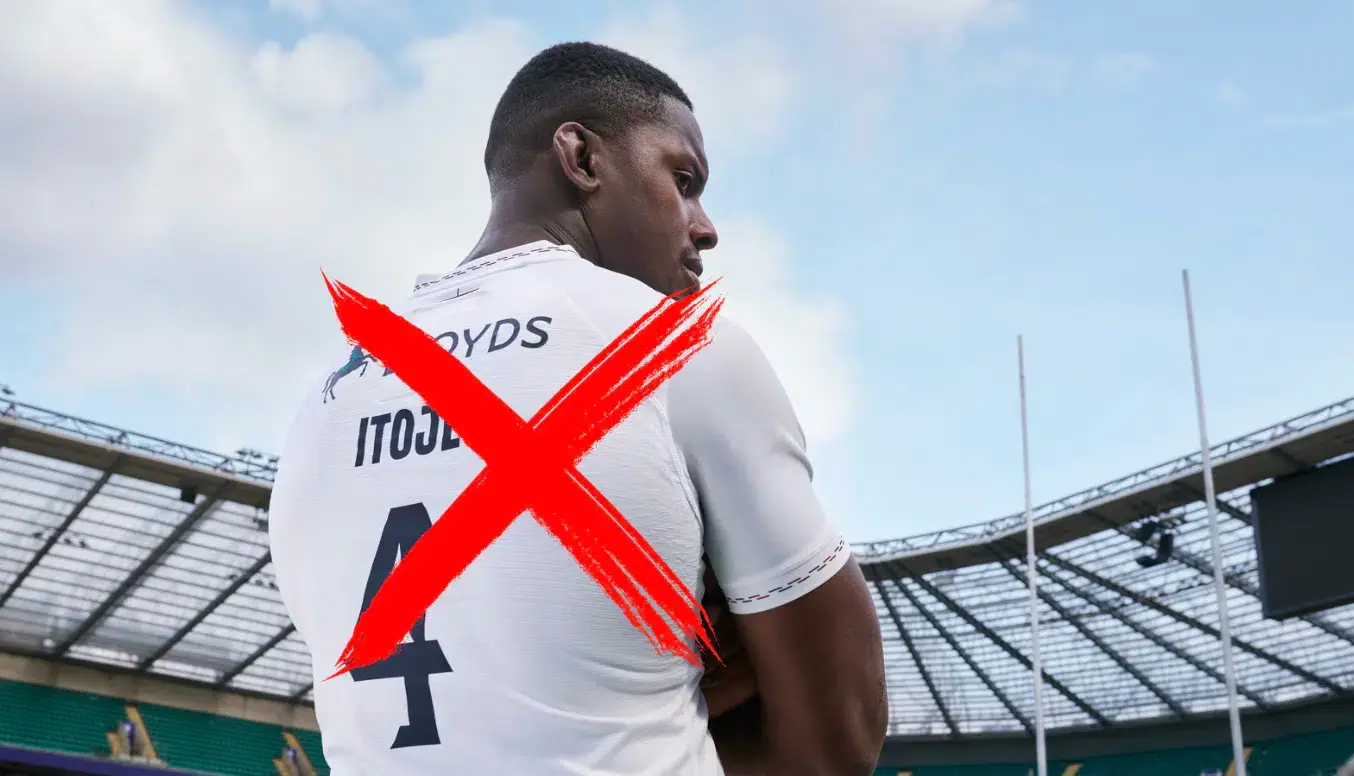
Maro Itoje — England: A generational talent who combines the size and power of a lock with the speed and turnover ability of a back-rower, Itoje has become one of the most disruptive forwards in world rugby. His ability to dominate lineouts, disrupt mauls and win turnovers has made him a defensive nightmare, while his success with Saracens and the British & Irish Lions has cemented his status among the modern greats.
Bakkies Botha — South Africa: The ultimate enforcer, Botha brought uncompromising physicality and intimidation to every aspect of the game. His devastating work in the tight exchanges helped make him one of the most feared locks of his generation, while his partnership with Victor Matfield formed the legendary Springbok "Blood Brothers" second row. A cornerstone of South Africa's 2007 World Cup triumph, Botha remains the archetype of old-school forward ferocity.
7. Paul O'Connell — Ireland
Paul O'Connell was the emotional heartbeat of some of the greatest teams in Irish rugby history. The Munster and Ireland legend combined immense physicality with an exceptional rugby brain, becoming one of the most influential leaders of his generation.
O'Connell was renowned for his thunderous carrying and uncompromising defence, but his greatest work often came at the lineout. His understanding of the set piece allowed him to orchestrate Ireland's own ball while disrupting opponents with remarkable consistency. He also possessed an extraordinary ability to demand more from those around him.
O'Connell captained the British & Irish Lions in 2009 and led Ireland to a historic Six Nations Grand Slam, while his influence at Munster made him a genuine icon of the province. Few forwards have ever embodied leadership quite like O'Connell. He was the player teammates followed into battle — and the one opponents dreaded facing.
6. Sam Whitelock — New Zealand
Sam Whitelock enjoyed an under the radar career, of making greatness look almost effortless. The most-capped All Black in history became a model of consistency across an extraordinary international career, producing elite performances year after year without ever seeking the spotlight.
Whitelock was part of New Zealand's 2011 and 2015 Rugby World Cup-winning sides, providing the technical excellence and reliability that allowed one of rugby's greatest teams to dominate world rugby. His greatest strengths were often the least glamorous. He secured defensive rucks, executed restarts, read opposition lineouts and performed the tight work required of a world-class second rower.
That reliability became his defining characteristic. Whitelock eventually earned 153 Test caps, remaining at the highest level for well over a decade while maintaining remarkably consistent standards. He was also an understated leader, capable of guiding the All Blacks through the most pressurised moments. For longevity, consistency and contribution to the most successful international team of the modern era, Whitelock's case is almost impossible to ignore.
5. Victor Matfield — South Africa
If you wanted to win a lineout, Victor Matfield was the man to call. The South African was arguably the greatest lineout specialist rugby has ever produced, turning the set piece into an attacking weapon for his own team and a nightmare for opponents.
Matfield's extraordinary rugby intelligence allowed him to read opposition formations and anticipate throws, regularly stealing possession at crucial moments. But he was much more than a set-piece specialist. His athleticism and spatial awareness allowed him to make a significant contribution around the pitch, while his calm authority made him an outstanding leader.
His partnership with Bakkies Botha became one of rugby's most celebrated second rows, combining Matfield's technical brilliance with Botha's uncompromising physicality. Matfield also captained the Springboks and was named Player of the Match in the 2007 Rugby World Cup final, along with leading the Bulls to becoming arguably the greatest Super Rugby team ever assembled.
4. Alun Wyn Jones — Wales
Some players have long careers, Alun Wyn Jones had an entire era. he Welsh legend became the ultimate symbol of longevity, durability and competitive spirit across to of the most famous red jerseys in rugby. He established himself as one of the most reliable second-rowers international rugby has ever produced, across 170 international appearances for Wales and the British & Irish Lions.
Alun Wyn hung up the boots as the most-capped player in international rugby history at the time of his curtain call. Across more than a decade at the highest level, he remained an outstanding lineout operator, relentless defender and tireless presence around the breakdown. His leadership was equally significant, as Jones captained both Wales and the Lions, leading by example and becoming a central figure in multiple Welsh Six Nations successes, including Grand Slam campaigns.
His career spanned three separate decades, yet his standards rarely dipped. That combination of durability, leadership and sustained excellence makes Jones one of the greatest locks the game has ever seen.
3. Martin Johnson — England
Martin Johnson embodied the gritty England spirit, as he led the charge to their finest hour in 2003. The imposing lock was the psychological heartbeat of every team he played for, combining immense physical power with a ruthless competitive edge.
Johnson's game was built around the brutal realities of forward play. He was an outstanding scrummager, an uncompromising tackler and a master of the dark arts that made life so difficult for opposition packs. But his greatest weapon was leadership, as Johnson captained England to their historic 2003 Rugby World Cup triumph, lifting the Webb Ellis Cup in Australia after defeating the hosts in the final.
He also holds the unique distinction of captaining the British & Irish Lions on two tours, in 1997 and 2001. That tells you everything about how highly his leadership was regarded. Johnson demanded absolute commitment from those around him and never appeared willing to surrender an inch. For physicality, authority and competitive drive, few locks have ever matched him.
2. John Eales — Australia
John Eales was so complete that the nickname "Nobody" — because nobody's perfect — somehow felt appropriate.
The Australian was one of the most uniquely skilled locks rugby has ever produced, combining the physical attributes of a second row with the handling, mobility and tactical awareness of a back. Perhaps his most extraordinary talent was his goal-kicking.
Eales became Australia's primary international kicker, producing crucial points while also providing elite lineout work and powerful scrummaging. He captained the Wallabies during their golden era and became a two-time Rugby World Cup winner, lifting the trophy in 1991 and 1999.
Yet his influence extended beyond his performances. Eales was renowned for his composure, leadership and sporting diplomacy, becoming one of Australia's most respected sporting ambassadors. He demonstrated that a lock could be a complete rugby player — powerful enough to dominate the tight exchanges but skilled enough to influence matches all over the field. His legacy is still celebrated in the land down under, with the Eales Medal awarded to the stand-out Wallaby of that year.
1. Eben Etzebeth — South Africa
Eben Etzebeth is the modern definition of a world-class lock. Standing at 2.03 metres, the Springbok giant possesses the physical presence expected of a second rower, but combines it with an extraordinary work rate, athleticism and technical ability.
Etzebeth has developed into one of the most intimidating forwards in world rugby, capable of dominating collisions while remaining disciplined and tactically intelligent. His breakdown work is particularly impressive, allowing him to influence matches long after the scrum and lineout have finished.
But his greatest achievement is his sustained excellence. Etzebeth became South Africa's most-capped player with 142 caps and counting, overtaking Victor Matfield in September 2024, while playing a central role in the Springboks' historic back-to-back Rugby World Cup triumphs.
More than a decade at the highest level has seen him remain one of the most physically imposing and consistently effective locks in the world. His longevity, trophy cabinet, leadership and sheer enforcing influence on matches combine to create an almost complete second-row package. For that reason, Eben Etzebeth is our greatest lock in rugby history.
TRENDING

LATEST NEWS
LATEST COMMENTS
Loading