Changing the game one ref at a time: Fiona Brunt on how she’s driving change for female referees
The WhistleWednesday, 09 September 2026 at 15:37
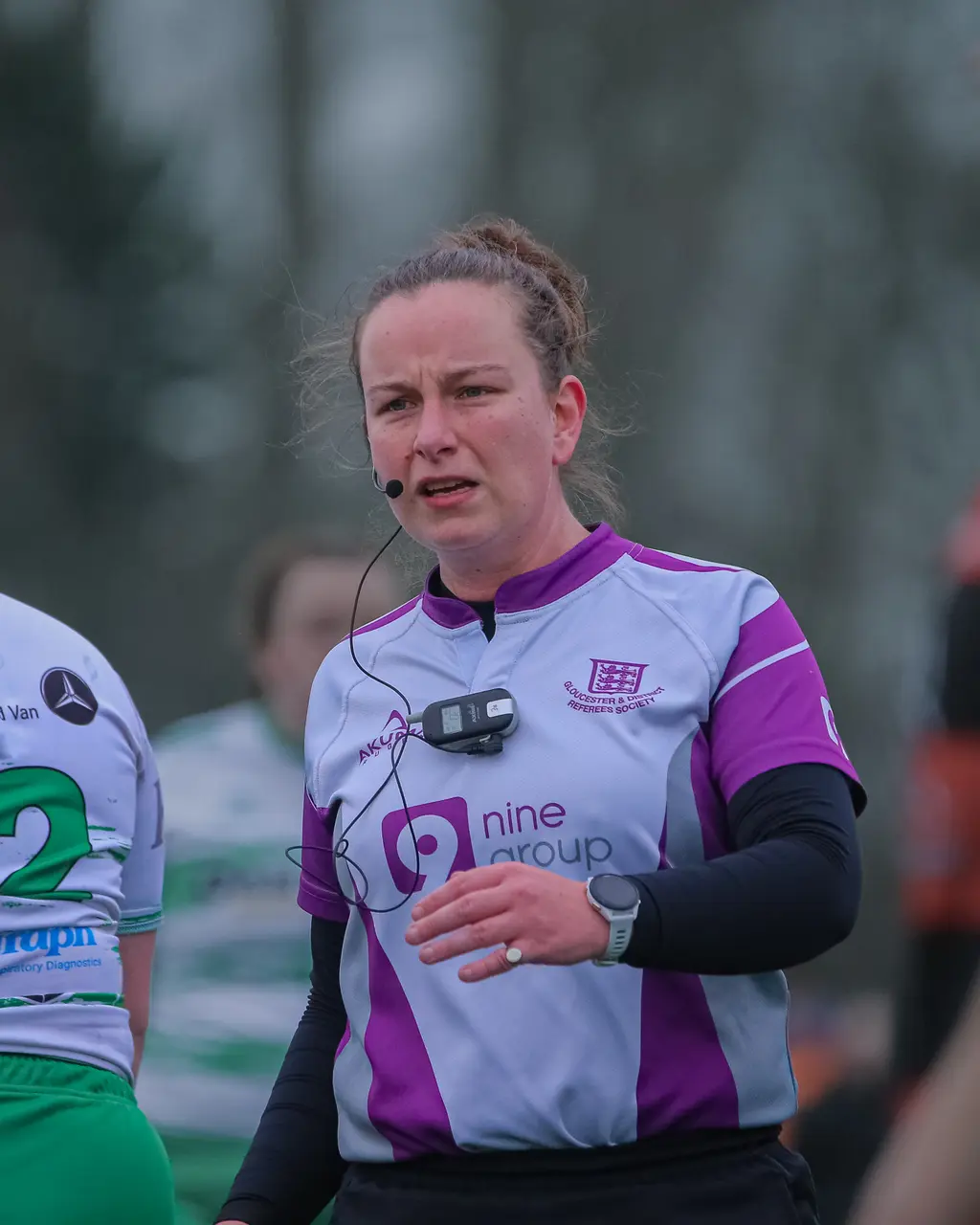

Hailing from Gloucester, Fiona Brunt has eight years of refereeing under her belt and first spoke to us in November 2022 when she took part in the Inspire campaign as part of a wider initiative by the RFU to bring more female referees into the sport.
At the time her refereeing career was already on its trajectory to where it is now, but Inspire cemented her passion to take things further - becoming one of the driving forces for change within the game, especially for the next generation of female refs.
Along with our partners at ACME whistles we caught up with Fiona to find out what life over the last four years has been like , where her refereeing career has taken her.
“When Inspire came around I was already doing a little bit in what is now the PWR and a little bit in international and that's continued,” she starts.
“But my career and the different inflection points have very much been based around the World Cups. So, it was the 2017 World Cup final that I decided to sign up for a referee course; then the Inspire campaign was around that 2022 COVID era when the Women’s World Cup was hosted out in New Zealand; then it was only a few months later that I joined the RFU as a member of staff and my job centred on getting more women into coaching, but also into refereeing, which was very much why I went for the role.
“The group of women that were within that 50 was my starting point for what I then did and tried to build in the three and a bit years that I was at the RFU. So, whilst it probably didn't have a big impact on my refereeing career as a standalone campaign, it absolutely did on my actual career.
“When I came in and did that job, it also sparked, ‘okay, well, there's some other things that we need to do to try and make this better. What can I do myself in my own personal time?’ And that's led me to join the RFRU board.
“I've just stepped up as the I&D lead, but I have been concentrating on female referees. So, Inspire was a huge catalyst in that journey that I've had career wise.”
In terms of her sporting background, Fiona is candid enough to say: “I wasn't in sport at all before and I don't think that any of my PE teachers would have put me anywhere near the top of their list for someone who might go into sport either. So, it has completely shifted the expectation for my career path.
“That being said, the Inspire campaign was about so much more and a lovely community was built from it. Some of the women are people I regularly work with and are very good friends of mine. In fact, two of us were bridesmaids for another of the Inspire women.
“Inspire was one of the very few times we’ve had so many female refs together in one place and it marked an opportunity to drive some real change within rugby and attract more female referees in.”
In 2025, Impact ’25 was born as a legacy programme for the Women’s Rugby World Cup that year. The aim was to accelerate the accessibility of rugby for women and girls by investing £12.13 million of Government funding into the sport across England and the home unions.
Fiona was instrumental in delivering this programme and said: “It was cyclical and every season we ran the same programme, but we ran it differently each time as we learned what we needed to do. And a lot of it was to remove some barriers, but we also really wanted to inspire and point to people highlighting that they can do it too.
“Holly Feller was in the original Inspire 50 and she's a great example that we liked to use at the time of someone who was playing, got injured, wanted to keep involved. She's a great example to say ‘look, you don’t need to be the next Holly Wood – it’s great if you want to but we just need people on the grass facilitating games of rugby.
“We try to use different examples of what refereeing looks like because yes, the elite refs are great inspiration for those who want to get to the top but realistically, not everyone's going to get there. That's the whole point. We want people who just want to go out on Saturday or Sunday and have a pint afterwards with the players and just have a bit of fun and make sure that a game of rugby goes ahead.
“That was a large part of Impact ’25 and another part was that we knew we needed to get everyone together more. We'd have conferences every year where we brought them together with coaches as well. I think there’s even more work to be done on that - trying to connect referees and coaches.
“But it was great that a referee could walk into a room and she might be the only referee in her particular society, but suddenly she's got 10 to 15, maybe more, other referees from other parts of the country who are doing the same thing as her, just starting or only been refereeing for a few years.
“It’s about bringing them together, trying to make connections for them so that they feel that they're less alone. So, a big part of it is not just removing the barriers but trying to connect people.”
For Fiona, it’s all about giving it a go. While she appreciates refereeing might not be for everyone, she has seen some people surprise themselves once they pick up the whistle and she wants to maintain that reputation that rugby has of being a community where people feel a sense of belonging and make lifelong friends.
As part of her recent work, Fiona has been delivering sessions on what this looks like to all society match officials at referee society meetings, saying: “My role is to make sure that anybody who wants to pick up a whistle feels like they belong. That's it. I don't see it as any more complicated than that. And I think if we overcomplicate it and we go, ‘well, how do we make sure this particular type of person feels like they belong?’ we're limiting ourselves in a way that we shouldn't.
“Anybody, I don't care who they are, I don't care if they're a good referee or not, if you're willing to give it a go, we want you to feel like you belong. So, I'm trying to explore how we make that possible which will involve being focused and utilising the policies that the RFU are developing for us as well.
“I helped the RFU pull together an anti-sexism and misogyny toolkit and policy over the last year. And that's going to be really helpful because it gives us a structure that we can use to educate and then also deal with issues of discrimination.
“But realistically, I'm trying not to be prescriptive because we just need more referees and we need to not only recruit more, but we need to retain better which means making sure that everybody feels comfortable in the environment, everybody feels supported and protected.
“And to go back to the point about belonging – at the RFRU we’re a pilot constituent body for work that the RFU is doing in inclusion. So, there's a whole inclusion framework we're working through at the moment and what our action plan looks like and how we will be held accountable for pushing that diversity of referees forward.
“So, there'll be actions within that, both short term and medium term. And then a hell of a lot of this is incredibly long term. We aren't going to be able to fix cultural issues within only a few years. It's going to take time but we're going to try and move towards it.
“I think that is what it looks like. In 10 years, I want every referee or everybody who considers giving refereeing a go to feel like they can walk into their local referee organisation and feel like they belong in that space. And if I've done that, then I think I've done my job.”
For more information on refereeing and to get started, visit www.acmewhistles.co.uk
TRENDING




LATEST NEWS
LATEST COMMENTS
Loading