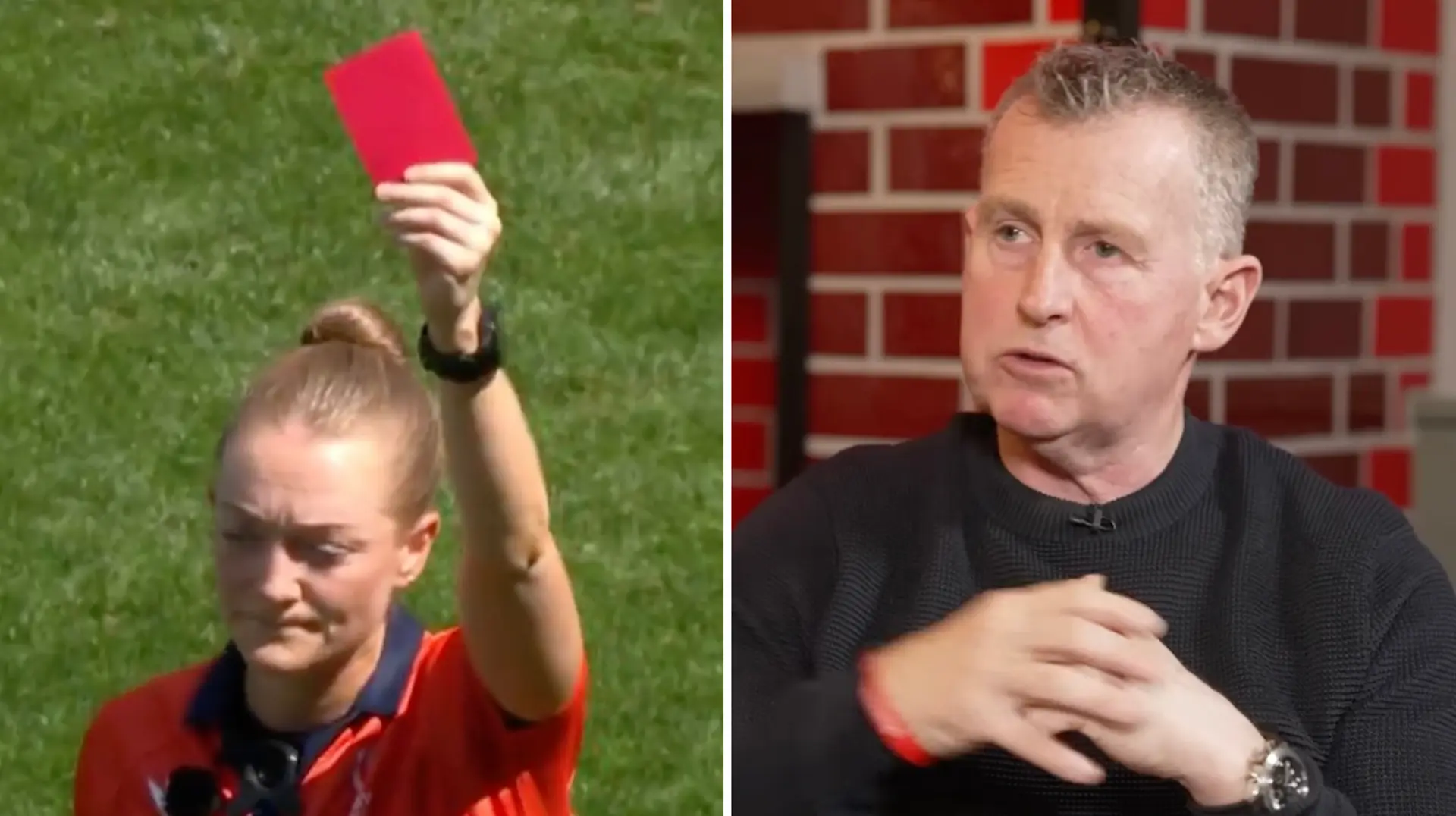
Former international referee Nigel Owens has called on World Rugby to make a series of important changes to the way the game is officiated, insisting greater consistency is needed as the Nations Championship continues.
Writing in his
WalesOnline column, the former World Rugby Referee of the Year highlighted several areas he believes need urgent attention, from foul play sanctions and the controversial 20-minute red card to breakdown "cheating" and differences in officiating between the northern and southern hemispheres.
Here are the biggest law changes and refereeing improvements Owens wants to see.
⭐ Save us to your Google Favourites for nonstop RUCK content! 1. World Rugby must create one global standard of officiating
Owens believes one of rugby's biggest issues is the lack of consistency between competitions, particularly those played in the northern and southern hemispheres. While he accepts different tournaments have different styles, he says international rugby should be officiated under the same interpretations wherever matches are played.
"World Rugby has to make sure everyone's aligned and consistent, no matter what tournaments the teams play in outside the international window."
"There will always be a slight variation, I think, in terms of how the two hemispheres want to referee the game."
He added that consistency should be one of World Rugby's biggest priorities as officials from different competitions continue to referee Test matches throughout the Nations Championship.
2. Introduce a more consistent approach to foul play
Owens believes supporters and players have been left confused by inconsistent decisions surrounding dangerous play, particularly when incidents are reviewed by the bunker.
He wants referees to apply the laws more consistently so identical offences receive identical punishments.
"One of the big things I'd like to see from referees is a bit of consistency around foul play, especially if it's sent to the bunker."
"During the Six Nations... we did maybe see a lack of consistency around the sanctions for foul play. Something that was a clear red card in some games wasn't given in others."
3. Scrap the 20-minute red card
One of Owens' strongest opinions remains his opposition to the 20-minute red card.
While the law has been backed by several southern hemisphere nations, he believes a player guilty of serious foul play should not be replaced after 20 minutes.
"For me, a straight red should also be a full red. Not a 20-minute red card."
"There's still some work to be done on that area."
4. Penalise players who deliberately trap tacklers
Owens also warned referees about a growing tactic at the breakdown, where attacking players deliberately prevent tacklers from rolling away in an attempt to win a penalty.
He believes officials must recognise the tactic and punish those responsible rather than the trapped defender.
"Players [are] deliberately holding a tackler in, in order for the referee then to not reward the jackler or penalise the tackler."
Owens went as far as describing the practice as "cheating".
"Referees need to be aware of what is essentially cheating, with players maybe putting their knees on the tackler to stop him moving away or holding him in there to make sure he's penalised."
5. Continue rewarding attacking rugby by policing offside
Not all of Owens' observations were critical.
He praised referees for their recent approach to policing offside around kicks and the offside line at the breakdown, believing it has created more attacking opportunities and improved the spectacle.
"They've recently been quite strong on offside in front of the kick and on the back foot."
"By allowing that little bit more space, I think it has contributed to some really open games of rugby that we saw in the Six Nations."
6. Maintain high standards at the scrum while finding the right balance
Rather than introducing fresh scrum laws, Owens wants officials to continue improving their management of the set-piece while striking the balance between strict law enforcement and allowing games to flow.
He believes the very best referees are those capable of applying the laws while still understanding the rhythm of the contest.
"The referees who go on to be exceptional referees are the ones who get that balance right, and often end up being the ones who land World Cup finals or big games like that."
He concluded by saying there is still work to do on foul play decisions and scrum officiating.
"I hope they continue to be strong on that and on refereeing scrums, and dealing with the foul play a bit better too because there was a little too much head-scratching over what was and what wasn't a red or yellow card."
Quiz: Name these 10 retro rugby players
From jaw-dropping tries to unforgettable moments (and yes, some questionable haircuts), these players defined a golden era of the game. If their names don’t instantly come to mind, we suggest a quick trip to YouTube to jog your memory. Trust us, it’s worth it.
Ready to test your knowledge? Let’s see if you’ve still got it. Good luck!
More Quizzes: