Who are the Young Player of the Year winners since 2001 – and what happened to them?
Rugby NewsTuesday, 15 September 2020 at 15:50

Heading back in time, we take a look at where its previous winners of the junior player award down the years...
2001: GAVIN HENSON (WALES)
After receiving the award, he made his international debut for Wales during June 2001 in a Test against Japan, coming off the bench before starting the next match against Romania. He attracted much media attention as part of a Wales national team which achieved Grand Slams in the Six Nations Championship in 2005 and 2008, but that would be as good as it got for Henson as he only won 33 caps in total.
He has also played for the British and Irish Lions, touring in 2005 to New Zealand but has never appeared at a World Cup. Domestically, Henson has played for Ospreys, Saracens, Toulon, Cardiff Blues, London Welsh, Bath and Bristol before joining Dragons (formerly Newport) in 2017.
2002: PAT BARNARD (SOUTH AFRICA)
Barnard was a member of the South African side that won the 2002 Under 21 Rugby World Championship and subsequently received the award. Injury then prevented him getting consistent rugby with the prop trying his hand in the Premiership by joining Northampton Saints in 2005. Two years later he joined Wasps after Saints were relegated but he was on the move again in 2009, joining Top 14 side Brive. His career has ultimately been stop start due to injury problems.
2003: BEN ATIGA (NEW ZEALAND)
There was a time when Atiga was seen as such a potent attacking weapon that British Lions coach Clive Woodward singled out the Aucklander as the man of whom he was most wary ahead of the 2005 tour to New Zealand. But despite the centre/fullback looking set for superstardom only played one test for the All Blacks, against Tonga in the 2003 Rugby World Cup after being called into the squad as an injury replacement for Ben Blair.
However, after struggling injury problems of his own, Atiga made the decision to take a break from professional rugby in 2008. He returned to rugby two years later and eventually joined Edinburgh in 2012 but was forced to retire two seasons later due to season due to joint disease.
2004: JEROME KAINO (NEW ZEALAND)
Now an All Blacks legend, he was Player of the Tournament at the 2004 IRB Under 21 World Championship and New Zealand Age Grade Player in the Year the same year. Kaino then scored a try on his All Blacks debut against the Barbarians (non Test cap) at Twickenham in December 2004.
In 2008 Kaino, who earned many comparisons with Jerry Collins for his uncompromising physical style, would become a key member of the All Blacks setup as the first-choice blindside flanker.
He would go onto win an incredible 83 caps, helping the All Blacks to back-to-back Rugby World Cup triumphs in 2011 and 2015. The now 35-year-old subseuqently ended his career this year by joining Top 14 side Toulouse earlier this year.
2005: TATAFU POLOTA-NAU (AUSTRALIA)
Front-rower Tatafu Polota-Nau enjoyed a lengthy career in Super Rugby with the Waratahs and Western Force before moving to Leicester Tigers after the autumn internationals in 2017.
Born in Western Sydney and a former Australia Schools international, hooker Polota-Nau played for Greater Western Sydney Rams and Parramatta Two-Blues at club level and earned the distinction of winning a first cap for Australia as a 20-year-old before he had even played at Super Rugby level.
Known as a powerful ball-carrier and fierce tackler, Polota-Nau made more than 140 appearances in Super Rugby and in 82 Tests, including World Cup campaigns in 2011 and 2015 where he played in the final against New Zealand, before heading to the northern hemisphere to join Leicester Tigers.
2006: LIONEL BEAUXIS (FRANCE)
He'd make his international debut for France against Italy during the 2007 Six Nations Championship. Following his debut Beaxis was selected for France's squad for the 2007 Rugby World Cup. During the tournament he made six appearances, first as a replacement against Namibia and Ireland before securing a starting slot against Georgia, a game in which scored his first international try.
Beauxis retained the jersey for France's famous win over New Zealand at the Millennium Stadium in the quarter-final and also started as Les Bleus were knocked out of the tournament in the semi-final by England. Beauxis missed the entire international season in 2008 due to a nagging back injury, ruling him out of both the Six Nations and autumn internationals.
He then struggled to get back into the international fold until 2012, where he played a part in every Six Nations match. However, he'd have to wait a further Six years for his next recall as a desparate France brought him back into the fold with him playing four of Les Bleus Six nations matches.
2007: ROBBIE FRUEAN (NEW ZEALAND)
The powerful utility back led New Zealand to the 2007 Under 19 Rugby World Championship, beating South Africa 31-7 in the final.
His debut for Wellington against Auckland soon followed but he was struck down by illness and subsequently underwent open-heart surgery for rheumatic heart disease, a potentially life-threatening inflammation of the heart.
He returned to rugby in 2009 and made over 70 combined Super Rugby appearances for Hurricanes, Crusaders and Chiefs. Fruen then ventured to Europe, playing for Bath and Edinburgh between 2016 and 2018.
2008: LUKE BRAID (NEW ZEALAND)
The loose forward was part of the Junior World Championship-winning New Zealand Under 20 side in 2008 and was recognised by the IRB as the Junior Player of the Year following that tournament.
He since made more than 80 Super Rugby games for the Blues and the Chiefs (for whom he made his debut) before joining Top 14 side Bordeaux-Begles. Despite not winning a senior All Black cap, he has represented the Maori All Blacks.
Braid comes from a well-known New Zealand rugby family: both his brother Daniel and father Gary were All Blacks. His great-uncle George Wyman captained Eastern Canada against the All Blacks.
2009: AARON CRUDEN (NEW ZEALAND)
Cruden made his provincial debut for Manawatu Turbos in 2008 and captained New Zealand to the 2009 IRB Junior World Championship title in Japan, as well as being named IRB Junior Player of the Year 2009.
He then burst onto the scene with the All Blacks the following year and although he initially missed out on selection for the 2011 Rugby World Cup, he replaced an injured Dan Carter and would go onto pick up a winners medal. However, injury then struck the fly-half with his opportunities then proving to be limited.
Just as he seemed to be getting back to his best, Beauden Barrett burst onto the scene with Cruden as a result moving to Montpellier on a big money contract.
2010: JULIAN SAVEA (NEW ZEALAND)
The winger picked up the award after scoring eight tries for the Junior World Championship-winning New Zealand Under 20 side in Argentina.
Savea thenn stormed onto the international stage in 2012 and quickly proved himself as a powerful runner with ball in hand, scoring nine tries in his debut season. In 2014 he went up a gear, scoring eight tries in eight Tests at a rate to equal that of the All Blacks’ greatest winger.
Savea showed his tremendous try-scoring abilities in 2015, scoring eight tries in eight matches, including a stunning treble against France in the RWC 2015 quarterfinal, one of which secured him the International Rugby Players Try of the Year Award. He was also nominated for the International Player of the Year Award in 2015.
He's since fell at of favour with All Blacks selectors and secured a big money move to Toulon in 2018.
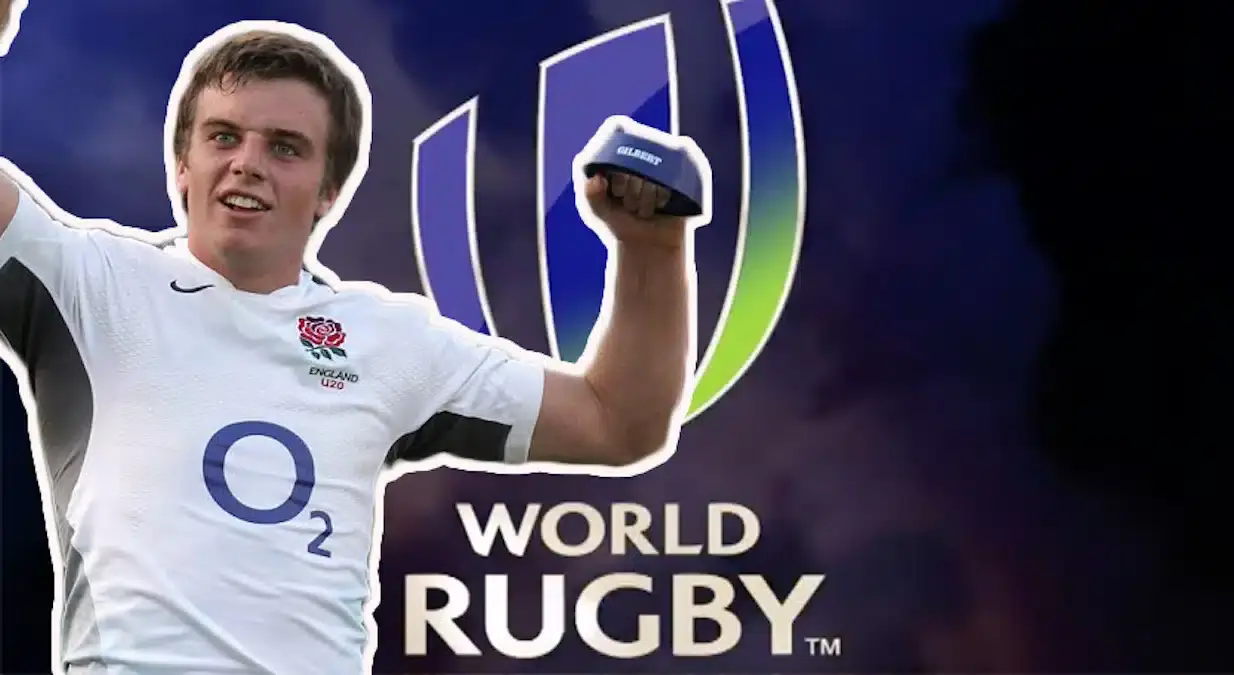
2011: GEORGE FORD (ENGLAND)
The then England U20 and Leicester fly-half beat New Zealand duo Sam Cane and Luke Whitelock to the coveted prize. Voted for by team head coaches and match officials, as well as international and local media, Ford was the first Englishman to claim the award and also became the youngest-ever winner of the award.
Ford has gone onto win 64 senior caps, scoring 300 points and winning back-to-back Six Nations titles with England in 2016 and 2017. Domestically, he left Leicester for Bath in 2013 but returned to Welford Road in 2017.
2012: JAN SERFONTEIN (SOUTH AFRICA)
Serfontein was a member of the South Africa under 20 team that won the 2012 IRB Junior World Championship. His performances in the tournament led to him being named 2012 IRB Junior Player of the Year.[1] He was also included in the squad for the 2013 IRB Junior World Championship,[2] but was later withdrawn to make him available for the senior national team.
He made his debut for the Springboks versus Italy on 8 June 2013 at Kings Park Stadium in Durban, playing from the bench as a replacement for Bryan Habana from the 71st minute. The centre won 35 caps between 2013 and 2017, scoring five tries before ending his international career to join Montpellier in the Top 14.
2013: SAM DAVIES (WALES)
The talented Welshman beat England's Jack Clifford and New Zealand's Ardie Savea to the award. Davies then made his senior debut for Wales versus Australia as a second-half replacement. The Ospreys number 10 has struggled to nail down a place in Warren Gatland's plans, winning just eight caps since. Has been called-up as cover for Dan Biggar under Wayne Pivac but is yet to feature during the 2020 Six Nations.
2014: HANDRE POLLARD (SOUTH AFRICA)
2015: JAMES CHISHOLM (ENGLAND)
The Haywards Heath-born Number 8 joined Harlequins from Brighton College and captained England U18s to victory in the FIRA European tournament. The former Sussex Under 18 high jump champion represented England Under 20s during the 2014 Six Nations and won the Junior World Championship later that year. In 2015, James helped the U20s to the Six Nations title, before being named as the World Rugby U20 Championship Player of the Year.
Chisholm enjoyed a successful 2016/17 season, when he was named IG Players’ Player of the Season, DHL Player of the Season and Nick Duncombe Young Player of the Season after scoring six tries in 24 appearances.
2017/18 was similarly prolific for the dynamic back-rower, again winning the DHL Player of the Season award and being gievn the captaincy for the Anglo-Welsh Cup campaign.
2016: MAX DEEGAN (IRELAND)
The number 8 was named Player of the Tournament for his part in helping Ireland Under-20's reach their first ever final during the 2016 World Rugby Under 20 Championship. He was promoted to Leinster's senior squad ahead of the 2017–18 season, having made three appearances for the province during the previous season. The 23-year-old made his senior Ireland debut during the 2020 Six Nations.
2017: JUARNO AUGUSTUS (SOUTH AFRICA)
Augustus, fondly known as “Trokkie” by his team-mates, crossed the tryline in each of the team’s five matches in the international spectacle to finish the tournament with a grand total of seven tries at the 2017 U20 championship. Surely a future Springbok.
2018: JORDAN JOSEPH (FRANCE)
The 19-year-old flanker currently plays for Racing 92 in the Top 14. Scoring 10 tries in 14 appearances for France U20, he is a very exciting prospect for Les Bleus.
2019: JUAN PABLO CASTRO (ARGENTINA)
Centre Castro was the most recent winner of the award in 2019. Following an outstanding year, he was named in the Jaguares squad for the 2020 Super Rugby season.
TRENDING

LATEST NEWS
LATEST COMMENTS
Loading