Warren Gatland emerges as shock content for new international coaching job
Rugby NewsWednesday, 06 May 2026 at 09:26
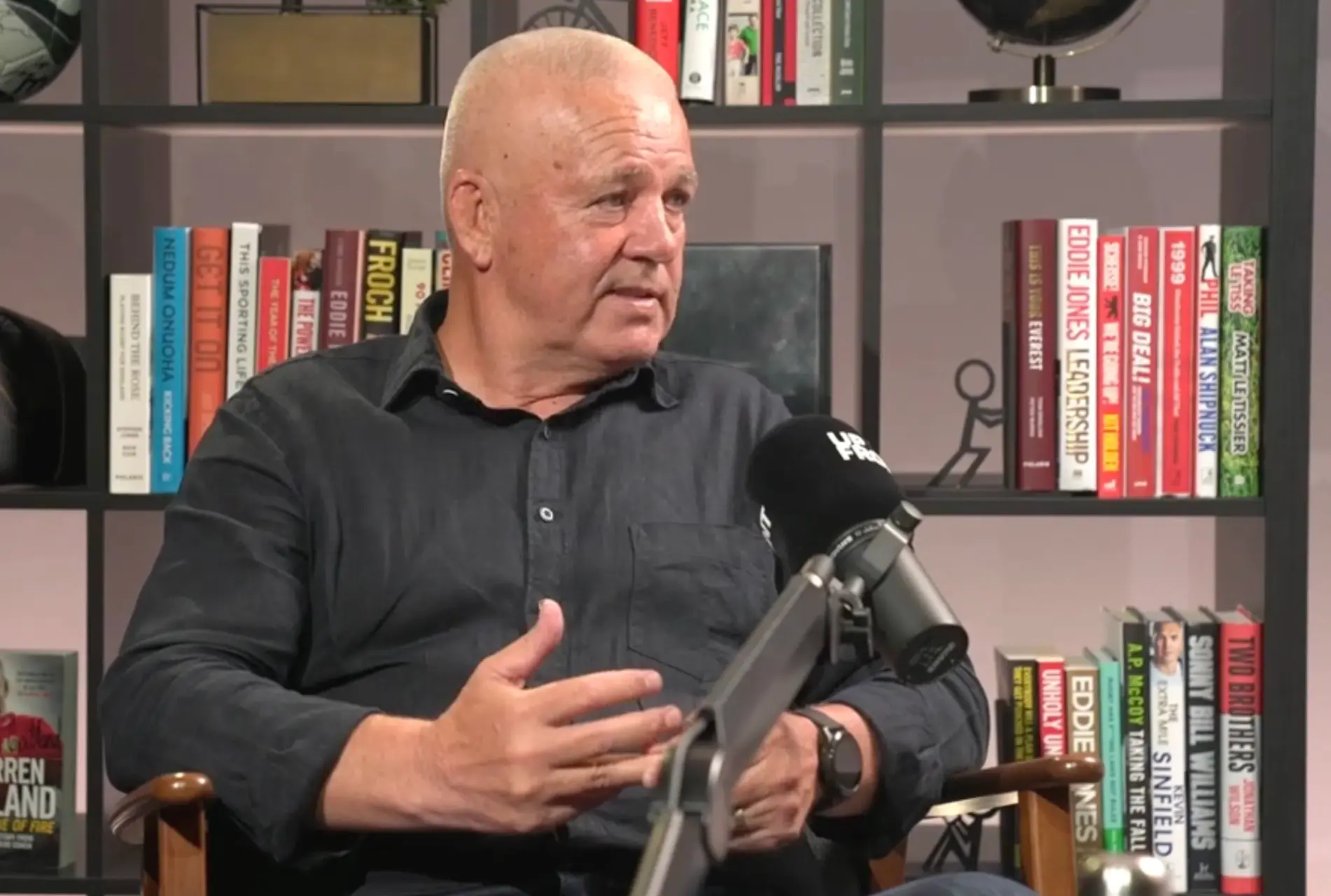

Former Wales head coach Warren Gatland has been spotted in the stands at an international clash — and it’s already sparked fresh talk about his next move in the game.
Gatland turns down Premiership return
The New Zealander had emerged as a shock candidate for the director of rugby role at Harlequins during the Six Nations.
It would have marked his first return to club rugby since leaving the Chiefs in 2022 to take charge of Wales for a second stint.
However, despite confirming he had been approached, a deal never materialised. Reports suggest Gatland was not keen on taking on the bulk of hands-on coaching responsibilities — a key sticking point in negotiations with the former Wasps boss ultimately walking away.
Spotted at Portugal v Romania
While a club comeback appears on hold, Gatland has now fuelled speculation about a return to the international arena.
The 62-year-old was in attendance at the Estádio Nacional do Jamor on Sunday, watching Portugal hammer Romania 44–7 in the Rugby Europe Championship.
His appearance did not go unnoticed, with many now wondering whether he could be lining up a role with Portugal — or even Romania — ahead of the next Rugby World Cup.
“Not done with coaching”
There has been no official explanation for Gatland’s presence at the match.
However, since stepping down from his Wales role earlier this year, he has made it clear he still has ambitions in the game — openly admitting he is “not done with coaching” and would be keen to work with a side heading to a World Cup.
For now, his next move remains unclear — but his latest appearance suggests the veteran coach may not be out of the game for long.
Ranked! The 10 best rugby coaches of all time
In this article, we celebrate the greatest rugby coaches of all time—architects of excellence who did more than win trophies, forging legacies that continue to influence the way rugby is played today.
10 Eddie Jones
Few coaches have had as varied and impactful a career as Eddie Jones. Known for his sharp rugby intellect and ability to spring tactical surprises, Jones has made a habit of rewriting the script. He took Australia to the 2003 Rugby World Cup final, masterminded Japan’s legendary upset over South Africa in 2015, and led England to the 2019 World Cup final.
Whether adapting to new cultures or revamping underperforming sides, Jones has proven to be a master strategist—never afraid to innovate, and always ready to outthink the opposition.
9 Guy Novès
For over two decades, Guy Novès was the architect of Toulouse’s dominance in French rugby. Under his stewardship, the club clinched 10 Top 14 titles and 4 Heineken Cups, establishing a culture of excellence that elevated Toulouse from a strong regional team to a European powerhouse.
Though his stint as France's head coach didn’t reach the same heights—hampered by scheduling challenges, an evolving game, and limited player access—his impact on French rugby is undeniable. Novès' influence still echoes through the current success of Stade Toulousain, a team partly shaped by his legacy.
8 Rod Macqueen
When talking about golden eras in Australian rugby, Rod Macqueen’s name is front and centre. He led the Wallabies to Rugby World Cup glory in 1999 and followed it up with a Tri-Nations title.
Macqueen was the mastermind behind Australia’s clinical, methodical style of play that earned them a 2001 series win over the British & Irish Lions. His ability to instil belief and consistency turned Australia into a global force and laid the foundations for a new generation of Wallabies.
7 Jake White
Taking over a Springbok side in disarray in 2004, Jake White set about rebuilding from the ground up—and succeeded beyond all expectations. By 2007, South Africa were world champions once again, their campaign defined by brutal defence and set-piece mastery. White’s knack for identifying talent helped launch the careers of stars like Frans Steyn. His coaching influence has since spanned the globe, but it’s that 2007 World Cup triumph that remains his crowning achievement.
6 Carwyn James
Carwyn James was as principled as he was brilliant. A man of deep conviction, he famously stayed in the changing rooms in protest during a 1970 match against apartheid-era South Africa. But it was on the field where his legacy was cemented—guiding the British & Irish Lions to their only series win over the All Blacks in 1971, and masterminding Llanelli’s legendary 1972 victory over the same opponents.
James also led the Barbarians to their famous 1973 win over New Zealand, inspiring Phil Bennett’s unforgettable sidestepping run. Though he never coached Wales at Test level, his influence was profound, extending all the way to Italy, where he won a title with Rugby Rovigo.
Join RUCK’s Instagram broadcast channel and get the latest rugby news straight to your phone.
5 Clive Woodward
Best remembered for guiding England to World Cup glory in 2003, Sir Clive Woodward changed the way English rugby approached professionalism.
His meticulous preparation and cutting-edge use of data and sports science set England apart during his tenure. Woodward built a team capable of handling pressure, blending raw power with tactical nuance, and his crowning moment came when Jonny Wilkinson’s drop goal sealed England’s only World Cup win to date. His methods inspired a generation of coaches to embrace innovation in the sport.
4 Ian McGeechan
Few figures are as deeply entwined with the spirit of the British & Irish Lions as Sir Ian McGeechan. Affectionately known as “Geech,” he coached the Lions on four tours, including the iconic 1989 and 1997 series wins—the latter often considered the greatest Lions tour of the professional era.
McGeechan also guided Scotland to a Grand Slam in 1990, blending passion and precision. His greatest strength was fostering unity and belief, making him a revered figure in both Lions and Scottish rugby folklore.
3 Graham Henry
Sir Graham Henry will always be the man who ended New Zealand’s long wait for World Cup redemption. After heartbreak in previous tournaments, Henry rebuilt the All Blacks into an unstoppable force, winning the 2011 World Cup on home soil.
Prior to that, he made his mark with Wales and even coached the British & Irish Lions. His emphasis on leadership, discipline, and mental resilience helped redefine how the All Blacks approached pressure—and paved the way for years of dominance to follow.
2 Steve Hansen
When Steve Hansen took over from Graham Henry, many wondered how he would fill the shoes of a World Cup-winning coach. The answer? By making one of the greatest teams in history even better. Hansen guided the All Blacks to a flawless World Cup victory in 2015 and maintained a staggering win rate throughout his tenure.
Calm and unflappable, he empowered players to make decisions and brought unmatched tactical clarity. His legacy includes not only silverware but also a period of sustained excellence that few in the sport can rival.
1 Rassie Erasmus
At number one, we have the game-changing genius of Rassie Erasmus. When he took charge of the Springboks in 2018, South African rugby was in crisis. Within a year, he had orchestrated one of the most remarkable turnarounds in rugby history—guiding the Boks to a Rugby Championship title and a World Cup win in 2019. Then, against all odds, he did it again in 2023.
Erasmus has combined old-school Springbok muscle with cutting-edge tactical thinking, and his transparency, boldness, and innovation have redefined what a head coach can be. His recent back-to-back Rugby Championship wins—capped by a record 43-10 win over New Zealand—only strengthen his case as the most influential rugby coach of the modern era.
TRENDING




LATEST NEWS
LATEST COMMENTS
Loading