Wales could follow football's example and change name after Rugby World Cup
Rugby NewsMonday, 31 October 2022 at 17:54
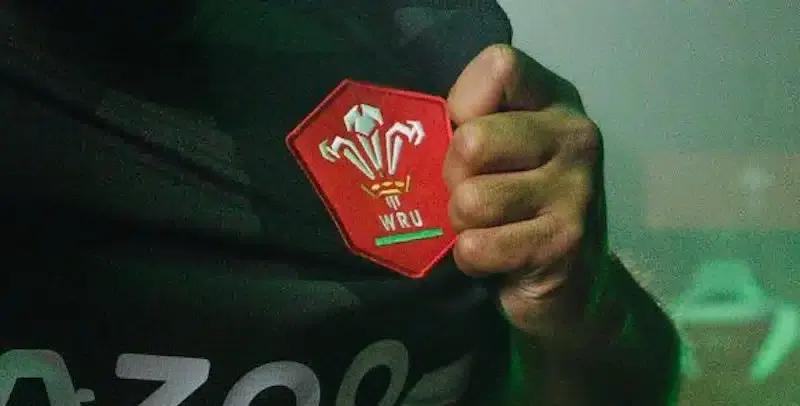
The Welsh Rugby Union are being encouraged to follow the national football side and change their name moving forwards.
It's been widely reported today that Wales' national football teams could change their name to Cymru - the Welsh name for Wales - after this year's World Cup in Qatar.
One fan wrote: "Rugby team should do this too, about time."
"I'd love this to happen in rugby too," commented a second.
The Football Association of Wales (FAW) already uses Cymru at its headquarters and in communications and documents.
"The team should always be called Cymru, that's what we call it here," said FAW chief executive Noel Mooney.
"Our view at the moment is that domestically we're clearly called Cymru. That's what we call our national teams.
"If you look at our website, how we talk about ourselves, we are very much Cymru.
"Internationally we feel we have a bit more work to do yet. So we are going to this World Cup as Wales.
"But I think 2023 will be a year when we have a good discussion with all the different stakeholders - whether that's governments, our own boards, councils and decision-making bodies, staff, club and players.
"We're a very open democratic organisation and we don't just unilaterally decide today to do something like that.
"I would say it's the direction of travel, but there's no firm decisions on it. It's more almost by osmosis that we're heading towards it."
Selecting an All-Time Wales XV: Gibbs, Jones, Williams
all-time Wales XV
All-Time Best Wales XV:
Fullback: J.P.R. Williams (1969-1981) - As part of the swaggering 1970s era, he was fearless, skilful, quick, aggressive, and he regarded a breach of the Wales try-line as an invasion of his personal property. Factor in the sideburns and the socks rolled down around the ankles, and you have a truly iconic figure.
Winger: Gerald Davies - Another of the greats from the all-conquering Welsh side of the 70s, all style and swerve and correctness with his turned-up collar and poetic majesty.
Centre: Bleddyn Williams (1947-55) - His career was disrupted by WWII in which he was in the RAF, but by the time he won the last of his 22 caps in 1955 he had captained the Lions and become known as ‘the Prince of Centres’ courtesy of his immense leadership, robust tackling and surging runs.
Centre: Scott Gibbs (1991-2001) - Voted as the Player of the Series in the Lions Tour of South Africa in 1997, Gibbs always had a strong impact on the pitch and after a brief stint of playing Rugby League, he returned to Rugby Union and in 1999 scored a superb solo try against England in the dying moments of the game securing a 32-31 win for the Welsh.
Winger: Shane Williams (2003-2011) - He will go down as Wales’ record Test try scorer, scoring 58 tries in his 87appearances, and he remains the only Welshman to have won the prestigious IRB World Player of the Year award.
Fly-half: Phil Bennett (1969-1978) - Almost in here for his three sidesteps for the Baabaas alone (1973 v All Blacks). Brilliant runner.
Scrum-half: Gareth Edwards (1967-78) - Scorer of 'The greatest try of all time' in 1973 whilst playing for the Barbarians, Edwards is unquestionably Wales' greatest ever scrum half. The number nine was named the BBC Welsh Sports Personality of the Year in 1974 and only a year later he received an MBE highlighting how great an impact Edwards made during his career.
Prop: Gethin Jenkins (2002-16) - Revolutionised the role of the loose-head prop. Like an extra back-rower with his ability over the ball and his defensive work-rate. The medal haul for club and country says it all.
Hooker: Bobby Windsor (1973-79) - The centrepiece of the Pontypool front-row, Bobby ‘The Duke’ Windsor was a steelworker by day, and as resilient on the field of play as that trade suggests.
Prop: Adam Jones (2003-14) - He won three Grand Slams during a 100-cap Test career. Jones starred for Neath, then Ospreys, and played a season for Cardiff Blues before joining Harlequins in 2015. He retired last summer following a stellar career.
Lock: Alun Wyn Jones (2007-) - Now with 146 Test caps to his name for the Lions and Wales, the Ospreys second row has grown into an inspirational and talismanic figure and would be a candidate for most people’s world team right now.
Lock: Robert Norster (1982-89) -The Cardiff lock ruled the roost in the 80s, a supreme lineout practitioner, a skilful operator on so many fronts, the prototype of the modern, all-court lock forward.
Flanker: Sam Warburton (2009-18) - A specialist openside more than capable of doing the heavy-duty work on the other side of the back row as he proved on several occasions for Wales. Another desperately tough call but the double Lions captain demands a place for a variety of reasons, not least his winning way with referees.
Flanker: Martyn Williams (1996-2012) - Mr Consistency. Man of the Match time and again for club and country. A footballing openside, this popular and highly respected centurion went on three Lions tours.
Number 8: Scott Quinnell (1993-2002) - After a short spell in league, returned to Union when the game went open. One of the most effective ball-carrying No 8s in the world, he was like a one-man pack for Wales at times.
TRENDING

LATEST NEWS
LATEST COMMENTS
Loading
