The greatest English rugby players of all-time (Ranked 20-1)
Rugby NewsThursday, 23 April 2026 at 14:54
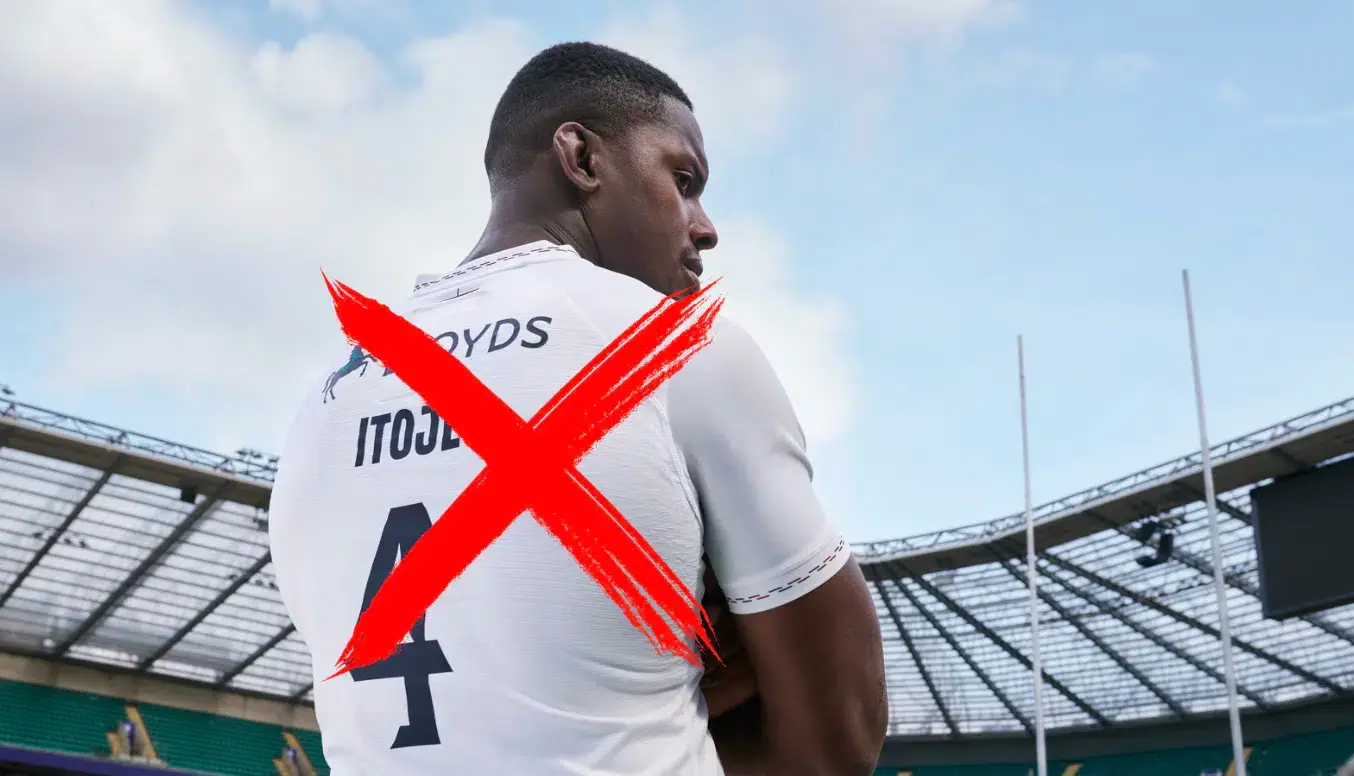
On St George’s Day, it is fitting to celebrate the players who have shaped English rugby history. From iconic World Cup winners to modern trailblazers, both the men’s and women’s games have produced extraordinary talent.
Here, we count down the greatest English rugby players of all time, honouring those whose skill, leadership, and impact have defined the sport across generations.
20 Maro Itoje
At the core of England’s modern side stands Maro Itoje, a lock whose athleticism and tireless work rate place him among the finest in the world. His dominance at the lineout, disruption at the breakdown, and ability to lift those around him have shaped his international career.
In 2025, he took on the captaincy of both England and the British & Irish Lions, guiding the Lions to a historic series victory in Australia. Smart, motivated, and adaptable, Itoje is a defining figure of his generation.
19 Ellie Kildunne
Electric speed, sharp agility, and fearless creativity have established Ellie Kildunne as one of the standout players in women’s rugby. A key contributor to England’s World Cup success on home soil in 2025, she was also named World Rugby Women’s 15s Player of the Year in the same campaign.
With 50 tries already scored, she ranks among the Red Roses’ most prolific finishers and continues to excite supporters with her bold style and attacking flair for both club and country.
18 Jonny May
Blisteringly fast and lethal in open play, Jonny May became one of England’s most effective wingers. Across 78 international caps, he scored 36 tries, placing him second on England’s all-time try-scoring list.
His trademark pace and knack for scoring from almost any position made him a fan favourite and a constant threat to opposition defences throughout his career.
17 Will Greenwood
A key figure in England’s golden era, Will Greenwood was known for his intelligent running, vision, and creativity in midfield.
He played a crucial role in England’s 2003 World Cup triumph, while his performances for the British & Irish Lions, particularly in 1997, highlighted his quality at the highest level. Both skilful and engaging, Greenwood left a lasting legacy as one of England’s most inventive centres.
16 David Duckham
In the 1970s, David Duckham captivated supporters with his elusive footwork and attacking instinct. He earned 36 caps for England, scoring 10 tries, and stood out during the 1971 British & Irish Lions tour of New Zealand.
His reputation grew further in 1973 when he starred in the Barbarians’ famous win over the All Blacks. Unpredictable and exciting, Duckham remains one of England’s most cherished wingers.
15 Fran Cotton
Known for his powerful scrummaging and physical presence, Fran Cotton was a cornerstone of England’s pack. A prop capable of playing on either side, he won three Lions caps in 1977 and contributed to the celebrated 1974 tour.
With England, his standout achievement came with the 1980 Grand Slam. Respected as both a leader and a fierce competitor, Cotton set a benchmark for future generations of props.
14 Jeremy Guscott
Few players blended style and effectiveness as seamlessly as Jeremy Guscott. A creative force through the 1990s and early 2000s, he combined vision, composure, and an instinct for breaking down defences. His impact spanned club, country, and Lions tours, earning widespread recognition.
In 2016, his lasting contribution was honoured with induction into the World Rugby Hall of Fame, confirming his place among England’s greatest centres.
13 Neil Back
Not the biggest player on the pitch, Neil Back built his reputation on relentless effort, sharp defence, and a remarkable ability to win turnovers.
He represented England at three World Cups and played a vital role in the 2003 victory. His Lions career included three tours, featuring the historic 1997 success in South Africa, and he later became the oldest test Lion during the 2005 tour of New Zealand.
His 15-year spell with Leicester Tigers demonstrated not only consistency but also leadership, as he balanced playing and coaching before retiring as one of the game’s most respected flankers.
12 Phil Vickery
Nicknamed the “Raging Bull,” Phil Vickery anchored England’s scrum with strength and determination. His achievements include winning the 2003 Rugby World Cup and captaining England to the 2007 final.
With three World Cups and two Lions tours to his name, he established himself as one of the most dependable props of his era. Vickery’s leadership and resilience defined his career, earning him lasting respect as a key figure in the pack.
11 Owen Farrell
Calm under pressure and deadly from the tee, Owen Farrell has been a central figure in modern English rugby.
Since debuting in 2012, he has scored over 1,200 international points, the highest total in England’s history, while also helping Saracens secure multiple titles. His influence extended beyond kicking, as he captained England to the 2019 World Cup final.
After stepping away from international rugby following 2023 but later becoming available again after returning to Saracens, Farrell remains one of the sport’s most composed playmakers and prolific scorers.
10 Peter Winterbottom
Unyielding in defence and fearless in contact, Peter Winterbottom was a driving force in England’s back row during the 1980s. Earning 58 caps, he held the record as England’s most-capped openside until 2003.
Twice selected for the British & Irish Lions, he impressed in New Zealand with his endurance and work rate, playing 19 matches on tour. His place on the Twickenham Wall of Fame reflects a career built on courage, dedication, and consistency.
9 Emily Scarratt
Emily Scarratt has secured her place in rugby history through record-breaking scoring and her role as one of the Red Roses’ most reliable performers.
Combining power, speed, and precision from the tee, she has set records for the most points in women’s international rugby, including achievements in both World Cups and Six Nations competitions.
Her longevity and excellence, which place her among England’s most-capped players, have made her both a match-winner and an inspiration worldwide.
Her role in the 2025 World Cup victory marked her fifth appearance at the tournament for England.
8 Rory Underwood
Pace was the defining feature of Rory Underwood’s career, making him England’s leading men’s try scorer. From 1984 to 1996, he scored 49 tries in 85 internationals, a record that still stands.
A mainstay for Leicester Tigers with over 230 appearances, Underwood was an exceptional finisher, able to convert opportunities into points in an instant. His consistency and speed made him one of rugby’s most dangerous wingers.
7 Sarah Hunter
Strong leadership and total commitment made Sarah Hunter the driving force of the Red Roses for more than a decade. Playing at number eight, she captained England through four World Cups, lifting the trophy in 2014 and earning widespread respect as a leader.
In 2021, she surpassed Rocky Clark to become England’s most-capped player with 138 appearances. Her legacy extends beyond trophies, inspiring teammates and contributing to the growth of the women’s game.
6 Jason Robinson
Few players electrified crowds like Jason Robinson, whose explosive speed and footwork troubled defenders. After switching from rugby league, he quickly became a standout in union, earning 51 England caps and scoring in the 2003 World Cup final.
He also represented the British & Irish Lions, where his pace and agility shone in test matches. As the first black captain of England, he broke new ground and left a legacy of both sporting excellence and wider significance.
5 Richard Hill
Richard Hill delivered the essential, often unseen work that supported England’s success. His defensive organisation, relentless tackling, and tactical awareness made him crucial during the 2003 World Cup campaign.
Though rarely in the spotlight, his reliability and consistency earned deep respect from teammates and coaches, securing his place among England’s most important flankers.
4 Jason Leonard
Endurance and dominance defined Jason Leonard’s remarkable career, making him one of rugby’s most-capped players. He was part of four Grand Slam-winning England sides and played a key role in the 2003 World Cup victory.
Leonard also toured three times with the British & Irish Lions, earning five test caps. His achievements were recognised with honours including an MBE, OBE, and a place in the World Rugby Hall of Fame, confirming his status as one of the sport’s great props.
3 Lawrence Dallaglio
Power, personality, and versatility made Lawrence Dallaglio one of England’s most recognisable forwards. Capable of playing across the back row, he earned 85 caps and was central to the 2003 World Cup triumph.
His achievements extended beyond the 15-a-side game, as he is among the few players to hold both Rugby World Cup and Sevens World Cup titles. With three Lions tours to his name, Dallaglio’s influence as a leader on and off the field is firmly established.
2 Martin Johnson
Few leaders in rugby have commanded authority like Martin Johnson. Imposing in presence and character, he captained England to their 2003 World Cup win, representing discipline, strength, and determination.
Widely regarded as one of the greatest locks in the game, he also led the British & Irish Lions, adding to his legendary reputation. His leadership continues to serve as a standard for others to follow.
1 Jonny Wilkinson
Accuracy, resilience, and relentless commitment defined Jonny Wilkinson’s career, highlighted by his famous drop goal that secured England’s 2003 World Cup victory.
A perfectionist in preparation and decisive in key moments, Wilkinson spent 12 years with Newcastle before achieving European success with Toulon. His remarkable scoring record and humility made him one of rugby’s most respected figures.
He is remembered not only as one of the greatest fly-halves in history, but as a player who helped set new standards for professionalism in the sport.
EDITORS PICKS:
TRENDING


LATEST NEWS
LATEST COMMENTS
Loading