
The wait is almost over for the first ever Nations Championship, with the inaugural 12-team competition set to commence in just over a week's time across the Southern Hemisphere.
Join RUCK’s Instagram broadcast channel and get the latest rugby news straight to your phone.
This all-new tournament replaces the traditional international windows in July and November, with a Southern and Northern series set to take place, before the Finals Weekend at Allianz Stadium, Twickenham. The competing sides for the Nations Championship come in from the 10 Tier One Nations from the Six Nations and SANZAAR along with the invited duo of Japan and Fiji.
In this article, we are taking a look back at the all time greatest players for each of the participating countries, in the 2026 Nations Championship. With boundless honourable mentions to consider, it has been quite the tall order to pick the one true GOAT from each of the 12 nations, yet we've given it a crack as the build to the tournament continues. Here's RUCK's picks for the Greatest Player from every Nations Championship Team.
JAPAN - SHOTA HORIE
Honourable Mentions: Michael Leitch, Kenki Fukoaka, Daisuke Ohata
Shota Horie’s place in Japanese rugby folklore is secure, but there is a compelling case that he stands alone at the summit. Few players have embodied the Brave Blossoms’ rise quite like the dread-locked hooker, whose career stretched across four Rugby World Cups and the most transformative era the nation has ever known.
Nicknamed as Japan's 'Iron Man' Horie was at the heart of the fabled Miracle of Brighton win over the Springboks in 2015, and helped drive Japan to a historic quarter-final on home soil in 2019, and remained a cornerstone of the national side until 2023. A brilliant technician at the set-piece, Horie combined old-school grit with soft hands, sharp footwork and a rugby brain that consistently put him a step ahead.
He also broke barriers away from the Brave Blossoms, as he became the first Japanese player to represent an Australian Super Rugby franchise, where he ran out for Melbourne Rebels in 2013, before captaining the Sunwolves. Longevity, leadership and landmark achievements — no Japanese player has left a bigger imprint on the game than Shota Horie.
FIJI: WAISELE SEREVI
Honourable Mentions: Rupeni Caucaunibuca, Semi Radradra, Joe Levula
When rugby is woven into Fiji’s national identity, standing at the mountain-top is no small feat. Yet Waisale Serevi remains the undisputed greatest player his Pacific islands have ever produced. Nicknamed "The Wizard", Serevi dominated rugby sevens with the Flying Fijians, with his dazzling footwork, outrageous vision and effortless creativity turned. Every touch was must-watch theatre as he elevated the shortened format from a niche spectacle into a global phenomenon.
Serevi captained Fiji to Rugby World Cup Sevens titles in 1997 and 2005, later guiding them as player-coach to their first-ever World Sevens Series crown. Beyond sevens, he also represented Fiji in three Rugby World Cups, proving his genius translated to the 15-man game, in a rare dual-code accomplishment.
Inducted into the World Rugby Hall of Fame and widely regarded as the greatest sevens player of all time, Serevi is the definitive sporting icon from the South Pacific. He embodied the joy, flair and fearless spirit of Fijian rugby, leaving a legacy that may never be surpassed.
ARGENTINA: HUGO PORTA
Honourable Mentions: Felipe Contepomi, Agustin Pichot, Juan Martin Hernandez
Before Agustín Pichot inspired a generation and Juan Martín Hernández dazzled crowds, there was Hugo Porta – the man who put Argentine rugby on the world map. Widely regarded as Los Pumas’ first global superstar, the fly-half was the heartbeat of the national side throughout the 1970s and 1980s, earning 58 caps at a time when Test opportunities were far more limited than today.
An elegant playmaker blessed with supreme vision, flawless tactical kicking and nerveless goal-kicking, Porta had the rare ability to dictate matches against the sport’s biggest powers. His crowning moment came in 1985, when his 21-point masterclass secured a famous 21-21 draw against the mighty All Blacks in Buenos Aires – still one of the defining performances in rugby history.
More than his statistics, Porta gave Argentina belief that it belonged on rugby’s biggest stage. Every Puma icon since has walked the trail he blazed, making him the greatest player his nation has ever produced.
AUSTRALIA: JOHN EALES
Honourable Mentions: David Campese, George Gregan, Tim Horan, Michael Hooper
Australia has produced no shortage of rugby immortals. David Campese was the game's first great entertainer, Tim Horan redefined outside-centre play, George Gregan became the Wallabies' most-capped player and Michael Hooper set extraordinary standards for consistency and commitment. Yet when the debate turns to the greatest Australian of them all, John Eales still stands above the rest.
Nicknamed "Nobody" because "nobody's perfect", the towering lock possessed an almost complete skill set – dominating the lineout, excelling in the loose, captaining with quiet authority and even stepping up to kick crucial goals. More importantly, he delivered when it mattered most.
Eales captained Australia to Rugby World Cup glory in 1999, lifted the Bledisloe Cup, Tri Nations title and famously slotted the match-winning penalty against New Zealand in 2000 to secure the Wallabies' first series win over the All Blacks in 14 years. In an era packed with world-class talent, Eales was the man everyone followed. His trophy cabinet, leadership and lasting influence make him the benchmark for Australian rugby greatness.
SOUTH AFRICA: SIYA KOLISI
Honourable Mentions: Francois Pienaar, Joost van der Westhuizen, Bryan Habana, Eben Etzebeth, Pieter-Steph du Toit, Victor Matfield, Schalk Burger, Tendai Mtwarira, Os du Randt, Malcolm Marx
My goodness. Where to even begin? The Springboks could comfortably put together a XV of players that caould each stake a claim to being the best to ever play in green and gold, such is the decorated lineage of rugby union in South Africa. Simply put, there is no obvious name that stands above the rest as the Springboks' GOAT, with our decision coming down to the finest of margins with a feat only achieved by one man.
Siya Kolisi stands alone as the only player to captain South Africa to two Rugby World Cup titles, with back-to-back (or Bokke-to-Bokke) triumphs in Tokyo 2019 and Paris 2023. This accomplishment has only been achieved by one other man, with a certain New Zealander set to feature next on this list, with Kolisi's incredible tenure at the Springboks helm making him our pick for the nations' greatest ever rugby player. This discussion could be debated until the Nations Championship comes to an end, so we fully appreciate that plenty of you will disagree with this pick.
What also elevates Kolisi's status within the overall rankings, is how he transcended rugby and represented something far greater than victories and trophies. As South Africa's first Black test captain, he became a powerful symbol of unity in a nation that moves onward from it's dark history. Fighting back from injuries to lead the Springboks to World Cup triumphs, Kolisi inspires millions of future stars day after day, and will continue to do so as South Africa chase down a third consecutive Rugby World Cup title.
NEW ZEALAND - RICHIE MCCAW
Honourable Mentions: Dan Carter, Jonah Lomu, Colin Meads, Ma'a Nonu, Tana Umaga, Kieran Read
New Zealand's rugby history is overflowing with legends. Dan Carter was the game's ultimate fly-half, whilst Jonah Lomu changed rugby forever as the sport's first super-star. Colin Meads embodied All Black toughness, Ma'a Nonu redefined the modern centre role, Tana Umaga inspired a generation with his leadership and Kieran Read was the complete No.8. Yet one man sits above them all: Richie McCaw.
The openside flanker did more than just captain the All Blacks throughout a successful period, McCaw became the standard by which every rugby leader is judged. Relentless at the breakdown, tireless in defence and unrivalled in his ability to influence the biggest moments, McCaw combined supreme skill with an obsession for winning.
He led New Zealand to back-to-back Rugby World Cup titles in 2011 and 2015, the latter making the All Blacks the first nation to successfully defend the trophy. Add two World Rugby Player of the Year awards, a (then) record 148 Test caps when he retired and a staggering win rate, including a perfect calendar year 14 Test wins in 2013, and the argument becomes overwhelming. No player has defined excellence in the black jersey quite like Richie McCaw.
ITALY - SERGIO PARRISE
Honourable Mentions: Diego Dominguez, Mauro Bergamasco, Martin Castrogiovanni, Tommaso Menoncello
Some players win trophies. Others change the perception of an entire rugby nation. Sergio Parisse belongs firmly in the latter category. Long before Italy became genuine Six Nations disruptors, the Azzurri possessed one undeniable truth: they had the best No.8 in world rugby.
While Diego Dominguez's boot, Mauro Bergamasco's relentless engine and Martin Castrogiovanni's scrummaging power all helped shape Italian rugby, and Tommaso Menoncello now looks destined for greatness, nobody has elevated the jersey quite like Parisse. For almost 20 years, he carried Italy with extraordinary consistency, producing world-class performances against opponents blessed with far stronger supporting casts.
Parrisse's blend of athleticism, soft hands, vision and physicality was almost unprecedented for a forward, making him equally capable of crashing over defenders, producing outrageous offloads or dictating play like an extra fly-half. With 142 Test caps and a record 94 matches as captain, his influence stretched far beyond statistics.
Silverware never arrived on international stage, but respect certainly did. Parisse gave Italy something priceless: credibility. He proved an Italian could be regarded as the world's best in his position, laying foundations that Gonzalo Quesada's exciting new generation continues to build upon.
WALES - SIR GARETH EDWARDS
Honourable Mentions: Sam Warburton, J.P.R Williams, Alun Wyn Jones, Barry John, Shane Williams, George North
Ask rugby supporters to describe the perfect scrum-half and, knowingly or not, many will describe Sir Gareth Edwards. Long before highlight reels and social media, the Welshman was redefining what No.9 could be, turning a position built on service into one capable of dominating matches.
That's no slight on Welsh greats from the amateur era like Barry John, J.P.R. Williams, or the more successful professional periods when Shane Williams, Alun Wyn Jones, Sam Warburton or George North ran out in red. Each defined an era. Edwards transcended them all.
His speed, awareness and instinct transformed broken play into opportunity, while his competitive edge made him the heartbeat of Wales' greatest-ever side. Three Grand Slams, five Five Nations titles and a starring role in the British & Irish Lions' historic unbeaten tour of New Zealand in 1971 tell only part of the story.
Then there is that Barbarians try against the All Blacks, still regarded as rugby's greatest score, with Edwards finishing the move in unforgettable fashion. Named World Player of the 20th Century, he wasn't simply the outstanding player of his generation. He became the blueprint every scrum-half has chased ever since.
FRANCE - ANTOINE DUPONT
Honourable Mentions: Serge Blanco, Thierry Dusatoir, Fabien Pelous, Jean Prat
The hardest part about judging Antoine Dupont is deciding where to set the bar. Comparing him with France's greats almost feels unfair because he has forced himself into conversations that stretch far beyond his own nation.
Serge Blanco captivated crowds with effortless brilliance, Thierry Dusautoir inspired through courage, while Jean Prat and Fabien Pelous became symbols of French rugby across different generations. Dupont has somehow blended all of those qualities into one extraordinary player.
His game has almost no obvious weakness. He can dictate tempo, dominate the breakdown, beat defenders, kick with precision and produce moments of genius that alter matches in an instant. Add Six Nations glory, domestic and European success with Toulouse, plus Olympic sevens gold on home soil, and it's little wonder many already regard him as the finest all-round rugby player the sport has produced.
Yet reputations count for little in modern French rugby. Maxime Lucu's outstanding form in Bordeaux-Bègles' historic European title defence has created the strongest challenge Dupont has faced for the No.9 jersey in years. Even for a player of his stature, excellence must be earned every weekend, and somehow, that only adds another chapter to an already remarkable story.
SCOTLAND - GAVIN HASTINGS
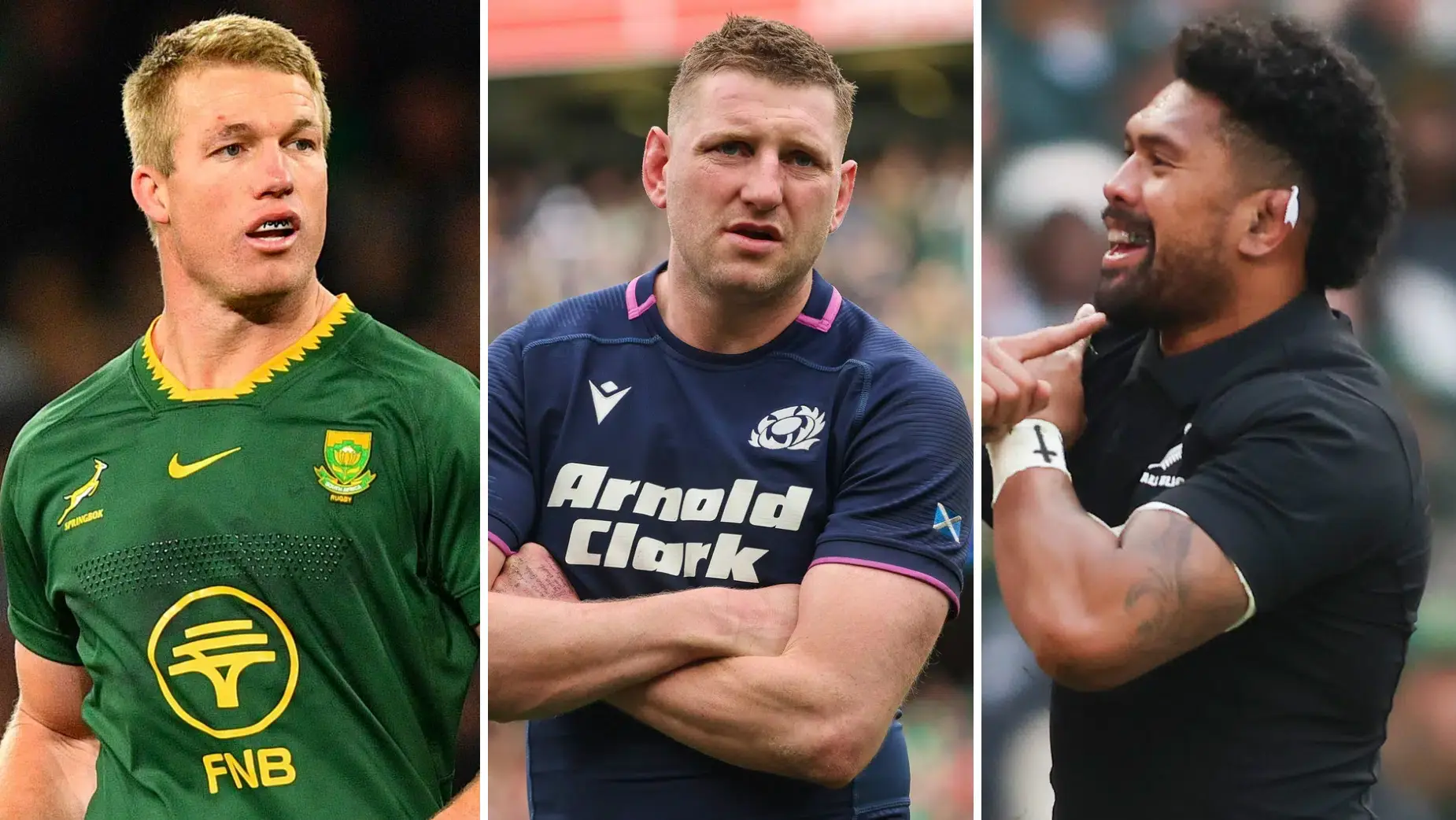
Honourable Mentions: Finn Russell, Andy Irvine, John Rutherford, Finlay Calder, Stuart Hogg
Whilst Finn Russell brought fly half flair and Andy Irvine provided elegance from full-back, when Scottish rugby needed a figurehead, it always turned to Gavin Hastings.
For more than a decade, the towering full-back was the heartbeat of the national side, combining an immense left boot with bravery under the high ball and a deceptively graceful running game. He was a key figure in Scotland's famous 1990 Grand Slam side, and sealed the title against England at Murrayfield in one of the nation's defining sporting occasions,
Whilst his points-scoring exploits made him one of the game's biggest stars during the amateur era, Hastings' greatest contribution was the belief he gave Scottish rugby. He made Scotland expect to compete with, and beat, the very best. Decades later, that remains his enduring legacy—and why no player has worn the dark blue jersey with greater distinction. Lets see if Finn Russell can lead Scotland to a Six Nations title before the end of his career, and we may need to re-write this article one day.
IRELAND - BRIAN O'DRISCOLL
Honourable Mentions: Johnny Sexton, Mike Gibson, Willie John McBride, Keith Wood, Ronan O'Gara, Paul O'Connell
Irish rugby has never lacked for heroes. Paul O’Connell brought steel and leadership to the engine room, Johnny Sexton defined a generation with his control at fly-half, Keith Wood set new standards for dynamism at hooker, and Willie John McBride became a symbol of old-school Lions-era toughness. But when the question shifts from greatness to genius, Brian O’Driscoll stands alone at the summit of the men in green.
He arrived at a time when Ireland were still chasing consistency on the biggest stages, yet quickly became the player opponents built entire defensive plans around. Blessed with explosive acceleration, razor-sharp footwork and an almost preternatural ability to read space, O’Driscoll redefined what an outside centre could be. He was finisher, a creator, a defensive organiser, and a constant threat from anywhere on the field.
His hat-trick in Paris against France in 2000 was unforgettable, as was his British & Irish Lions performances, iconic tries and long term captaincy of Ireland, which cemented his status as a leader and match-winner. He won multiple Six Nations titles with Ireland and was named Six Nations Player of the Championship on three separate occasions, underlining his sustained dominance at the highest level. With 133 caps and 46 international tries, his numbers only hint at his influence.
ENGLAND - JONNY WILKINSON
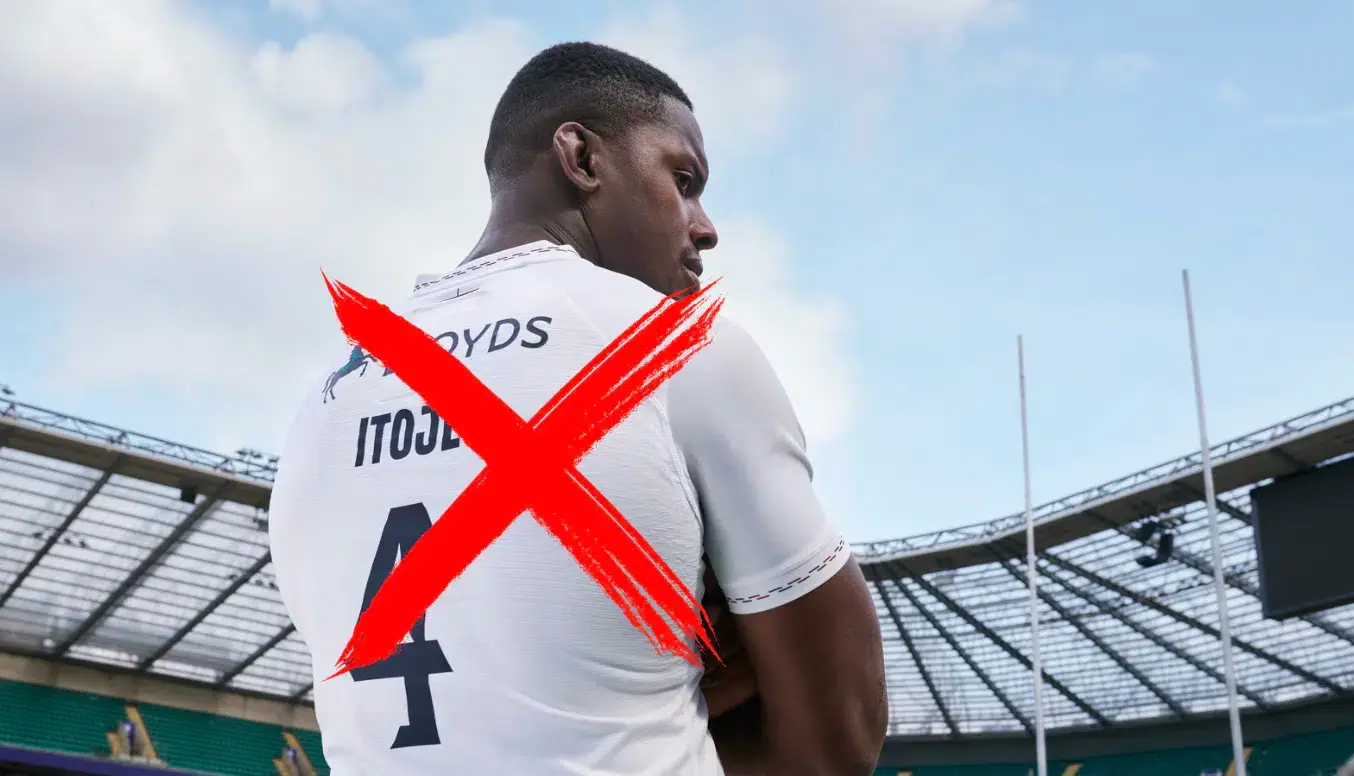
Honourable Mentions: Martin Johnson, Owen Farrell, Lawrence Dallaglio, Maro Itoje, Richard Hill
“Wilkinson… he drops it… it’s over!” Those words have echoed through English rugby ever since that cold night in Sydney, when one swing of the boot sealed a one and only Rugby World Cup title and defined a generation. In moments like that, Jonny Wilkinson was rose to the occasion, and takes his place against fierce competition to be the greatest England player of all time.
England have produced titans of the game: Martin Johnson’s uncompromising leadership, Lawrence Dallaglio’s ferocity, Richard Hill’s intelligence are all halmarks of the bygone era. Today's modern landscape sees the likes of Maro Itoje lead with his heart on his sleeve, with former captain Owen Farrell also a definitive England great. However, none have since carried the weight of expectation like Wilkinson, nor met it so consistently on rugby’s biggest stages.
A master of preparation and precision, Wilkinson rebuilt his game after repeated injury setbacks to become the most complete tactical operator of his era. The 2003 Rugby World Cup final was only the signature moment of a career defined by control, discipline and nerve beyond measure. With a boot that could bend finals to his will, Wilkinson authored England’s greatest rugby chapter, that is yet to be emulated some 23 years later.
LATEST RUGBY NEWS:
- Wales team to play Barbarians confirmed: Star Makes Comeback After Lengthy Absence
- Rassie Erasmus makes his feelings clear on England boss Steve Borthwick
- “Factory reset” – Maro Itoje breaks his silence after being replaced as England captain
- Who are the 4 Uncapped Players in the All Blacks squad for the Nations Championship?
TRENDING


LATEST NEWS
LATEST COMMENTS
Loading