The 2015 Rugby World Cup team of the tournament included Richie McCaw and rugby's ‘King of Cool’
Rugby NewsTuesday, 27 August 2019 at 15:23
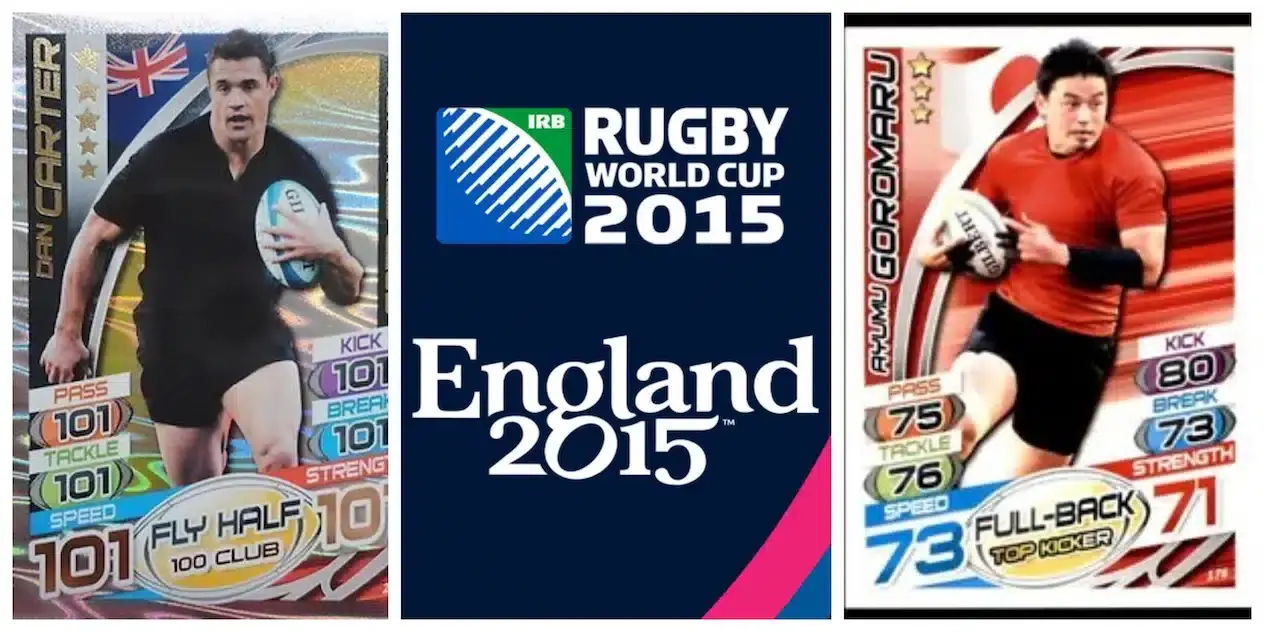

RUCK.co.uk take a look back through the history of the biggest rugby competition in the world.
The 2019 Rugby World Cup is just around the corner, so RUCK are trawling through the archives to relive past tournaments.
Today we are taking a look at the 2015 edition, won by New Zealand in England.
2015 RUGBY WORLD CUP
Hosts: England
Champions: New Zealand
Runners-up: Australia
Third place: South Africa
Fourth place: Argentina
Top scorer: Nicolas Sanchez (Argentina) - 97 points
Most tries: Julian Savea (New Zealand) - 8 tries
2015 RUGBY WORLD CUP TEAM OF THE TOURNAMENT
From
Fullback: Ayumu Goromaru (Japan)
The Japanese full-back was exceptional for his side in every game he played at the RWC. Reliable under the high ball, a dangerous counter-attacker and excellent with the boot from both hand and tee, Goromaru was the standout player at his position over the last month and a half.

Winger: Santiago Cordero (Argentina)
It was almost a 50/50 call between Cordero and Nehe Milner-Skudder, but the 21-year-old Argentine was just a shade more reliable defensively and under the high ball than the Kiwi. The elusive footwork and speed of Cordero made him a star of this RWC and when Argentina are able to welcome back Manuel Montero, they will have quite the little and large double act on their wings.
Centre: Mark Bennett (Scotland)
Bennett recovered from a shoulder injury to make the RWC 2015 squad and has again proved a danger in the Scottish midfield in the tournament, scoring twice in the win over Japan and once against Australia
Centre: Ma'a Nonu (New Zealand)
Nonu saved his best to last in this year’s tournament, turning it on to glorious effect in the final against Australia. Beyond his physical carrying, which is always dangerous, the distribution and kicking game of Nonu wrought havoc on almost every defence the imposing centre came up against.
Winger: DTH van der Merwe (Canada)
Van der Merwe was a shone through for the North Americans with a four-try haul coming from all angles of the field, despite coming bottom of Pool D. Obvious shout for Savea, Springboks star Bryan Habana has been revitalised this tournament but the Canuck just gets the nod with Argentina’s Juan Imhoff also in the frame.
Fly-half: Dan Carter (New Zealand)
The peerless Carter continues the streak of All Blacks and like Smith and Nonu before him, bows out of international rugby in glorious fashion. The graceful passes and composed kicking of the fly-half were exceptional throughout the tournament and even with him carving up defences with aplomb, it still felt as though Carter had the ability to kick it up into a higher gear if required.

Scrum-half: Fourie du Preez (South Africa)
The Springboks’ RWC campaign may not have gone the way du Preez would have wanted, but the veteran scrum-half (likely) signed off his international career in very good form. Aaron Smith has been the benchmark in scrum-half play these past few years, but du Preez took that mantle back, albeit on a very temporary basis, over the last seven weeks.
Looshead-prop: Scott Sio (Australia)
Sio may not have drawn the penalties from opposing scrums that Sekope Kepu did, but he was the foundation for Australia’s new and improved scrum. Under the tutelage of Mario Ledesma, Sio has kicked on from impressing at Super Rugby level with the Brumbies to becoming a bona fide test-calibre loosehead.
Hooker: Agustin Creevy (Argentina)
A great predecessor to Mario Ledesma, who hung up his international boots in 2011. A mobile and ball-handling hooker his off-loading skills and always capable of a turn-over. Worthy of a RWC Final spot.

Tighthead-prop: Manasa Saulo (Fiji)
Saulo was the spearhead of a Fijian pack which took England, Australia and Wales to the cleaners in the scrum. The tighthead even exposed Sio, who is our (and many others’) pick for the form loosehead of the competition. A move to one of the big domestic competitions is surely just a matter of time now for Saulo.
Lock: Brodie Retallick (New Zealand)
Last year’s World Rugby Player of the Year was a little quiet during the pool stage but grew into the RWC once the knockout rounds came calling. His steady progression throughout the tournament culminated in a stunning performance in the final, where he was every bit as important to the All Blacks as the likes of Nonu and Carter.
Lock: Lood de Jager (South Africa)
The dynamic lock added plenty of carrying threat to a South African pack which looked relatively blunt for much of the competition. His play forced the venerable Victor Matfield to the bench, as the Cheetah contributed significantly in every facet of the Springboks’ game, from the tight to the loose.
Flanker: Michael Leitch (Japan)
Japan's inspired skipper led from the front, making a total of 51 tackles during the pool stage and driving his team to new World Cup heights. Seized the moment spectacularly.
Flanker: Richie McCaw (New Zealand)
The greatest player of his generation, All Blacks captain McCaw once again excelled on rugby union's biggest stage. An imposing figure on and off the pitch.

Number 8: David Pocock (Australia)
There are just not enough superlatives to do Pocock’s performances at this tournament justice. He was by and far the RWC’s best individual performer and it was his tenacious work in the final that kept Australia competitive in a game in which they were clearly the second best team. The Zimbabwean-born back rower is the benchmark by which we must measure rugby’s breakdown operators and his combination of leg and core strength, technique and shorter stature have made him an almost unmovable object at the contact area.
TRENDING


LATEST NEWS
LATEST COMMENTS
Loading