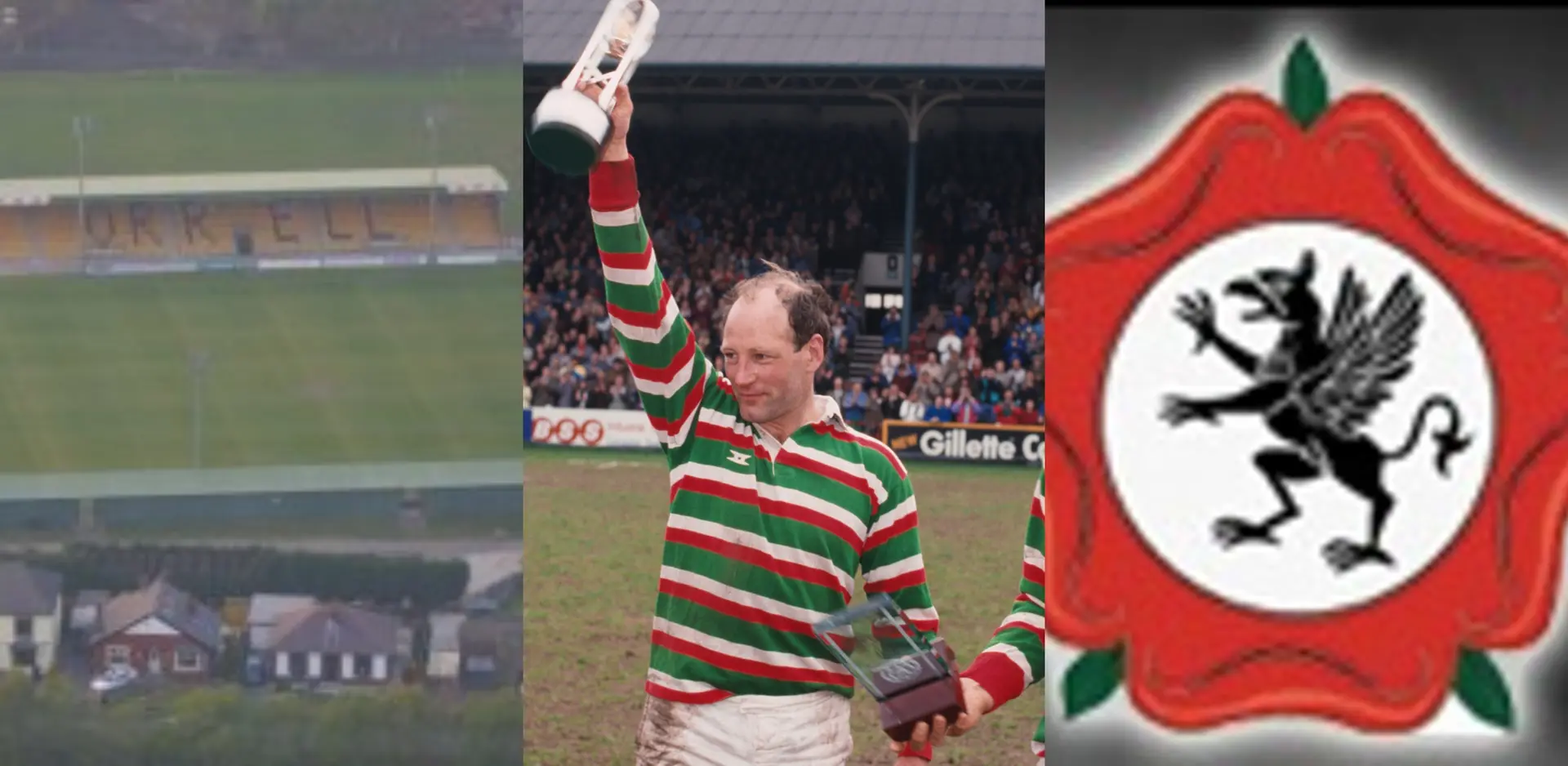

The 1987–88 Courage League National Division One was the first season of a truly national league in the first tier of the English league system currently known as the Gallagher Premiership.
There was no fixture list, the teams arranged fixtures amongst themselves. One match would count between each of the twelve teams involved and the points scheme was such that a team received four points for a win, two for a draw and one point for a loss. Most teams played eleven games, although some played ten.
finished first in the league table and were crowned champions. Coventry and Sale were relegated to the 1988–89 Courage League National Division Two for next season, the latter side having lost all of its eleven matches. Rosslyn Park and Liverpool St Helens were promoted from the 1987–88 Courage League National Division Two for the following season.
Here is what became of the 12 originals:
Despite an uninspiring first season, Bath dominated the early years of the competition winning six times in eight years and doing the "double" four times. Since the game went professional, Bath has won Heineken Cup and Challenge Cup but have failed to win the English domestic title since their last win in 1996.
DID YOU KNOW: In May 1996, Bath Rugby and Wigan RLFC made history by playing against each other at both codes.
This would prove to be Coventry's only ever season in the top flight, spending the next 30 years stuck between the second third tier of rugby, although they almost returned to the Premiership in 1997 but were edged out by a well-funded Newcastle Falcons. Most recently, they return to the Championship for the first time in eight years for the 2018/19 season after winning promotion from National League One.

The club's heyday was in the late 1980s with a number of top international players representing the first XV. These included Simon Hodgkinson, Rob Andrew, Dusty Hare and Brian Moore (also a Lion) representing England.
The advent of professionalism saw the Green & Whites fall on hard times and the first XV narrowly avoided relegation into the regional divisions in 2002–03. The club has bounced back since then and was promoted into National League One in 2003–04 before later climbing back up to England's second tier.
Quins have been a mainstay of the top flight, spending a solitary season in the Championship in 2005/06, but have somewhat surprisingly despite their financial backing and ideal location have won just one league title (2011/12).
The current club captains are James Horwill and Chris Robshaw while the current Head of Rugby is former England defence coach Paul Gustard, with Billy Millard acting as the Club's General Manager.
They ended Bath's astonishing run of 22 unbeaten cup matches in 1988, winning 4–3. The team's relegation from the top division at the end of the 1990–1991 season marked a consolidation period for the club after their fantastic times of the 1970s.
On 30 January 1998, the club went into administration, after overstretching its financial resources in the early years of professional rugby union. They fell as low as National League 2 North.
The club is now in National League One after being relegated from the Championship.
Leicester have won 12 major titles since their first in 1988. hey were European Champions twice, back-to-back in 2001and 2002; have won a record 10 English Championships.
Tigers have never finished a league season below sixth position, and are one of only four teams never to have been relegated from the top division. They've also qualified to play in every season of European Rugby Champions Cup (and the Heineken Cup which it replaced) in which English teams have participated, the only English side to do so.
The club was founded in 1927, holding a place in the top-tier of rugby union from 1986 to 1997. Under the ownership of Dave Whelan, things really went wrong and the club suffered multiple relegations due to a lack of players, funds and facilities. The club is now once again owned by it's members but is a long way off the top flight.

The Cherry and Whites have never been relegated and finished top of the pile three times since the Premiership went professional, but have failed to win the playoffs each time. Nevertheless, they have won the European Rugby Challenge Cup twice in 2006 and 2015.
During the nineties, despite thrilling displays under Paul Turner, and his successor John Mitchell, both club and ground struggled to keep a grip on the demanding commercial and financial realities of running a professional rugby club.
Sale took 20,000 fans to Twickenham for the 1997 Pilkington Cup Final but Leicester won a mistake-ridden match 9–3. This interest quickly faded and the anticipated increased crowds never materialised and relegation from the Premier Division loomed until rugby union-playing local businessman Brian Kennedy came to the rescue late in the 1999–2000 season.
Since then, the club has been on a sound financial footing, and despite often being a mit-table club, won the Premiership title in 2006.
Wasps now own and play at the Ricoh Arena. Prior to the move to the midlands Wasps had several homes; from 1923 to 1996 they were based at Repton Avenue in Sudbury, London, from 1996 to 2002 they played at Loftus Road in Shepherd's Bush and from 2002 to 2014 they played at Adams Park in High Wycombe.
Wasps has won 12 major titles. They were European Champions twice, in 2004 and 2007; have won six English Championships including three in a row from 2003–05; and won three Anglo-Welsh Cups. They have also won the 2003 European Rugby Challenge Cup.
Once a powerhouse of the English rugby union game, the men's 1st XV now play in North 1 West at the sixth level of English rugby union system, following their relegation from National League 3 North at the end of the 2016-17 season.
They competed in the top division of English rugby for the first two seasons after the league structure was introduced but were relegated in 1989.
In Season 2003/04 the 1st XV gained promotion to National League Division 2, reached the final of the Powergen Shield at Twickenham and was Rugby World Magazine 'Team of the Year'. Two years later in 2005/06 they secured promotion to National League Division 1.
TRENDING

LATEST NEWS
LATEST COMMENTS
Loading