"Springboks make History" - Wales' Darkest Days: 5 Heaviest Wales Rugby Defeats of All Time
Rugby NewsMonday, 01 December 2025 at 16:20

This past Saturday, Welsh rugby endured one of the darkest days in it's tenured history. A 73–0 home defeat to South Africa at the Principality Stadium witnessed the Springboks hammer in 11 tries in Cardiff, as Steve Tandy's side could not make a dent upon the two-time World Champions.
Unfortunately, this match can't be glossed over as just a 'bad loss'. The magnitude of the defeat has now etched itself into the record books as Wales’ worst-ever home defeat, and only their second-heaviest loss in a Test match. The toughest part about this defeat however, was that Wales looked to have turned a steady corner after ending their 18-match losing streak in the Summer.
This was followed up by a subsequent November win over Japan, which ensured that Wales would take the crucial 12th placed rung upon the World Rugby Rankings ahead of the 2027 World Cup draw. Even after some inspired efforts against the All Blacks, Wales fell hard upon their luck with this latest crushing blow, courtesy of the relentless men in gold and green.
As fans and pundits debate what went wrong, it’s worth reflecting on the five worst defeats that Wales have ever suffered. A full disclaimer to those RUCK readers who reside in Cymru, this will be quite hard to stomach. So, discretion is advised as we re-visit the very depths of the Welsh Dragons' downfall.
5 HEAVIEST WALES MEN'S RUGBY DEFEATS IN TEST MATCH HISTORY
5. Wales 14–68 England - 2025 Guinness Men's Six Nations
15 March 2025, Cardiff
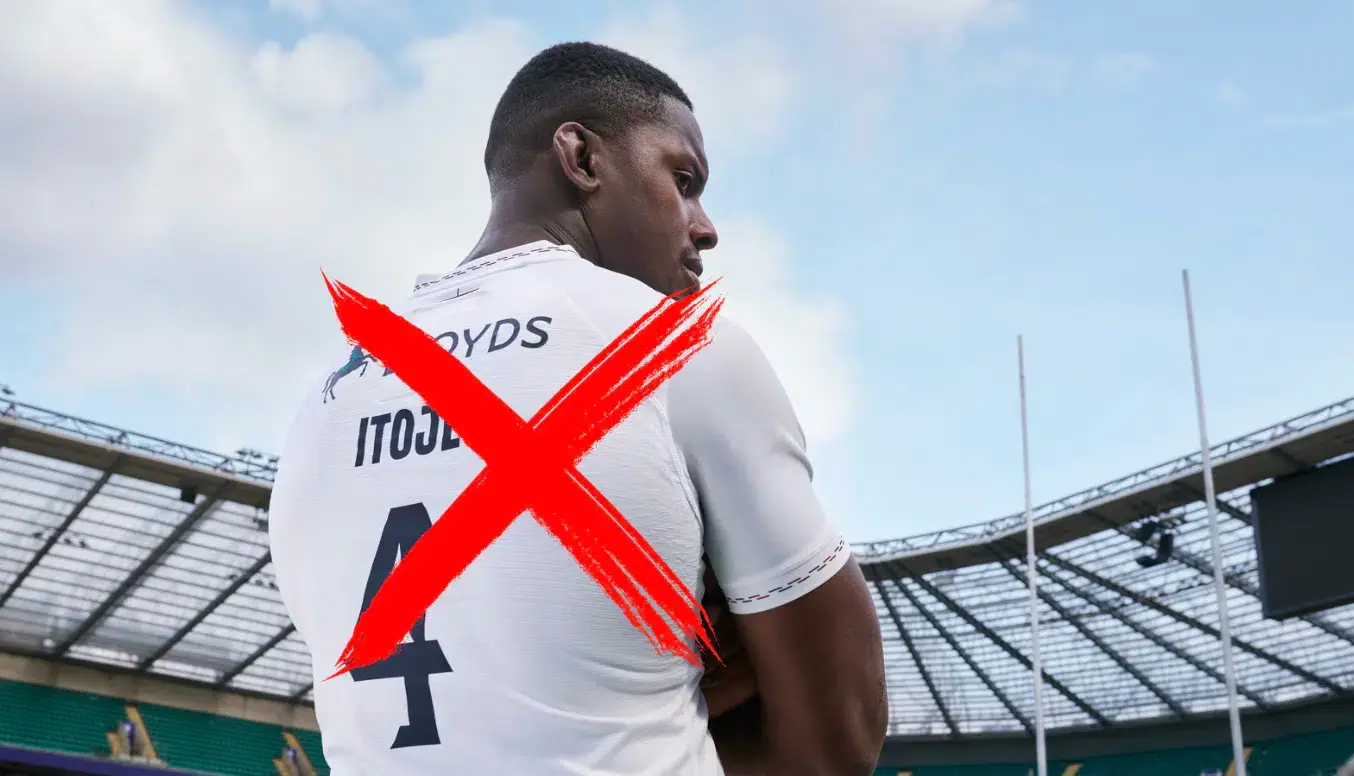
With two entries to Wales' five heaviest defeats occurring in the same calendar year, Steve Tandy's side will be desperate to see an end to a turbulent 2025. The 68–14 loss to England was a seismic setback, exposing a team unable to cope with relentless physicality and tactical precision. From the outset, England dominated the collisions and small battles, with Maro Itoje burrowing over inside three minutes to signal Wales’ struggles.
By half-time, England led 33–7, with tries from Tommy Freeman, Chandler Cunningham-South, and Will Stuart highlighting their cohesion. Wales’ only score came via Ben Thomas, but any hope of a comeback were extinguished by England’s back-row dominance and clever use of replacements. A notable milestone came for England’s 20-year-old Henry Pollock, who marked his Test debut with a brace of tries, sprinting out wide from a sharp George Ford pass.
Despite the margin, England’s campaign fell just short of the title, while Wales endured their 17th consecutive Test defeat, retaining the dreaded Wooden Spoon. The Principality Stadium’s crowd, once buoyed by optimism, witnessed a crushing performance that underscored the gulf in class, leaving Welsh rugby to confront the depth of its challenges in the professional era.
4. England 62–5 Wales – 2007 Rugby World Cup Warm-up Match
4 June 2007, Allianz Stadium, Twickenham
The 62–5 demolition at Twickenham in a 2007 Rugby World Cup warm-up match epitomised a difficult era for Welsh rugby. England fielded a largely experimental side, yet their pack’s relentless physicality and clinical execution left Wales exposed throughout. Nick Easter wrestled over the whitewash for his first of four tries, following a scrum-half break by Shaun Perry, signalling a day in which the Welsh defence would be repeatedly overwhelmed.
By half-time, England led 22–0, with tries from Easter and Steve Borthwick underlining their dominance, while fly-half Jonny Wilkinson contributed with conversions and a penalty, surpassing 900 career Test points. Wales’ first and only score, an unconverted try from Dafydd James, offered scant consolation against an England side whose forward pack steamrolled their opposition and whose backline exploited every gap with precision.
Easter continued his personal haul post-break to rack up an eventual quatet and equalling an English forward try-scoring record — before being replaced by Lawrence Dallaglio, who added further scores over the try-line. Additional tries from Jason Robinson, Mathew Tait, and Shaun Perry compounded Wales’ misery on a miserable afternoon in South West London.
The match laid bare Wales’ lack of depth, selection inconsistency, and transitional struggles ahead of the 2007 Rugby World Cup. Yet in its aftermath, it prompted introspection that would pave the way for the resurgence under Warren Gatland, marking this defeat as a brutal but formative chapter in Welsh rugby history.
3. Australia 63-6 Wales - 1991 Wales Tour of Australia
22 July 1991, Brisbane
Wales’ 63–6 defeat to Australia in Brisbane during the 1991 tour came at a turbulent time for Welsh rugby. The amateur era was winding down, professionalism was looming, and Wales struggled to keep pace with nations investing heavily in strength, conditioning, tactical innovation, and squad development. Facing a Wallabies side on the rise — eventual 1991 Rugby World Cup champions — Wales were outmatched in almost every department.
Australia ran in 12 tries, with key contributions from Marty Roebuck and Peter Slattery, while Wales’ only points came from a Mark Ring penalty. The Wallabies’ superior fitness, forward-passing game, and tactical cohesion kept Wales on the back foot from the first whistle. Defensive lapses and poor discipline meant the Welsh side rarely threatened in attack, compounding the margin of defeat.
The humiliation extended off the field: reports of infighting at the post-match dinner highlighted deeper cultural and organisational issues. The tour prompted the resignation of coach Waldron and the immediate retirement of captain Paul Thorburn, marking a period of reckoning for Welsh rugby. While painful, this 63–6 loss served as a catalyst for professionalisation, structural reform, and a rethinking of Welsh rugby culture — steps that would ultimately underpin more competitive performances in the modern era.
2. Wales 0–73 South Africa – 2025 Quilter Nations Series
29 November 2025, Cardiff
The 73–0 demolition by South Africa at the Principality Stadium was a watershed moment — the heaviest home defeat in Welsh rugby history and the second-worst overall. South Africa scored 11 tries, dominated the scrum, controlled the breakdown, and suffocated Wales with a tactical kicking game, leaving the hosts unable to register a single point.
Wales fielded a depleted side, missing over a dozen frontline players due to club commitments and injuries. The inexperience and lack of cohesion were brutally exposed, as the Springboks’ physicality and depth rendered Welsh attacks rare and impotent. Gerhard Steenekamp, Ethan Hooker, Jasper Wiese, and Morne van den Berg crossed for early tries, with Andre Esterhuizen orchestrating much of South Africa’s relentless surge. Even when Wales came close, players such as Blair Murray, Joe Hawkins, and Ellis Mee were repeatedly repelled by the relentless defense.
The second half saw South Africa extend the margin with tries from Gerhardus Louw, Canan Moodie, Ruan Nortje, Sacha Feinberg-Mngomezulu, and Eben Etzebeth. A sin-binning for Aaron Wainwright further compounded Welsh woes, but even a 14-man Springbok side could not be breached in the closing minutes of the match, following Etzebeth's eye-gouge offence.
This humbling loss underscored the gulf in preparation, depth, and execution between the nations, leaving Welsh rugby to contemplate structural renewal and the rebuilding of confidence, discipline, and foundation for the professional era.
1. South Africa 96-13 Wales - Summer Tour of South Africa
27 June 1998, Loftus Versfeld, Pretoria
The 96–13 loss to South Africa in Pretoria remains the heaviest defeat in Welsh rugby history, a staggering 83-point margin that highlighted the gulf between northern and southern hemisphere rugby in the early professional era. Wales embarked on the tour hampered by injuries, withdrawals, and administrative chaos, with 18 top players unavailable and caretaker coach Dennis John thrust into an impossible situation.
Despite a 49–11 warm-up win over Zimbabwe, Wales were underprepared for the quality of the Springboks, who were in the midst of a 17-match unbeaten run. South Africa exploited every weakness with relentless pace, physicality, and tactical precision, scoring seven of their 15 tries in the final 20 minutes as Wales ran out of steam. The Welsh side struggled with defensive cohesion, possession retention, and coping with the hostile environment, including stones thrown during warm-ups.
Key figures for the Springboks included Pieter Rossouw, Percy Montgomery, Stefan Terblanche, and Gary Teichmann, who combined to overwhelm the visitors. Wales’ only try came from fullback Aled Thomas.
The defeat became a symbolic low point, forcing reflection and reform. Less than a year later, under Graham Henry, Wales recorded a famous 29–19 win over South Africa at the Millennium Stadium, demonstrating the resilience and rebuilding sparked by this humbling experience.
EDITORS PICKS:
- PREM Rugby Team of the Week – Henry Arundell stars for Bath
- Ronan O’Gara set for ‘huge ban’ after he was sent off, he can’t help himself
- Bristol 46-12 Northampton: Brilliant Bears brush aside Saints in superb attacking showing
- New Footage Shows What Set Off Eben Etzebeth vs Wales
- Rassie Erasmus releases statement after Eben Etzebeth ‘eye gouge’
- Wales player ratings vs South Africa: Autumn Internationals
- “That is Cheeky” – Springboks fan gate crashes Australia vs New Zealand SVNS Final
TRENDING




LATEST NEWS
LATEST COMMENTS
Loading