Sir Ian McGeechan picks all-time world XV: Three England legends make the team
Rugby NewsFriday, 26 July 2024 at 07:05
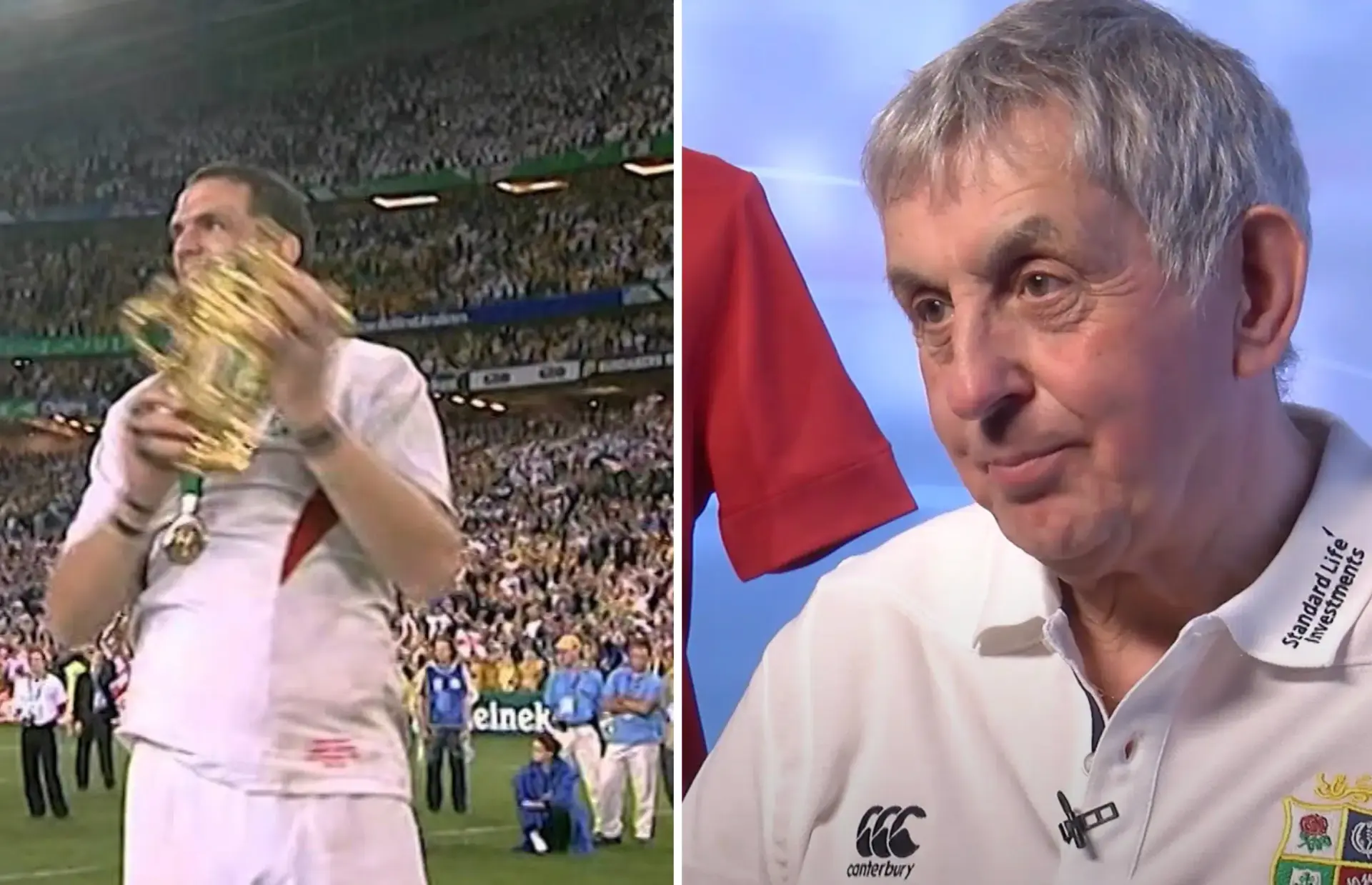

As someone who coached the Lions on four separate tours (and played on two others), Sir Ian McGeechan is better qualified than most to pick an all-time rugby dream team.
McGeechan is a celebrated former Scottish rugby player and renowned coach. With a distinguished career spanning over four decades, he led Scotland to numerous victories and served as a key figure in the British and Irish Lions' successful tours.
Known for his strategic acumen and inspirational leadership, McGeechan's impact on rugby is profound. Beyond the pitch, he is a respected commentator and advocate for the sport, continuing to influence rugby's development globally.
The legendary coach has selected his all-star XV for The Telegraph, and here it is with Jonah Lomu being the first name on his team sheet!
Sir Ian McGeechan's dream team
BACK-THREE
Fullback: JPR Williams (Wales)
PR Williams is a legendary Welsh fullback, known for his fearless tackling and reliable defense. Dominating the backfield during the 1970s, he was a crucial part of Wales' Five Nations successes. A dual-sport athlete, Williams also excelled in tennis, making him a versatile sportsman.
He said" "Not a staggeringly original choice, I’ll admit. But to my mind the only one. If I’m going to be picking a dream XV over the next few days then I want JPR at the back. No question."
Left-wing: Jonah Lomu (New Zealand)
Jonah Lomu, a New Zealand rugby icon, revolutionized the wing position with his immense power and speed. His standout performances at the 1995 Rugby World Cup made him a global superstar. Despite his career being hampered by illness, Lomu's impact on the sport remains unparalleled.
He said: "Illness and injury ultimately slowed him down. But his performances at the 1995 World Cup, just as the game was turning professional, will never be forgotten. The game needed a superstar, and it got one in Lomu. He was brilliant for rugby."
Right-wing: John Kirwan (New Zealand)
Kirwan, a prolific New Zealand winger, was renowned for his all-round game, combining strength, speed, and skill. He scored 35 tries for the All Blacks and was instrumental in their dominance during the late 1980s. Post-retirement, Kirwan became an advocate for mental health.
McGeechan commented: "He had an all round game; he could carry the ball through heavy traffic, he could offload, he was like an extra back-rower at times. Plus, he had natural effortless pace. He ended up scoring 35 tries for the All Blacks and was instrumental as they went through their unbeaten spell of games between 1987 and 1990."
CENTRES
Outside-centre: Brian O'Driscoll (Ireland)
O'Driscoll, an Irish rugby legend, is celebrated for his extraordinary talent and leadership. An influential outside-centre, he captained Ireland and the British & Irish Lions, earning numerous accolades. His ability to impact games with his skill and intelligence made him one of the all-time greats.
He said: "His ability to get back on his feet after tackling to compete for the ball was extraordinary, and ensured he always had an impact on the game, whatever type of game it was. He was such a natural talent."
Inside-centre: Philippe Sella (France)
Sella, a powerhouse inside-centre for France, is revered for his strength and skill. He earned 111 caps between 1982 and 1995, making him one of the most capped players of his era. Sella's partnership with O'Driscoll is imagined as a dominating midfield duo.
McGeechan added:"Sella and O’Driscoll were powerful men. They could stop a forward in his tracks. I think as a pair they would dominate any midfield and I like the thought of them together."
HALFBACKS
Fly-half: Dan Carter (New Zealand)
Carter, a New Zealand rugby legend, is regarded as one of the greatest fly-halves. Known for his precision kicking, playmaking, and defensive skills, he transformed the game. Carter's influence extended beyond the field, shaping modern rugby with his innovative style.
McGeechan wrote that Carter “really was the complete 10. His defence was immaculate, he could break himself, he could bring others in to play, his kicking from hand and from tee was incredibly accurate. He also changed the way the game was played with his kicking from his own 22m and his kicking to compete. The greatest of the modern era in my opinion.’’
Scrum-half: Gareth Edwards (Wales)
Edwards, a Welsh rugby maestro, is widely considered the greatest scrum-half of all time. His career, spanning the 1960s and 70s, saw him excel with remarkable speed, vision, and game intelligence. Edwards' legacy is immortalized in numerous accolades and his impact on the sport.
"My favourite scrum-half of all time happens to be my favourite player of all time. Gareth Edwards was and always will be the master. The Greatest.’’
FRONT-ROW
Loosehead-prop: Tom Smith (Scotland)
Smith, a formidable Scottish loosehead prop, was pivotal in Scotland's rugby success in the late 1990s and early 2000s. Known for his resilience and skill, he played in six consecutive Lions Tests and contributed significantly to Scotland's 1999 Five Nations triumph.
He wrote: "I just don’t think he gets anywhere near the credit he deserves. Six consecutive Lions Tests in 1997 and 2001, a talismanic figure in Scotland’s 1999 Five Nations win, a major reason Scotland were competitive at the 2003 World Cup."
Hooker: Sean Fitzpatrick (New Zealand)
Fitzpatrick, a New Zealand rugby icon, excelled as a hooker and captain. With 92 Test appearances and 51 as captain, his consistency and leadership were unmatched. Fitzpatrick's career, spanning 12 years, solidified his reputation as one of rugby's greatest players and leaders.
"He was outstanding, not just as a player but as a captain, and as a man. His consistency was unbelievable in an international career that spanned 12 years: 92 Test appearances, including a world record 63 consecutive Test matches and 51 as captain. "
Tighthead-prop: Jason Leonard (England)
eonard, a stalwart of English rugby, was known for his versatility in the front row, primarily as a tighthead prop. He earned 114 caps for England, showcasing technical prowess and unwavering temperament. Leonard's influence extended off the field, contributing to the sport's development.
"He played both sides of the scrum but he was more of a tighthead. Completely unflappable, Jason was never in any trouble. Technically, he was superb and temperamentally he was sound, a huge character on and off the pitch."
SECOND-ROW
Lock: Martin Johnson (England)
Johnson, an iconic England lock, defined an era of forward play. As a formidable leader, he captained England to their 2003 World Cup victory. Johnson's physicality, tactical acumen, and leadership made him a central figure in English rugby history.
" I think he defined an era, both for forward play and for the performances of the teams he represented."
Lock: John Eales (Australia)
Eales, a legendary Australian lock, captained the Wallabies to two Rugby World Cup victories in 1991 and 1999. Known for his leadership, skill, and versatility, Eales set the standard for modern locks. His influence on the game remains profound and enduring.
McGeecham added: "A two-time Rugby World Cup-winner with the Wallabies in 1991 and 1999, captaining his side to victory over France in the second of those finals. A lot of the ‘number fives’ that have followed him play the way they do because of the type of game Eales set."
BACK-ROW
Blindside-flanker: Richard Hill (England)
Richard Hill, an outstanding English blindside flanker, was celebrated for his game intelligence and positional sense. A key player in England's 2003 World Cup-winning team, Hill's work rate and consistency made him one of the most respected and influential players of his era.
He said: "One of the easier selections, if I’m honest. Hill seemed to know almost instinctively where to be and when."
Openside-flanker: Richie McCaw (New Zealand)
McCaw, a legendary New Zealand openside flanker, is revered for his leadership and unparalleled work ethic. As the All Blacks captain, he led them to two Rugby World Cup victories. McCaw's tactical brilliance and relentless play redefined the role of a flanker.
"Having picked Richard Hill at blindside, the thought of pairing him with Richie McCaw at openside genuinely excites me. Can you imagine those two together? The opposition would not stand a chance."
Number 8: Zinzan Brooke (New Zealand)
Brooke, a dynamic New Zealand number 8, was known for his versatility and skill. His ability to contribute in open play and kick goals set him apart. Brooke's innovative style and impact on the game cemented his legacy as one of rugby's greats.
He wrote: "One of the toughest choices of the lot. Maybe the toughest. His ability to bring others into the game, his ability to stay connected in the game himself, popping up repeatedly through different phases; all exemplary. And he dropped goals of course. A true original."
TRENDING


LATEST NEWS
LATEST COMMENTS
Loading