Sir Clive Woodward launches scathing attack on Scotland boss Gregor Townsend
Rugby NewsTuesday, 10 February 2026 at 19:55
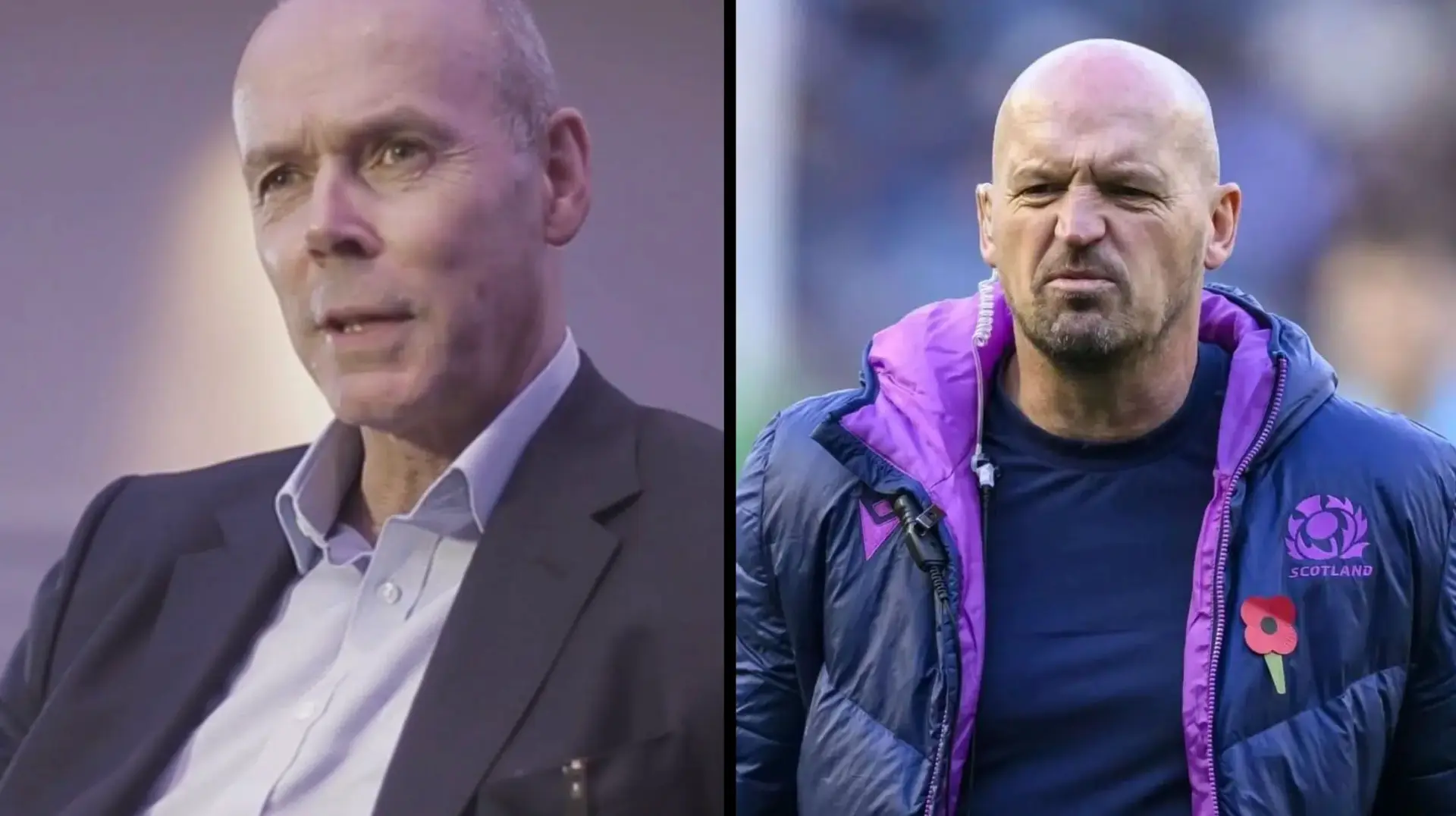
Sir Clive Woodward has launched a scathing attack on Scotland head coach Gregor Townsend, accusing him of losing focus at the worst possible time following Scotland’s shock Six Nations defeat to Italy.
Writing in his Mail Online column, the former England World Cup-winning coach argued that international rugby coaching demands absolute commitment — and claimed Townsend has failed to meet that standard by taking on a consultancy role with Red Bull.
“Coaching in international rugby is so all-consuming, full-on and downright demanding that it must have 100 per cent of your focus,” Woodward wrote, adding that excellence often requires sacrifice away from family life.
and get the latest rugby news straight to your phone.
‘Shooting himself in the foot’
Woodward said Townsend had made a serious error of judgement by dividing his attention, describing the Red Bull role — alongside reported links to Red Bull-owned Newcastle Falcons — as self-inflicted damage.
“Taking a consultancy role with Red Bull, and his likely impending appointment as coach of Red Bull-owned Newcastle, is him shooting himself in the foot,” he said.
The former England coach also questioned how the Scottish Rugby Union allowed the situation to develop, insisting senior figures should have forced Townsend to choose between Scotland and outside commitments.
Poll:
SRU also under fire
Woodward claimed Scotland’s recent performances show the impact of the distraction, pointing to their autumn loss to Argentina and the defeat in Rome as warning signs.
“Townsend has opened the door to criticism and allowed his Red Bull role to become a distraction,” he wrote.
He contrasted Scotland’s uncertainty with England’s stability under Steve Borthwick and Maro Itoje, warning that Townsend’s authority could be undermined if players believe he has “one eye on other projects”.
While stressing that he likes Townsend as both a person and a coach, Woodward was blunt in his conclusion.
“Scotland, meanwhile, are all at sea and it’s all of Townsend’s and the SRU’s making,” he said, adding that the situation was entirely avoidable.
Scotland great in frame as five-man race to replace Gregor Townsend heats up
With pressure building on the SRU to determine the next phase of the national programme, focus is inevitably shifting toward who could step in if change becomes unavoidable.
Here are five potential successors being discussed.
5 Simon Easterby
Highly rated within Irish rugby circles, Simon Easterby has begun to build a reputation as a future international head coach. His first real opportunity came in late 2024 when he stepped in as Ireland’s interim boss while Andy Farrell took charge of the British & Irish Lions. That spell began encouragingly, with a Six Nations victory over England in early 2025 highlighting his calm authority and tactical clarity.
Easterby has operated at the top level for several years, initially as Ireland’s forwards coach before successfully switching to defence in 2021. While his senior head coaching experience remains limited, his exposure to elite environments and modern systems is considerable. A move to Scotland would represent a major step, but the chance to lead a national side outright may prove tempting.
4 Greig Laidlaw
Few figures have shaped modern Scottish rugby quite like Greig Laidlaw. A talismanic presence for nearly a decade, he won 76 caps, captained Scotland a record 39 times and retired as the nation’s second-highest points scorer.
Calm under pressure and fiercely competitive, Laidlaw embodied leadership throughout a demanding international career.
Since retiring in 2019, he has quietly begun his coaching journey in Japan, gaining experience away from the scrutiny of the Test arena. While still very much a long-term project, his deep understanding of Scottish rugby culture sets him apart.
Experience at both scrum-half and fly-half gives him a broad tactical perspective, while his influence off the field was universally respected. Appointing Laidlaw would be a bold, future-facing decision rather than an immediate solution, but one worth watching closely.
3 Joe Schmidt
Elite pedigree defines Joe Schmidt’s coaching career. At club level, he oversaw an unprecedented period of success with Leinster, reaching six finals and winning four trophies in just three seasons. That momentum carried into international rugby, where he transformed Ireland into a world power between 2013 and 2019, delivering three Six Nations titles, a Grand Slam and historic victories over New Zealand.
After later roles with the All Blacks and Australia, Schmidt remains one of the sharpest tactical minds in the game. His current tenure with the Wallabies, set to end soon, makes a move north unlikely, particularly given family considerations. Were availability not an issue, Scotland would struggle to find a more accomplished candidate. For now, however, this remains more theoretical than realistic.
2 Vern Cotter
A return to familiar territory could appeal if the SRU prioritise structure and resilience. Vern Cotter’s previous spell as Scotland head coach between 2014 and 2017 delivered clear progress, culminating in a World Cup quarter-final and a team renowned for defensive grit and physical conditioning.
Beyond Murrayfield, Cotter boasts an impressive club résumé. He guided Clermont Auvergne to their first-ever Top 14 title after multiple near misses and enjoyed Super Rugby success with the Crusaders and Blues. More recently, he coached Fiji with mixed outcomes.
Cotter understands the Scottish system, the pressures of the role and the need for cultural buy-in. While not a glamorous appointment, his experience and authority would bring immediate stability and clarity.
? Have your say — and tell us why in the comments.
1 Franco Smith
Momentum makes Franco Smith the standout candidate. Since arriving at Glasgow Warriors, he has reshaped the club into one of the most dynamic teams in the URC, blending attacking ambition with growing consistency. That transformation was rewarded with URC success in 2024 and widespread praise across Europe.
Smith’s high-tempo, heads-up approach suits Scotland’s current playing group, packed with creative backs and mobile forwards. Importantly, he also brings international experience from his time as Italy head coach before moving into a high-performance leadership role. His existing knowledge of Scottish players, systems and supporters would allow continuity rather than disruption. If change comes, appointing Smith would feel less like a reset and more like the next step forward.
EDITORS PICKS:
- Louis Rees-Zammit 100m Time: Wales winger smashes his own record
- How the Six Nations Works: New Format Change Confirmed
- 2003 World Cup hero finds love again after heart surgery and divorce
- “Another injury knock” – Fan favourite prop gets first England call-up
- Fans are rewatching the BBC’s banned Six Nations advert — and it’s still hilarious
TRENDING


LATEST NEWS
LATEST COMMENTS
Loading