Richie McCaw ranks his three toughest back-row opponents
Rugby NewsWednesday, 25 August 2021 at 13:13
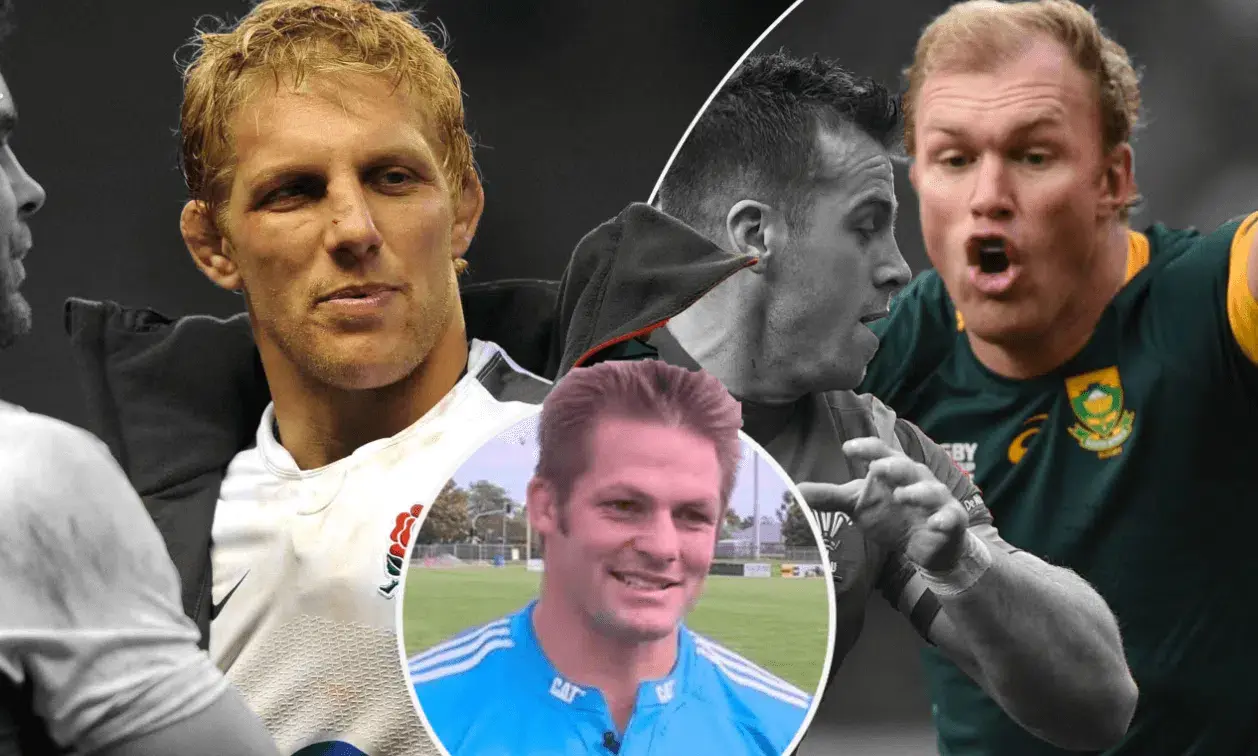

Richie McCaw, who captained the All Blacks to consecutive World Cup titles in 2011 and 2015, has ranked his three toughest back-row opponents.
#3. Lewis Moody (England)
- Position Back-row
- Height 6 ft 3 in
- Weight 225 lb
- Caps 71
Moody was known for the enthusiasm with which he plays the game, his willingness to chase down opponents and his ability to compete for possession at restarts, earning him the nickname "Mad Dog" from teammates and supporters.
Richie McCaw said: "I had got a lot of respect for the way he plays, he throws himself into a lot of it. Moodt was a little bit different to most flankers - he was also a ball carrier and he could put a lot of pressure on backlines."
DID YOU KNOW? He enjoys extreme sports—although he suffers from vertigo—and his current hobbies include wakeboarding, travelling and golf
#2. Schalk Burger (South Africa)
- Position Back-row
- Height 6 ft 4 in
- Weight 242 lb
- Caps 86
McCaw said: "You can come up against another tough team but never feel like you have had a tough match against your opposite. But with Burger you knew where they are going to be and how hard they play near the ball."

DID YOU KNOW? When not playing rugby, Burger lives and works with his family on the Welbedacht Wine Estate near Wellington, Western Cape.
#1. George Smith (Australia)
- Position Back-row
- Height 5 ft 11 in
- Weight 233 lb
- Caps 111
Smith was a great contributor to Australian rugby in the modern era, playing in 111 tests across 13 years donning the green and gold jersey. 24 of those tests were against the All Blacks, of which Smith triumphed in seven – but only three in which McCaw also played.
McCaw said: Speaking in a Q+A with World Rugby, McCaw's revealed former Wallabies flanker George Smith as the one he feared most on the field, saying Smith "was always pretty tough".
“I remember playing him when I was in the under 19s against Australia and remember then thinking just what a good player he is.”

DID YOU KNOW? He was easily recognised on the field by his dreadlocked hair style until late 2006 – when he decided to sell his dreadlocks for charity. They were given to a charity for younger people with cancer.
EDITORS PICKS:
TRENDING

LATEST NEWS
LATEST COMMENTS
Loading