England's squad at the 2027 World Cup: Farrell and Pollock spark debate
Rugby NewsMonday, 06 October 2025 at 19:30

With the Red Roses sealing their Women's Rugby World Cup triumph last Saturday, attention now turns to the men and their own bid for World Cup Glory.
By Jack Humphreys on RUCK Debut
The next Men's Rugby World Cup is exactly two years away in Australia, and after the Lions successful tour in the summer, the leading England players will be eyeing up a strong return to the 'land down under'
As the rugby landscape passes a significant milestone upon the count-down to Rugby World Cup 2027, it's time once again for us here at RUCK to peer into the crystal ball, and predict whom we expect to see on the plane, heading down to the land of the Wallabies.
In this acticle, we cast our minds some two years into the future and lay down our picks on who head coach Steve Borthwick will select for his England side, that will embark upon the ultimate mission of being crowned World Champions.
PREDICTION: ENGLAND'S 2027 RUGBY WORLD CUP SQUAD
Props (6)
Bevan Rodd (Sale Sharks)
Ellis Genge (VC) (Bristol Bears)
Will Stuart (Bath)
Asher Opoku-Fordjour (Gloucester)
Fin Baxter (Harlequins)
Joe Heyes (Leicester Tigers)
Ellis Genge (VC) (Bristol Bears)
Will Stuart (Bath)
Asher Opoku-Fordjour (Gloucester)
Fin Baxter (Harlequins)
Joe Heyes (Leicester Tigers)
In recent years, the front row has become one of England’s biggest strengths. The two Lions, Ellis Genge and Will Stuart, select themselves, but with the retirements of Joe Marler and Dan Cole, the door has opened for the next generation to take centre stage.
The two Sale Sharks props, Bevan Rodd and Asher Opoku-Fordjour, were consistently excellent last season and look on track for breakout campaigns. The same can be said for Fin Baxter and Joe Heyes, who have been on the fringes of recent England squads but showed their class on the tour of Argentina and the US over the summer.
Hookers (3)
Theo Dan (Saracens)
Luke Cowan-Dickie (Sale Sharks)
Jamie George (Saracens)
Luke Cowan-Dickie (Sale Sharks)
Jamie George (Saracens)
Jamie George has made the number two shirt his own over the last decade, but by 2027, his role will be more about leadership within the camp. George brings a wealth of experience from multiple Six Nations campaigns, Lions tours, and World Cups, making him the perfect mentor for the younger players. Most of the playing duties will fall to long-time heir apparent Theo Dan, who has steadily developed into one of the Premiership’s most complete hookers. Dan’s dynamic ball-carrying, accurate throwing, and work at the breakdown make him a key part of England’s forward platform.
Luke Cowan-Dickie remains the perfect finisher, capable of coming off the bench to maintain intensity in the closing stages of matches. The 2025 Lions tourist has a subtle calmness under pressure, reliability in throwing, and tireless work rate around the field give England a tactical edge in tight encounters. With this trio, England will have both continuity and the spark of youth at the crucial hooker position.
Locks (4)
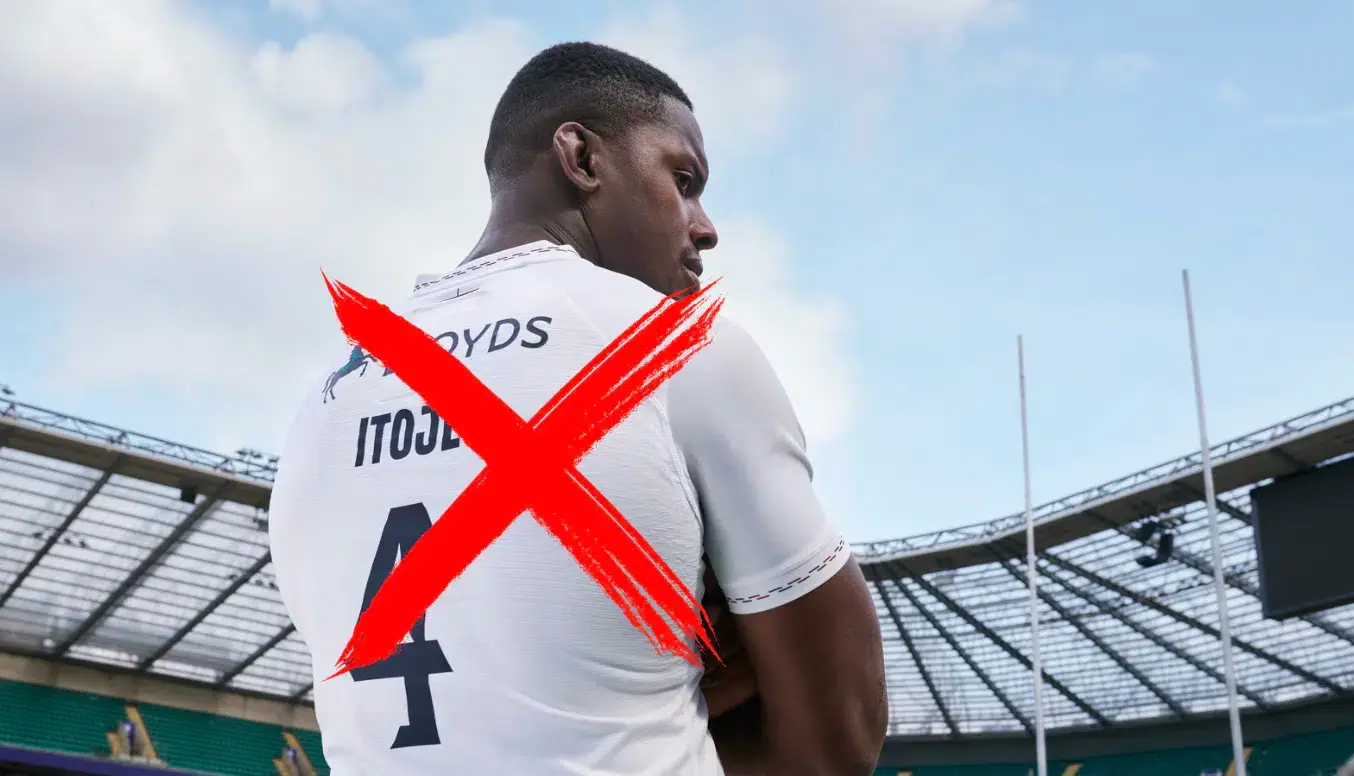
Maro Itoje (C) (Saracens)
Ollie Chesum (Leicester Tigers)
Charlie Ewels (Bath)
Chandler Cunningham-South (Harlequins)
Ollie Chesum (Leicester Tigers)
Charlie Ewels (Bath)
Chandler Cunningham-South (Harlequins)
At lock, Maro Itoje strolls in as captain alongside his fellow Lion Ollie Chesum, no debate there. The other two spots are slightly more contentious. Chandler Cunningham-South was brilliant for Quins last year and he’ll only improve over the next two, a one-man wrecking crew coming off the bench, the last person tired defenders want to see in the final 20 minutes.
The final spot goes to the quietly brilliant Charlie Ewels, who has been the spine in Bath’s dominant pack during their recent resurgence. Ewels and Itoje were second-row partners in England’s triumphant U20 World Cup team in 2014, beating South Africa in the final, a feat every England fan will be praying to repeat.
Back rows (7)
Tom Curry (Sale Sharks)
Sam Underhill (Bath)
Ted Hill (Bath)
Guy Pepper (Bath)
Henry Pollock (Northampton Saints)
Ben Earl (Saracens)
Emeka Ilione (Leicester Tigers)
Sam Underhill (Bath)
Ted Hill (Bath)
Guy Pepper (Bath)
Henry Pollock (Northampton Saints)
Ben Earl (Saracens)
Emeka Ilione (Leicester Tigers)
The back row is England’s most competitive position and the most agonising to select; some world-class players won’t make it on the plane. Tom Curry, Ben Earl, and Henry Pollock are shoe-ins. Curry is one of the world’s best jacklers, Earl is brilliant with the ball in hand, and Pollock has the potential to be one of the world’s best.
Earl and Pollock’s hands and pace also make them viable options to slot into the centres if required. Many in Somerset and Newcastle view Guy Pepper alongside Henry Pollock as a potent combination; he is lethal at the breakdown and leads the Premiership in turnovers this season.
Sam Underhill is arguably England’s best tackler and seems to excel against southern hemisphere opposition, a very useful trait at a World Cup. Ted Hill has been brilliant since joining Bath from Worcester, and his ability to slot into the second row when required is useful for tournaments.
Emeka Ilione is showing great potential at Leicester; he’s a threat at the breakdown and can carry the ball. Expect an England debut in the next two years. Together, this group has the potential to be the best back row in the world.
Scrum-halves (3)
Alex Mitchell (Northampton Saints)
Ben Spencer (Bath)
Jack Van-Poortvliet (Leicester Tigers)
Ben Spencer (Bath)
Jack Van-Poortvliet (Leicester Tigers)
This is a transition period for England’s nine shirt following the retirement of Ben Youngs and Danny Care. Alex Mitchell looks to have made it his own after an impressive season and Lions tour.
Ben Spencer is having a career renaissance at Bath, with many arguing he was the biggest factor in Bath winning the Premiership last season. His box-kicking will get him selected, as Borthwick builds much of his game plan around this skill—Spencer is the best in the business.
Jack Van-Poortvliet has put together successive strong seasons and looks to be maturing in the Leicester nine jersey. He must keep up his good work, as Harry Randall is close on his heels for the final scrum-half spot.
Fly-Halves (3)
Fin Smith (Northampton Saints)
Marcus Smith (Harlequins)
George Ford (Sale Sharks)
Marcus Smith (Harlequins)
George Ford (Sale Sharks)
England’s fly-half stocks are in a strong position heading into 2027. These three players bring complementary strengths, ensuring depth and tactical flexibility.
George Ford remains the senior figure of the group, combining World Cup experience with exceptional game management skills. While his pace may have slowed slightly with age, his strategic nous and composure in key moments will continue to influence England’s attacking patterns.
Marcus Smith is the mercurial talent of the trio, capable of turning a game with a single break or line-splitting pass. His footwork, acceleration, and creativity in open play provide England with a genuine X-factor, allowing them to unlock even the most stubborn defences. Fin Smith has steadily emerged as one of the Premiership’s most consistent performers. His disciplined approach complements England’s tactical game plans, particularly in structured situations where control and precision are paramount.
Together, this trio ensures England can field a fly-half combination capable of both orchestrating controlled, structured play and injecting unpredictability when needed, with Marcus Smith also capable for a deployment at fullback. Whoever starts, England will have options to adapt to opposition strengths, a critical asset for World Cup campaigns.
Centres (4)
Ollie Lawrence (Bath)
Henry Slade (Exeter Chiefs)
Owen Farrell (VC) (Saracens)
Max Ojomoh (Bath)
Henry Slade (Exeter Chiefs)
Owen Farrell (VC) (Saracens)
Max Ojomoh (Bath)
Ollie Lawrence would’ve been a British & Irish Lion without his Achilles injury in the penultimate game of the Six Nations. Luckily for England, he hasn’t lost a step since returning and will be a starter in 2027. The silky Henry Slade is most likely to be alongside him; his hands and feet are well known, but his defence is underrated.
Owen Farrell makes the plane alongside Jamie George in more of a leadership role, but don’t be surprised when he comes on to close games out. Max Ojomoh is highly rated by his fellow players and is only going to get better in the lead-up to 2027.
His covering for the absent Russell at fly-half this season has showcased aspects of his game previously underrated: tactical kicking, game management, and flat 20m passes. His versatility, mixed with brutal physicality, will earn him a spot in the squad. These skills are prevalent throughout the midfield, as each man can hit harder and kick further than the last.
Back three (5)
George Furbank (Northampton Saints)
Henry Arundell (Bath)
Tommy Freeman (Northampton Saints)
Immanuel Feyi-Waboso (Exeter Chiefs)
Freddie Steward (Leicester Tigers)
Henry Arundell (Bath)
Tommy Freeman (Northampton Saints)
Immanuel Feyi-Waboso (Exeter Chiefs)
Freddie Steward (Leicester Tigers)
This area of the pitch has a new feel with the retirements of stalwarts like Antony Watson and Johnny May since the last World Cup. There is nothing to fear for England fans. Tommy Freeman has been a revelation since his breakthrough and is already one of the world’s best.
Henry Arundell has been on fire since returning from France and looks to be a shoe-in. Competition will be rife, however, with Immanuel Feyi-Waboso starting the season brilliantly; he will only improve over the next year, which is a scary prospect for rival fans. The two fullbacks are leaps and bounds ahead of their domestic competition. George Furbank, with his lightning pace and soft hands, seems to be the favoured option when fit.
Freddie Steward is no slouch, very secure under the high ball, some criticism of his hands and defending notwithstanding, his place on the plane seems secure.
VERDICT: ENGLAND'S 2027 MEN'S RUGBY WORLD CUP SQUAD
This predicted squad has a good mix of young, exciting talent and chiselled veterans looking for their swan song. It is credit to the quality of England’s talent pipeline that people will disagree with the selections made here and advocate for players like George Martin, Harry Randall, Beno Obano, Ben Curry. The future is indeed bright, and there is more than enough talent for a repeat of 2003. An exciting two years of selection fever ahead. See you down under.
EDITORS PICKS:
- Team of the Week: Rugby Championship Round 6
- Statement: England legend Lewis Moody confirms heartbreaking MND diagnosis
- “Very attractive” – England captain Maro Itoje considering surprise move
- World Cup winner’s son headlines England hopefuls who impressed in the Prem this weekend
- Springbok player ratings vs Argentina: South Africa win Rugby Championship
TRENDING


LATEST NEWS
LATEST COMMENTS
Loading