Power, Passion, and Personality: How These Women Are Shattering Stereotypes in Rugby
Rugby NewsMonday, 03 November 2025 at 16:57
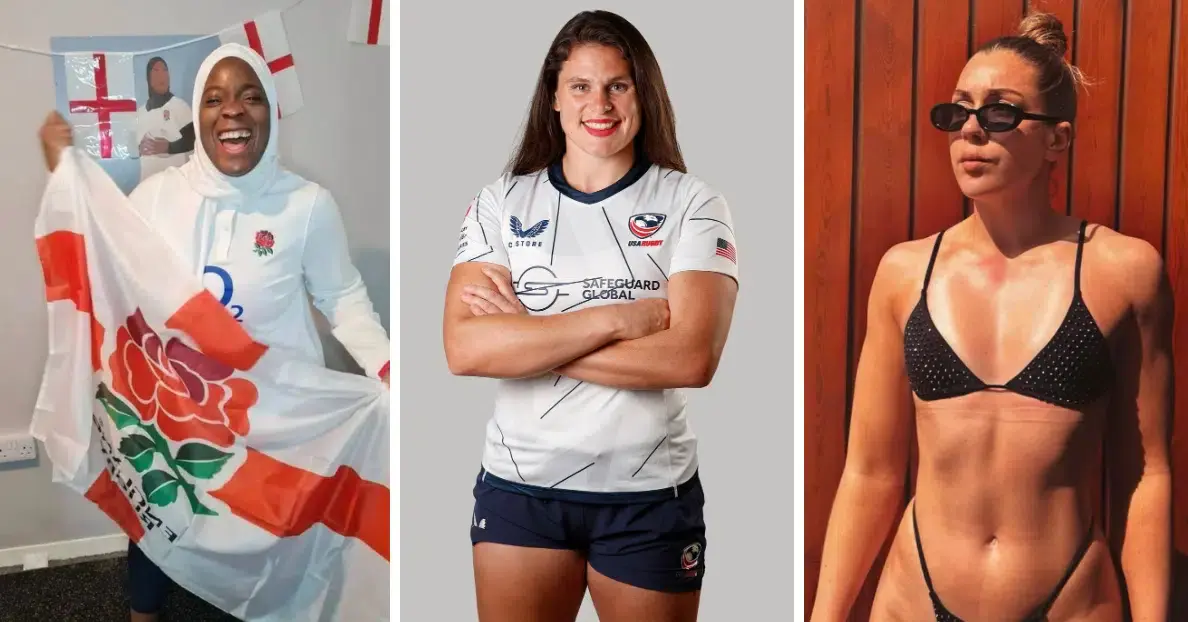

Rugby has long been seen as a male-dominated, hyper-masculine sport—but women’s rugby is challenging that perception.
These five athletes are not only excelling on the pitch but are reshaping what it means to be a rugby player, breaking stereotypes related to appearance, identity, culture, and background.
and get the latest rugby news straight to your phone.
1. Holly Aitchison
Holly Aitchison plays for the England Women’s Rugby Team, known as the Red Roses. Beyond rugby, she has appeared in modeling campaigns and worked with major beauty brands, including high-profile campaigns like Victoria’s Secret.
Holly has been candid about her struggles with self-image and anxiety, and how rugby gave her grounding.
Her dual role as a high-performance athlete and model challenges the notion that female rugby players must suppress femininity or style.
Holly demonstrates that strength, skill, and beauty can coexist, proving that rugby players don’t have to fit a single mold.
2. Georgia Evans
Georgia Evans is a number 8 for the Wales Women’s Rugby Team.
Known for her distinctive game-day style, she often wears hair bows and full make-up—a personal style that has sparked online criticism. Georgia responded directly to the critics, saying:
“The bows in my hair, the tape around my arm, the eyelashes and full face of make-up that I choose to wear has no bearing on my ability, my passion or fight for this game.”
Her stance shows that toughness, dedication, and femininity are not mutually exclusive. Georgia is redefining what it means to look like a rugby player, proving that personal style does not limit athletic ability or commitment.
3. Evie Gallagher
Evie Gallagher plays as a back-row player for the Scotland Women’s Rugby Team. She is known for her brightly coloured hair, piercings, and tattoos, expressing individuality and challenging traditional expectations of what a rugby player should look like.
Gallagher rose through youth rugby at Stirling County RFC before making her senior debut for Scotland in the Women’s Six Nations at age 20. Her journey demonstrates that talent, commitment, and personality are just as important as tradition in shaping rugby’s future.
4. Zainab Alema
Zainab “Zee” Alema is a London-based, Ghanaian-British Muslim woman, mother of three, neonatal nurse, and rugby player. She plays for Richmond RFC and founded the charity Studs in the Mud, which provides support and equipment for women, particularly from underrepresented communities, to play rugby.
Zainab’s story challenges stereotypes around race, faith, and parenthood. She reflects:
“If you’re black, Muslim and a woman, you can still play rugby.”
Her journey highlights the importance of inclusion and representation, proving that women from diverse backgrounds can thrive in rugby and inspire the next generation.
5. Ilona Maher
Ilona Maher is an American international rugby player and two-time Olympian with the USA Rugby Sevens Team, winning a bronze medal at the Paris 2024 Olympics. She has also played for Bristol Bears in England’s Women’s Premiership and is a prominent social media influencer.
Maher is a strong advocate for embracing both athleticism and femininity, famously stating:
“My lipstick doesn’t take away from how hard I hit, from how I read the game, from how I run.”
She demonstrates that elite performance, personal style, and visibility can coexist, inspiring young players worldwide to embrace their identity both on and off the pitch.
Breaking the Mold
Together, these five athletes show how women’s rugby is evolving:
- Appearance and identity: Players like Georgia Evans, Evie Gallagher, and Holly Aitchison show that make-up, bows, bright hair, tattoos, and style can coexist with elite performance.
- Background and representation: Zainab Alema demonstrates that race, faith, and parenthood are not barriers to sport.
- Pathways and opportunity: Evie Gallagher’s rise from youth rugby to international recognition shows that talent and dedication matter more than stereotypes.
- Changing norms: Ilona Maher and the others challenge outdated ideas that women’s rugby must imitate men’s rugby aesthetics or that femininity is incompatible with toughness.
These athletes are more than rugby players—they are trailblazers shaping the sport’s culture, visibility, and accessibility. They prove that rugby is defined by skill, determination, and passion, not by conformity or appearance.
TRENDING



LATEST NEWS
LATEST COMMENTS
Loading