Paraguay skipper voices frustration with World Rugby following World Cup disqualification
Rugby NewsTuesday, 23 December 2025 at 12:50

.
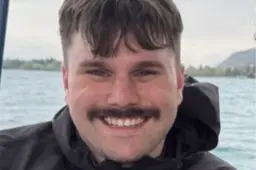
Paraguay captain Mariano Garcete spoke candidly about his frustration with World Rugby and the emotional fallout from his country’s disqualification from the Final Qualification Tournament, after Los Yacarés’ hopes of reaching their first Rugby World Cup were abruptly ended off the field.
and get the latest rugby news straight to your phone.
This interview was conducted in conjunction with What’s All The Ruckus? — a weekly podcast featuring Tier 2 and 3 international rugby guests
Paraguay’s place in the Repechage for the final spot at Australia 2027 had appeared secure following a hard-fought two-legged play-off win over Brazil.
Los Yacarés won the first match 39–19 and backed it up with a 31–24 victory away from home to complete a 70–43 aggregate success. For Garcete and his teammates, it was the culmination of years of work aimed specifically at overtaking their South American rivals.
That progress was undone when Paraguay discovered they had fielded an ineligible player across the two matches. The union subsequently withdrew from the competition, bringing a sudden end to a historic qualification campaign before a ball had been passed in the final tournament.
“It’s difficult to talk about,” Garcete said. “We worked very, very hard since seven years ago and the principal objective was to beat Brazil. They started a real high performance structure before us, so they developed a lot. It was really difficult for us.”
Garcete, a second row who has also represented Yacaré XV in Super Rugby Americas, said the regional professional competition had been critical in closing the gap. He felt it had allowed Paraguay to finally compete on equal terms with Brazil, who had long benefited from earlier investment and infrastructure.
“Super Rugby Americas helped us a lot to achieve that goal,” he said. “We put in lots of hard work to beat them, we were really happy.”
That sense of achievement quickly turned to disbelief when Paraguay were informed of the eligibility breach. Garcete said the squad accepted responsibility for the mistake but questioned the clarity and direction of the regulations themselves.
“Then we got notified about the situation that we misunderstood the World Rugby rules,” he said. “I think actually that the World Rugby rules are not really clear. Also I don’t like World Rugby. They are making a lot of changes on rules, on eligibility, on everything. Why? Rugby is dying, and they make it more difficult for people to understand rugby.”
Garcete believed the governing body’s priorities were misplaced, particularly when it came to investment and development pathways.
World Rugby’s announcement a few months ago that it would invest between $250 and $270 million over five years into the United States rugby ecosystem, ahead of hosting the 2031 men’s and 2033 women’s World Cups, drew strong criticism from the Paraguayan captain.
He felt that the focus on the American market overlooked regions where the sport was already growing organically.
“They are only interested in development in the Northern Hemisphere,” Garcete said, arguing that South America had shown sustained progress with far fewer resources.
Garcete also voiced concerns about what he saw as an attempt to reshape rugby’s identity to fit a commercial entertainment model, particularly in the United States.
“I think rugby is a very traditional sport, I don’t think that we need the USA to come in,” he said. “I don’t want NFL with showtime at half-time, and selling the sport with girls in bikinis. That is not our sport.”
For Garcete, rugby’s value lay in its simplicity and community culture rather than spectacle. “Our sport is drinking on the field, watching the game, enjoying yourself, having a good time,” he said.
Despite his criticism, Garcete said Paraguay had little choice but to accept the decision and move on. Missing out on the Repechage in Dubai was particularly painful given that the place had been earned on the field.
“It was difficult to not play in that tournament in Dubai considering we earned that place,” he said. “But we understand what happened, so we don’t have anything more to do. We just keep working and working harder.”
Garcete pointed to South America’s club-based model as the foundation for the region’s continued rise. He said strong amateur clubs remained central to player development and national team success.
“In South America we have the culture of clubs,” he said. “That is the base of any rugby structure in any country.”
He highlighted Uruguay and Chile as examples of what sustained regional competition could achieve. Uruguay had qualified regularly for World Cups and secured landmark victories, while Chile reached consecutive tournaments after building cohesion through Super Rugby Americas.
“How do you think they beat Samoa?” Garcete asked. “They spent the first half of the year in Super Rugby Americas, almost all of the team together.”
Looking further ahead, Garcete expressed confidence that Argentina’s system would ultimately deliver a men’s World Cup title.
“I think that Los Pumas will win the World Cup. It’s inevitable,” he said. “They have a really good club structure. The most important thing is that they maintain the amateur clubs. For me that’s non-negotiable.”
EDITORS PICKS:
- Siya Kolisi Quits Sharks, Next Club Confirmed
- Leinster and Ireland fly half set for province switch ahead of 2026/27 season
- Wales lock Jake Ball has relished Scarlets homecoming after extended Japan stint
- Former Scotland head coach joins new national team in surprise move
- The Updated Best Rugby Players in the World (Ranked 10-1)
- URC Round 7 Recap: Dragons finally end URC losing streak with victory over Connacht
- PREM Rugby: Team of the Week for Round 7
TRENDING





LATEST NEWS
LATEST COMMENTS
Loading


