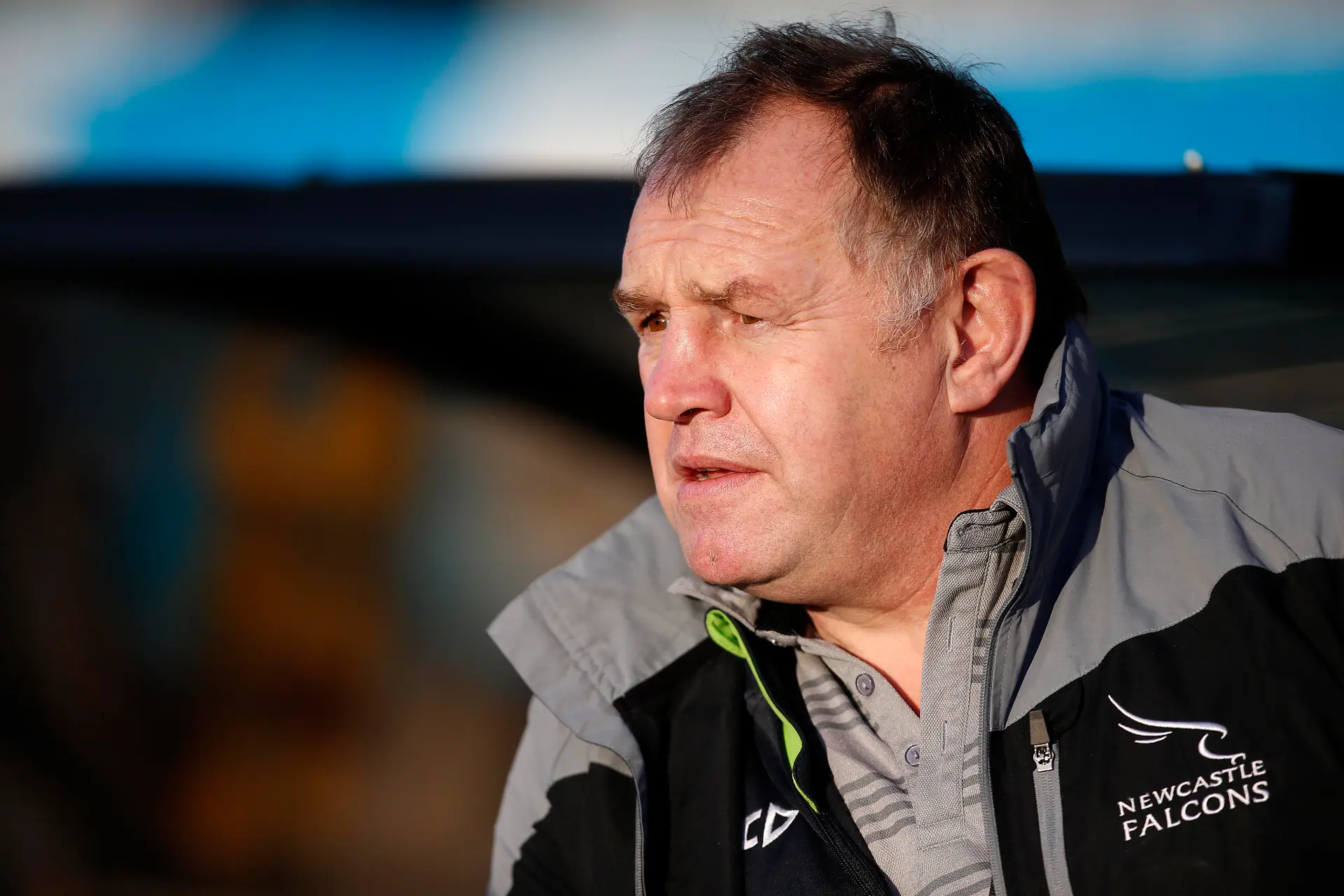

Championship club Newcastle Falcons have placed all their players and staff on furlough - a period of unpaid leave - because of coronavirus.
The club have written to all staff about the decision and asked for their formal consent to the move.
And the Falcons admit they do not know when they may be able to return.
Newcastle were 18 points clear at the top of the second tier before the Rugby Football Union ended the division's 2019-20 campaign earlier this month.
What does furlough mean?!
Among the Chancellor’s plans is a huge bailout to cover the wages of millions of UK workers.
The Government has pledged to cover 80 percent of salaries up to £2,500 per month, with all employers able to apply to HMRC to pay the wages of people who are furloughed.
An employee furlough is when bosses require their staff to take unpaid leaves of absence.
In other words, they'll still technically be employed but won't work or get paid.
The Gov.UK website states: "If your employer intends to access the Coronavirus Job Retention Scheme, they will discuss with you becoming classified as a furloughed worker. This would mean that you are kept on your employer’s payroll, rather than being laid off.
"To qualify for this scheme, you should not undertake work for them while you are furloughed. This will allow your employer to claim a grant of up to 80% of your wage for all employment costs, up to a cap of £2,500 per month.
"You will remain employed while furloughed. Your employer could choose to fund the differences between this payment and your salary, but does not have to."
RANKED | 5 best players in Newcastle Falcons history
5. Doddie Weir
In June 2017, it was made public that Weir was suffering from Motor Neurone Disease. Weir announced his diagnosis via Twitter in order to promote Global MND Awareness Day.
He has since set up a foundation named ‘My Name’s Doddie’ in order to ‘raise funds for research into a cure for MND and to provide grants to people living with the condition’.
DID YOU KNOW: Weir was famously described by legendary commentator Bill McLaren as being “On the charge like a mad giraffe”
4. Hugh Vyvyan
While studying a theology degree at University of Newcastle, Vyvyan caught the eye of the Newcastle Falcons and eventually made his debut against Moseley, when the club were in National Division Two in 1997.
In 2001 he was an important member of Falcons’ Powergen Cup winning side at Twickenham (though he was a replacement for the final), a feat he repeated in 2004 but this time starting as captain and scoring a try in the final
In 2004, he left Kingston Park to join Saracens where he was made captain before even having played a game.
3. Tom May
Making his professional debut for Newcastle Falcons in March 1999, May went onto make 267 appearances for the club, scoring 66 tries, during a 10-year spell at Kingston Park.
During his time on Tyneside May helped the club win two domestic cups, crossing the try line twice in a 30-27 win over Harlequins in the 2001 Tetley’s Bitter Cup final, before returning to the Twickenham turf three years later when Newcastle sealed victory in the Powergen Cup against Sale Sharks.
He left Newcastle in 2009, following a season where his performances in the fly half shirt played a instrumental role in the club registering it’s record number of six consecutive Aviva Premiership victories, to join French giants RCT Toulon.
2. Gary Armstrong
“Inside me at scrum-half I have one of the toughest players in the world. We call Gary Armstrong the Junkyard Dog.”
Those were the words of Jonny Wilkinson on his former Newcastle Falcons team-mate, Armstrong.
He was a long-haul lorry driver as well as a snapping terrier of a scrum-half who took contact unflinchingly. He was a Lion in 1989 and was regarded as one of the best No 9s in the world in the mid-90s while still working gruelling hours.
He eventually answered the siren’s call of professionalism, leaving Scotland to play seven seasons in Newcastle from 1997, winning the Premiership title in his first term. However, he jokes that he only learned to pass off his left hand once he was paid to play.
Describing what Armstrong brought to the table, Peter Walton also said: "He was the hardest, dirtiest, and best player ever."
1. Va'aiga Tuigamala
He played for London Wasps, winning the English Premiership, and later joined Newcastle Falcons in a world record £1m deal. Upon signing for the Falcons, team-mate Doddie Weir called Tuigamala "simply the best rugby player in the world"
A centre or wing, he was known as a powerful runner, physically much larger than most typical wings in rugby union. He scored a hat-trick on his third appearance for Newcastle against Moseley at Kingston Park and was an important part of the 1998 Championship-winning side, making 16 appearances that season.
Tuigamala then delayed an arm operation to put in a Man of the Match performance in the 2001 Powergen Cup Final.
Internationally, he first played for New Zealand in rugby union, winning 19 caps, and later for Samoa in both rugby league (two caps) and rugby union (23 caps). He played in one rugby league and two rugby union World Cups.
TRENDING

LATEST NEWS
LATEST COMMENTS
Loading
