New Black Rugby Community charity set to drive inclusion, equality, and diversity across rugby
Rugby NewsThursday, 04 December 2025 at 11:25
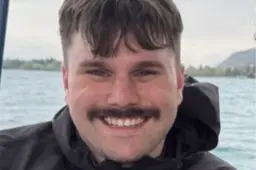
A few weeks after its launch, the Black Rugby Community is already becoming exactly what its founders dreamed it could be: a home. Not just an organisation, not just a charity—a place where Black people in rugby finally feel like they belong.
This interview was conducted in conjunction with What’s All The Ruckus? — a weekly podcast featuring Tier 2 and 3 international rugby guests.
Join the RUCK’s WhatsApp community here and get the latest news sent straight to your messages.
Frank Sackey and Anne Onwusiri had been imagining this moment for years. Their collaboration between Old Downbadians RFC and Black Girls Ruck culminated in formal charity status in October, but the first seeds were planted long before that.
Back in February 2024, they submitted their first application, hopeful that the sport they loved could become more welcoming, more representative, and more open to those who rarely saw themselves reflected on the pitch.
For Frank, who has represented Ghana internationally in both XVs and sevens, the need for a Black rugby community crystallised in a single moment. Old Downbadians RFC—his collective of Black players—held a small tournament, expecting a modest turnout.
Instead, players travelled from across the country. They didn’t come for silverware. They came for connection: shared jokes, shared backgrounds, shared cultural shorthand that didn’t need explaining.
It reminded Frank of the first time he realised he wasn’t alone in feeling culturally out of place in rugby. He spoke about the online group chat that quietly changed his life.
"Me and what are my best friends now, we started off talking because there was a group chat on Twitter," he said. "It was players who wanted to talk about rugby from the Black community that were the only black guy in their rugby team who didn't have anyone else who they could be themselves around.
"I didn't really think about it until I was introduced to that group that I guess the rugby community is not as accepting of my personal culture… Having a place where I could just talk rugby and be myself and not be code switching between people mattered."
That feeling—of being able to breathe out—has since become the backbone of the Black Rugby Community.
Their newly established charity focuses on four areas: promoting equality in grassroots rugby, creating opportunities for underrepresented groups, offering financial support such as grants for kit or qualifications, and helping those facing social or economic barriers to participate.
All of it boils down to one ambition: breaking down the walls that stop people from stepping onto the pitch.
At the charity’s launch event, nearly 100 attendees turned up. Many of them had felt the same invisible weight that Frank carried in his early years in the sport. Some had struggled with overt stereotypes, like being automatically placed in certain positions.
Others faced subtler challenges—small reminders that they were the “only one.”
Frank often pointed out how few fly-halves of colour exist in the game, something he referred to as “the quarterback problem.”
"The quarterback problem is about how in American football… quarterbacks stay quarterbacks and other players don't become quarterbacks," he said. "If you've got a low representation of players in a certain position, that doesn't change and it's the same with us and fly-halves.
"We already know there is not that much representation of Black players in the fly-half position and we can essentially say that's from players not being introduced to it at school level or club level. And if that's the case, we have to work back and work out why."
For the BRC, tackling those entrenched pathways is essential. So is making qualifications accessible.
"Things like refereeing qualifications, coaching qualifications, even just getting involved with the team, doing media content and stuff," Frank said. "We want to be able to push people into becoming a part of the rugby community where they otherwise wouldn't have done so."
Yet despite the challenges, Frank remained hopeful. He genuinely believed the sport held the potential for inclusivity—if people were given the confidence and support to step into it. Gaining charity status felt like a major step in unlocking that.
"This year we were fortunate enough to get charity status after a couple of years of pushing for it," he said. "That charity status means that we are able to offer our services back out to the community.
"Sometimes you just don't see the representation and it stops you from getting involved because you wonder why other people like you aren't getting involved."
Through the Black Rugby Community, players who once felt isolated now have a place to run towards.
Frank summed up their purpose simply, with the kind of warmth that makes the charity feel less like an organisation and more like family.
"If you ever have a problem or an issue, just know that you're not alone and you can get through it and the rugby community is there for you," he said. "That's what the charity is all about."
EDITORS PICKS:
- The Fastest Rugby Players in the World 2025 (Ranked 10-1)
- “Japan stun South Africa” – The five biggest shocks in Rugby World Cup history
- “Portugal and Pontypridd” – Teams you totally forgot competed in the EPCR Challenge Cup
- “Saints shock Leinster” – 5 Biggest Champions Cup upsets of All Time
- England’s potential route to the 2027 Rugby World Cup final
TRENDING



LATEST NEWS
LATEST COMMENTS
Loading


