"Mad Dog Moody" - Richie McCaw made his feeling clear on Lewis Moody
Rugby NewsMonday, 06 October 2025 at 11:26
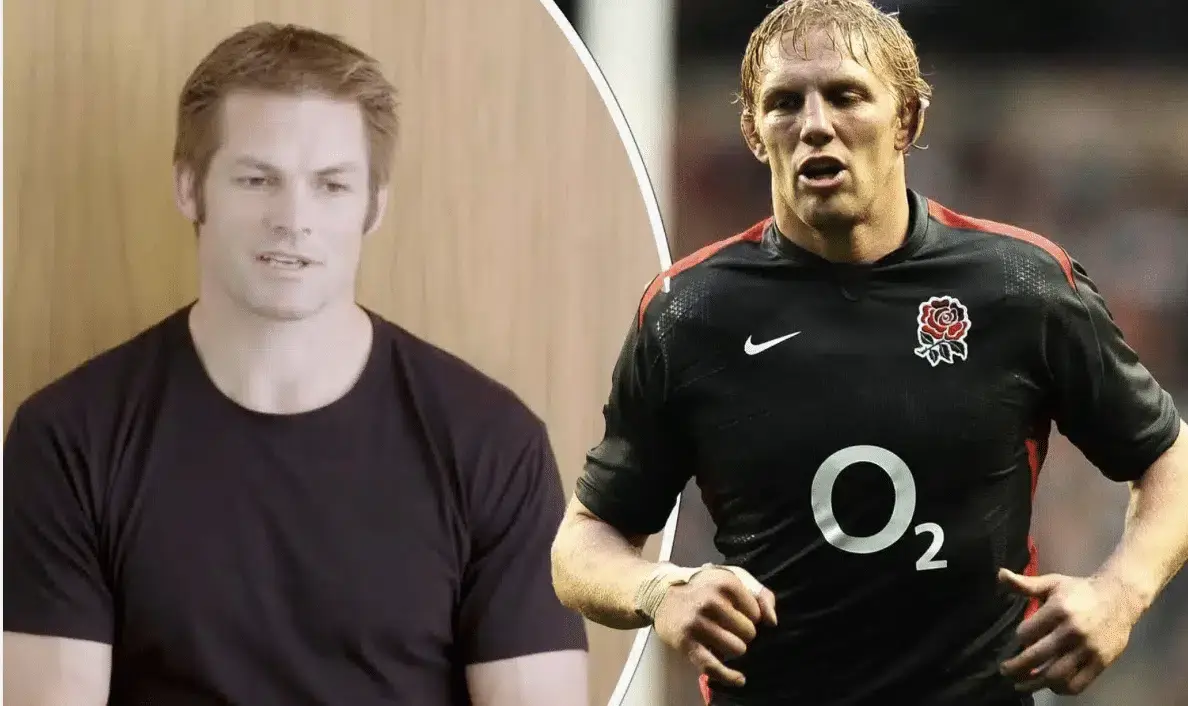

Richie McCaw, the iconic former captain of New Zealand, has placed Lewis Moody, the standout English rugby player, among the top five flankers he encountered throughout his illustrious career.
Today Moody revealed he has been diagnosed with Motor Neurone Disease (MND), a condition that affects the nerves in the brain and spinal cord.
Join the RUCK’s WhatsApp community here and get the latest news sent straight to your messages.
McCaw, renowned for his legendary status, amassed an impressive record of 148 international caps for the All Blacks, with 131 victories under his belt, while leading his country in 111 matches.
His crowning achievement came in 2011 when he triumphantly lifted the World Cup on his home turf, solidifying his position as one of the greatest All Blacks of all time.
Remarkably, McCaw continued to excel for an additional four years, shattering numerous records and uniquely claiming the Webb Ellis trophy for a second time in 2015.
This extraordinary feat not only concluded his international career but also marked the end of his playing days as he promptly announced his retirement from the sport.
#5. Lewis Moody (England) – “Mad Dog” with a Heart of Gold
Position: Back-row
Height: 6 ft 3 in
Weight: 225 lb
Caps: 71
Height: 6 ft 3 in
Weight: 225 lb
Caps: 71
Moody was known for the enthusiasm with which he played the game, his willingness to chase down opponents, and his ability to compete for possession at restarts, earning him the nickname “Mad Dog” from teammates and supporters.
Off the pitch, Moody is remembered as a fierce competitor who also inspired teammates with his leadership and sportsmanship. He won 71 caps for England and played in three Rugby World Cups, including the 2007 campaign where England reached the final. Moody also captained the side and enjoyed successful club stints with Leicester Tigers and Bath. Today, Moody courageously revealed he has been diagnosed with Motor Neurone Disease, a progressive condition that affects motor neurons, sharing that he is committed to raising awareness and continuing to contribute to rugby and charitable causes.
Richie McCaw said: “I had got a lot of respect for the way he played, he threw himself into a lot of it. Moody was a little bit different to most flankers – he was also a ball carrier and he could put a lot of pressure on backlines.”
#4. Thierry Dusautoir (France) – “The Breakdown Maestro”
Position: Back-row
Height: 6 ft 2 in
Weight: 218 lb
Caps: 80
Height: 6 ft 2 in
Weight: 218 lb
Caps: 80
Dusautoir made his international debut against Romania in 2006 before making a name for himself the following year when France stunned New Zealand 20-18 in the World Cup quarter-finals.
Known for his relentless defensive work and leadership, Dusautoir captained France for several years and became one of the finest flankers in world rugby history. His performance in the 2011 World Cup final, scoring a try and earning man of the match honours, is still celebrated. He retired from international rugby in 2015, leaving behind a legacy of grit, skill, and sportsmanship.
Richie McCaw said: "Over the years I've played him a few times and you always know he's there," said McCaw of Dusautoir. "He was always pretty big defensively and in the breakdown area. A menace."
DID YOU KNOW? He broke the record for most tackles in a match, making 38 tackles against the All Blacks in the 2007 World Cup.
#3. David Pocock (Australia) – “The Tackling Whisperer”
Position: Flanker
Height: 6 ft 0 in
Weight: 227 lb
Caps: 80
Height: 6 ft 0 in
Weight: 227 lb
Caps: 80
The Zimbabwe-born openside flanker, who made his debut for the Wallabies in 2008, quickly earned a reputation for his breakdown mastery and incredible work rate.
Pocock played at his first Rugby World Cup in 2011 and was widely considered one of the best players in his position. Known for his integrity both on and off the pitch, Pocock retired from international rugby in 2019 to focus on environmental and humanitarian causes.
Richie McCaw said: "Ever since I started playing rugby I've looked forward to games against other No7s who are highly rated," he said. "Pocock was one of the best."
DID YOU KNOW? Pocock and his friend Luke O’Keefe run a not-for-profit organisation, Eightytwenty Vision, which aims to help the less fortunate people of Zimbabwe.
#2. Schalk Burger (South Africa) – “The Human Bulldozer”
Position: Back-row
Height: 6 ft 4 in
Weight: 242 lb
Caps: 86
Height: 6 ft 4 in
Weight: 242 lb
Caps: 86
Burger was one of the most feared and respected flankers of his era. Known for his uncompromising style and high work rate, Burger captained South Africa and was pivotal to their success in the late 2000s and early 2010s. His career included triumph in the 2007 Rugby World Cup and numerous memorable performances at the breakdown. Off the pitch, Burger lives on the Welbedacht Wine Estate in the Western Cape, where he works alongside his family.
McCaw said: "You can come up against another tough team but never feel like you have had a tough match against your opposite. But with Burger you knew where they are going to be and how hard they play near the ball."
DID YOU KNOW? When not playing rugby, Burger lives and works with his family on the Welbedacht Wine Estate near Wellington, Western Cape.
#1. George Smith (Australia) – “The Dreadlocked Dynamo”
Position: Back-row
Height: 5 ft 11 in
Weight: 233 lb
Caps: 111
Height: 5 ft 11 in
Weight: 233 lb
Caps: 111
Smith was a great contributor to Australian rugby in the modern era, playing in 111 tests across 13 years donning the green and gold jersey. 24 of those tests were against the All Blacks, of which Smith triumphed in seven – but only three in which McCaw also played. Known for his athleticism, breakdown skill, and relentless consistency, Smith was a central figure for Australia for over a decade.
McCaw said: Speaking in a Q+A with World Rugby, McCaw revealed former Wallabies flanker George Smith as the one he feared most on the field, saying Smith "was always pretty tough".
“I remember playing him when I was in the under 19s against Australia and remember then thinking just what a good player he is.”
“I remember playing him when I was in the under 19s against Australia and remember then thinking just what a good player he is.”
DID YOU KNOW? He was easily recognised on the field by his dreadlocked hairstyle until late 2006 – when he decided to sell his dreadlocks for charity. They were given to a charity for younger people with cancer.
EDITORS PICKS:
- “Very attractive” – England captain Maro Itoje considering surprise move
- Chandler Cunningam-South to quit Harlequins for Gallagher Prem rival
- Andy Farrell married an England rugby legends sister – she’s his biggest supporter
- England star Ellie Kildunne set to move on after boyfriend split
- The 10 Greatest Wingers in Rugby History (Ranked 10-1)
TRENDING

LATEST NEWS
LATEST COMMENTS
Loading