How England 2003 Rugby World Cup winner became an unlikely gay icon
Rugby NewsFriday, 04 September 2026 at 13:43
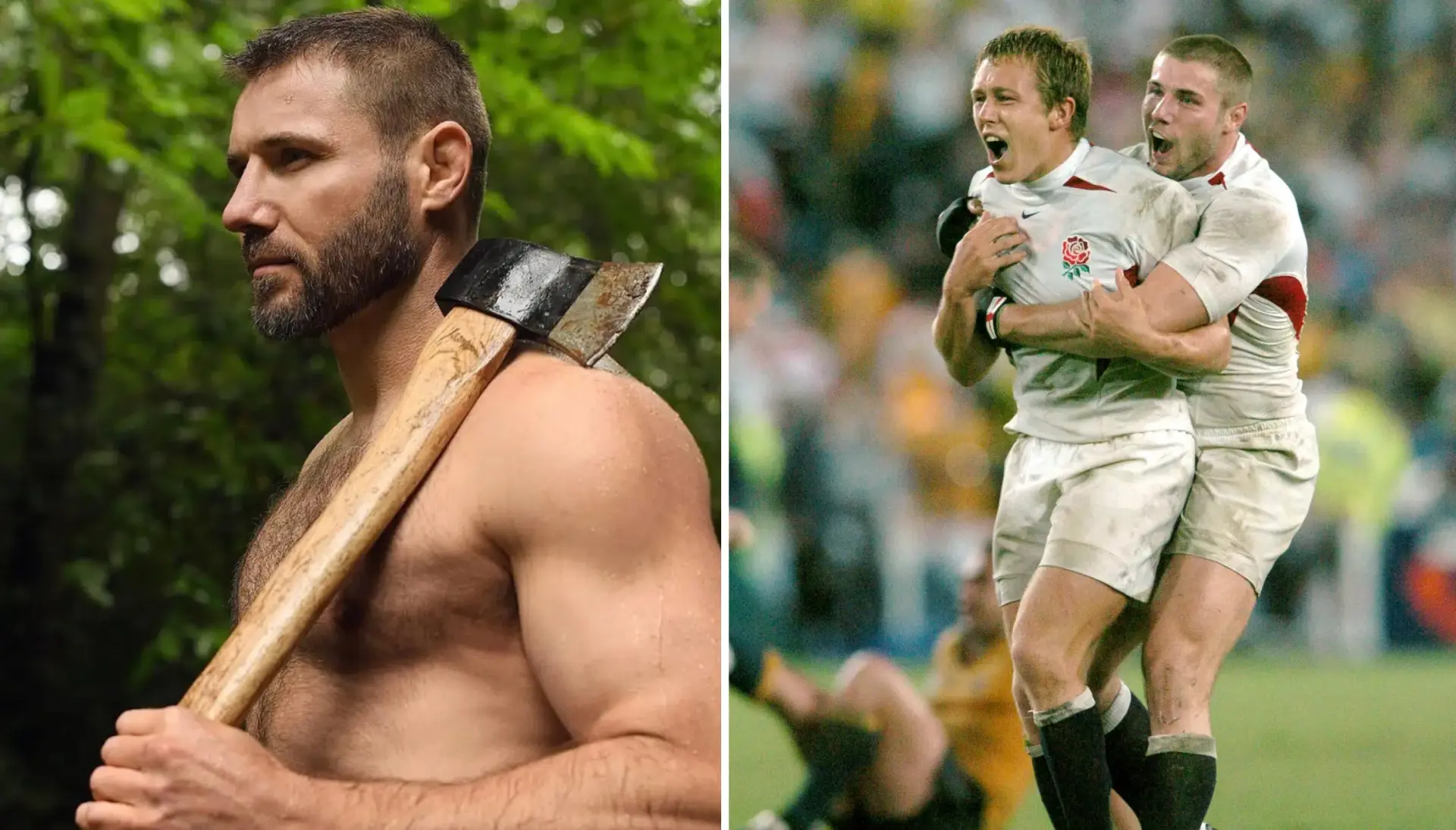

England Rugby World Cup winner Ben Cohen enjoyed a glittering career at the highest level – but one of the most unexpected chapters of his life came away from the rugby pitch.
The former Northampton Saints winger won 57 England caps and was part of Sir Clive Woodward’s legendary side that lifted the Webb Ellis Cup in Australia in 2003.
Four years later, however, Cohen discovered he had developed an enormous following within the gay community.
⭐ Save us to your Google Favourites for nonstop RUCK content!
“They were all men”
Around the time of the 2007 World Cup, Cohen was contacted by a man named Laurent in Paris who had created a Facebook fan page dedicated to him.
The numbers immediately caught Cohen's attention.
“37,000 people had joined it,” he recalled.
“I was saying, ‘Are you sure you’ve got the right Ben Cohen?’ And he said, ‘Yes, I am.’
“He said I needed to know something, which is that all of the fans were men.”
Laurent then explained to the World Cup winner that he had become something of a gay icon.
Cohen, who is straight, embraced the attention rather than distancing himself from it.
He later admitted: “It was flattering people found me attractive.”
But after reading messages from supporters, Cohen realised there was a far more serious side to his new platform.
“Lots of stories were shared on the platform about members of the community suffering at the hands of other people,” he explained.
“So, I wanted to be an ally. I wanted to bridge the gap between the gay and straight communities.”
Turning tragedy into change
The issue of violence and bullying was particularly personal for Cohen.
His father, Peter, died in 2000 after being seriously injured while intervening to help someone who was being attacked.
Cohen later said: “Having that man, who was the rock of our family, taken away from us... I know what violence does.”
After hearing similar stories of suffering from LGBTQ+ supporters, Cohen decided to act.
In 2011, he established the Ben Cohen StandUp Foundation, focusing on tackling bullying and homophobia.
Cohen believed his position as a straight, World Cup-winning rugby player gave him an opportunity to challenge stereotypes.
“I think that the most important thing about it is that I'm straight and promoting a foundation that's anti-homophobia,” he explained.
“I'm bridging the gap between gay and straight.”
What started with an unexpected Facebook page ultimately transformed Cohen from one of England’s 2003 heroes into one of sport’s most prominent straight LGBTQ+ allies.
LATEST RUGBY NEWS
Six LGBT+ rugby stars making a difference on and beyond the pitch
Here are six LGBT+ rugby stars inspiring change on and off the field.
Join RUCK’s Instagram broadcast channel and get the latest rugby news straight to your phone.
Nigel Owens
Few figures in rugby are as widely respected as Nigel Owens. One of the most experienced referees in the history of the game, Owens officiated at a Rugby World Cup Final and became known for his calm authority and quick wit.
Off the field, his impact has been just as powerful. Owens came out publicly in 2007 and has since spoken openly about his struggles with mental health and identity growing up in rural Wales. His honesty has helped countless fans and players feel less alone, proving that authenticity and success can go hand in hand.
Campbell Johnstone
Campbell Johnstone made history as the first All Blacks player to come out as gay. His announcement was a landmark moment not just for rugby union, but for global sport.
Johnstone’s decision to speak openly was driven by a desire to create a safer, more accepting environment for future players. By stepping forward, he challenged long-standing stereotypes and showed that even in one of the most traditionally masculine teams in sport, there is room for openness and inclusion.
Jack Dunne
Irish forward Jack Dunne has been a strong advocate for inclusivity in rugby. Having played professionally in Ireland and abroad, Dunne has used his platform to promote diversity and challenge outdated attitudes within the sport.
By being open about his identity, he’s helping to normalize conversations around sexuality in rugby dressing rooms—spaces that have historically been difficult for LGBT athletes. His visibility matters, especially for younger players navigating similar journeys.
Hannah Botterman
England international Hannah Botterman has become one of the standout props in the women’s game, representing England Women's Rugby Union Team on the biggest stages.
Botterman is also proudly open about her sexuality and is part of a generation of players helping to make women’s rugby one of the most inclusive environments in sport. Her presence reinforces the idea that athletes can be unapologetically themselves while competing at the highest level.
Hollie Davidson
Trailblazing referee Hollie Davidson has broken barriers both as an elite official and as an openly gay woman in rugby. She became the first woman to referee a match in the Six Nations Championship, marking a major milestone in the sport.
Off the field, Davidson was in a long-term relationship with a Scotland international for around a decade, further highlighting her deep ties to the game at every level. She has also refereed top-tier men’s fixtures, underlining her status as one of the leading officials in world rugby.
Davidson’s visibility is doubly important—representing both women and the LGBT community in a role traditionally dominated by men. Her rise shows that rugby is evolving, opening doors for a more diverse generation of officials.
Craig Maxwell-Keys
Craig Maxwell-Keys is one of England’s leading referees, regularly officiating in the Premiership Rugby and on the international stage.
Openly gay, Maxwell-Keys has spoken about the importance of inclusion within rugby and the responsibility that comes with visibility. By simply being himself in such a prominent role, he helps dismantle stereotypes and encourages others in the sport to do the same.
Quiz: Name these 10 retro rugby players
From jaw-dropping tries to unforgettable moments (and yes, some questionable haircuts), these players defined a golden era of the game. If their names don’t instantly come to mind, we suggest a quick trip to YouTube to jog your memory. Trust us, it’s worth it.
Ready to test your knowledge? Let’s see if you’ve still got it. Good luck!
More Quizzes:
TRENDING

LATEST NEWS
LATEST COMMENTS
Loading