“Flat and Fractured” - 9 players who flopped for England against Scotland
Rugby NewsSunday, 15 February 2026 at 08:57
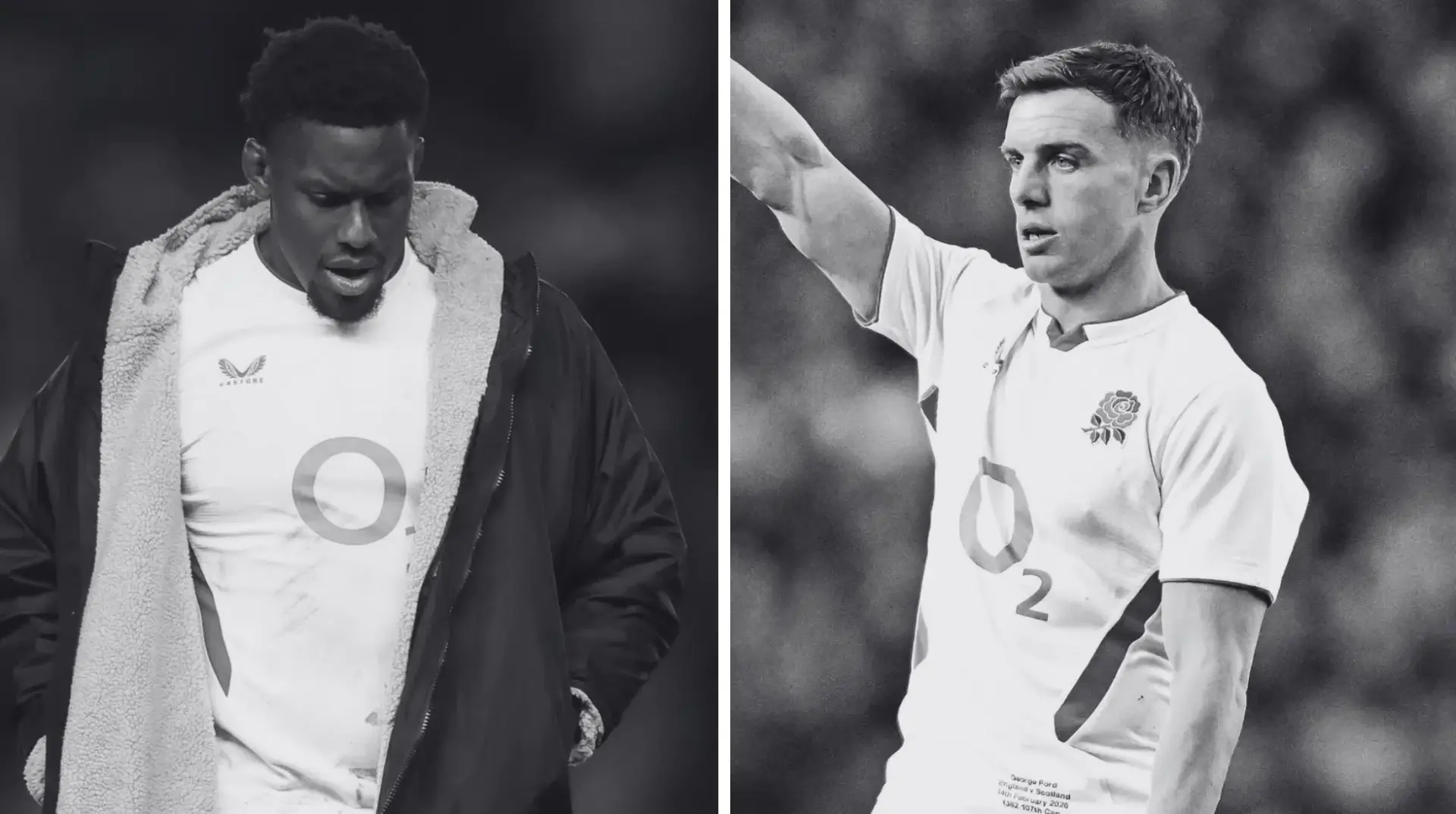

England were second best for long periods in their Calcutta Cup clash with Scotland, and a number of senior figures endured uncharacteristically off-colour afternoons.
Here are nine players who struggled to hit their usual standards.
Sam Underhill
The flanker found it tough to stem the Scottish tide in the first half and was replaced at the break by Tom Curry. He slipped off a tackle on his Bath Rugby team-mate Finn Russell, who was able to hack through for Scotland’s third try.
Underhill managed just five tackles in his 40 minutes before being hooked at half-time – a rare poor showing from one of England’s most reliable defensive operators.
Guy Pepper
Pepper was involved in a minor scrap with Russell during a feisty encounter. It was his first experience of a Test defeat, and while he registered three dominant tackles from his 10 in 56 minutes, he could not influence proceedings as he would have liked.
He stood up physically amid the chaos but struggled, like many around him, to shift momentum.
Maro Itoje
It is not often you see Maro Itoje replaced before the hour mark, which underlined the flat nature of England’s display.
It was curious to see him stationed on the wing when Scotland crossed for their first try, and he later knocked on in a promising second-half position. He was left covering vast space for Scotland’s opener – hardly his fault – but still endured a frustrating outing. Energy improved after the break, yet another spill when England were building pressure summed up an untidy afternoon. His early withdrawal raised eyebrows.
Ellis Genge
The loosehead was exposed badly by Russell’s kick through and failed to gather cleanly, leading directly to Ben White’s try.
It was a moment that encapsulated England’s lack of composure in key defensive situations.
Luke Cowan-Dickie
Back in the starting side, Cowan-Dickie’s concession of an early penalty contributed to a dreadful England start. A no-arms tackle soon after piled further pressure onto a side already struggling to get a foothold.
His lineout throwing looked rushed early on. Although England ultimately secured their own ball, several takes were scrappy tap-backs rather than clean takes. To his credit, he finished with a 100 per cent lineout success rate, won a penalty at the breakdown early in the second half, and competed hard on the floor – but the early indiscipline proved costly.
Henry Arundell
The hat-trick hero against Wales endured a wildly eventful and damaging afternoon. The winger was sent off after two yellow cards either side of scoring a try.
His first yellow came for failing to release the tackler as he desperately scrambled to prevent a Scottish score. England conceded 14 points during his absence. He responded by finishing smartly for a try, joining the line through the middle, but his second yellow – and therefore red – for taking Kyle Steyn out in the air before half-time proved hugely costly.
Fraser Dingwall
Dingwall’s first-half decision to kick away possession was questionable, and he struggled to impose himself thereafter. Like the rest of England’s outside backs, he was suffocated by a rampant Scottish defence.
Anonymous may be the best description – faint praise, perhaps, but kinder than could be said of others.
George Ford
George Ford produced a beautifully timed pass to send Arundell over for England’s opening try as they searched for a way back into the contest.
Yet the pivotal moment came when his drop-goal attempt, with England seeking to close the gap to 24-16, fell short. Seconds later, Scotland extended their lead to 31-13. He struggled to generate the contestable kicks England needed and rarely troubled the Scottish backfield. Charged down at another critical juncture while attempting a drop goal, Ford endured an indifferent day despite some intelligent distribution.
Tom Roebuck
Tom Roebuck carried and chased with intent but was too often driven backwards and lacked his usual aerial authority. He rushed out on Russell for Scotland’s opening try but could not prevent the fly-half from flicking the ball away, leaving Itoje scrambling to try to halt Huw Jones.
Roebuck did not enjoy the aerial dominance that has marked his Test career and struggled to impose himself with ball in hand. Handling errors, including a sloppy knock-on when England chased a bonus point, compounded a frustrating performance in which he simply could not get involved.
EDITORS PICKS:
TRENDING


LATEST NEWS
LATEST COMMENTS
Loading