"Finished" - Six Players Who Flopped on Six Nations Super Saturday
Rugby NewsSaturday, 14 March 2026 at 22:55
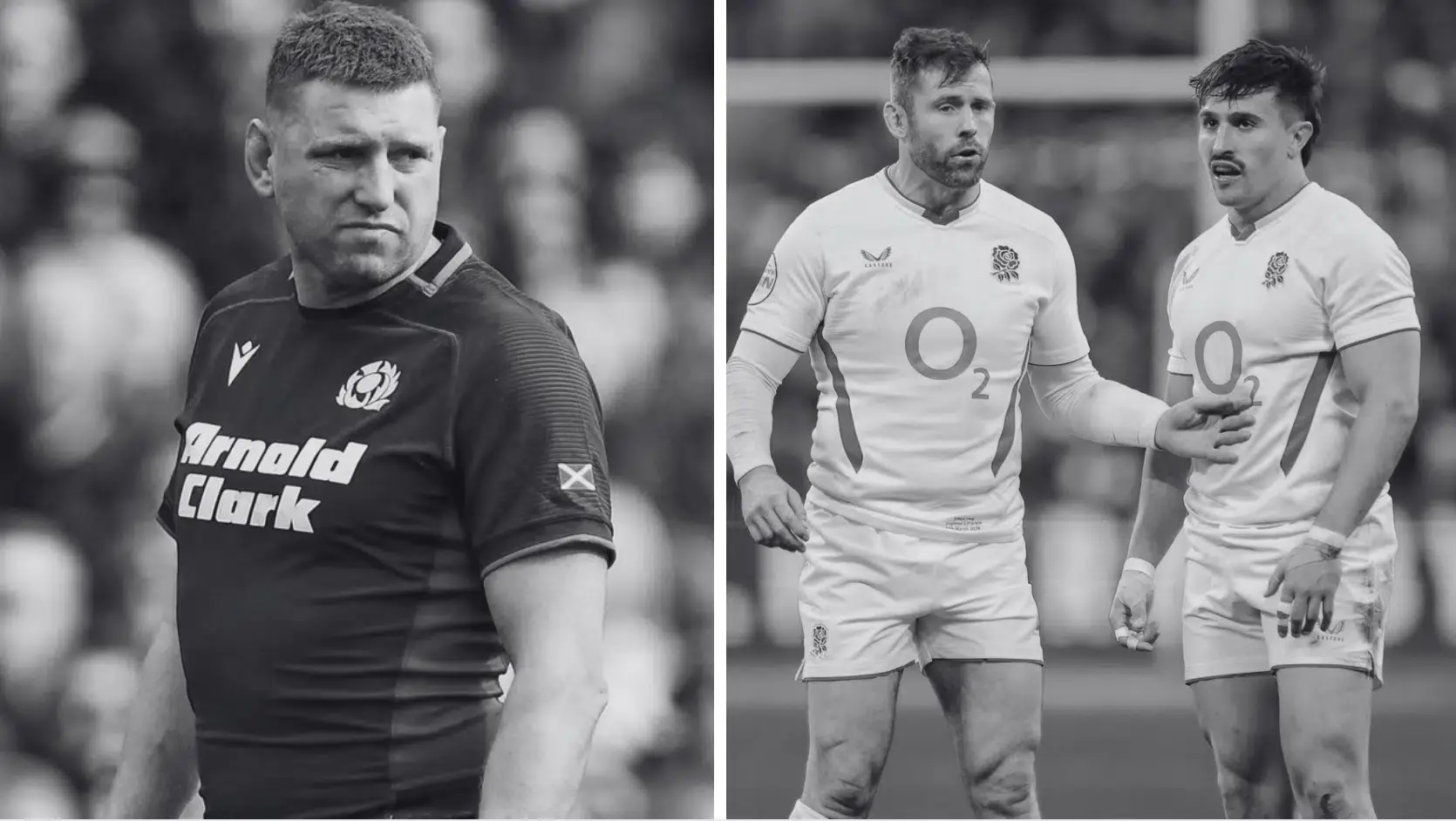

Super Saturday brought the 2026 Six Nations to a dramatic conclusion, with Ireland overpowering Scotland, Wales securing a long-awaited victory against Italy, and France edging England in a high-scoring thriller to clinch the title.
⭐ Save us to your Google Favourites for nonstop RUCK content!
While several players produced standout performances on the final weekend, others found it difficult to influence the outcome of their matches.
Here are six players who endured difficult afternoons in Round 5.
Join RUCK's Instagram broadcast channel and get the latest rugby news straight to your phone.
#1. Finn Russell (Scotland)
Finn Russell, like much of the Scotland side, showed occasional flashes of quality but struggled to consistently shape the contest against Ireland.
With limited opportunities to attack the defensive line directly, Russell was often forced to rely on tactical kicking and distribution rather than his usual creative playmaking.
Although he did cross for a try, the Scotland fly-half was unable to exert the level of control typically associated with his performances.
#2. Elliot Daly (England)
Elliot Daly began the match brightly, delivering a sharp pass to Tom Roebuck that helped create England’s opening try.
However, defensive positioning became an issue later in the match. France were able to exploit space in behind England’s defensive line, including the kick through that led to Louis Bielle-Biarrey’s second try.
Daly also found himself caught between pressing forward and covering deep during France’s opening score.
In such a fast-paced contest, small defensive lapses proved costly.
POLL
#3. Lorenzo Pani (Italy)
It proved to be a challenging afternoon for Lorenzo Pani as Italy struggled to adapt to Wales’ tactical kicking approach.
The young Zebre back conceded two penalties and had difficulty dealing with the pressure created by Wales’ back-three combination.
Italy’s backfield defence was tested repeatedly, and Pani appeared uncertain at times when responding to Wales’ kicking game.
It was a learning experience for one of Italy’s emerging talents.
#4. SIONE TUIPULOTU (Scotland)
As Scotland captain, Sione Tuipulotu carried significant responsibility in midfield against Ireland.
Facing a physical Irish pack and a well-organised defence, Scotland found it difficult to generate momentum in attack.
Tuipulotu worked hard throughout the match but was unable to consistently break through Ireland’s defensive structure.
After the game, he acknowledged that Ireland were the stronger side on the day.
#5. Dorian Aldegheri (France)
France’s front row faced a stern challenge from England during the first half, particularly at scrum time.
Dorian Aldegheri came under pressure in several early exchanges, with England managing to win some important moments in the set piece before the interval.
France’s coaching staff opted to make a change early in the second half, with Aldegheri leaving the field after 46 minutes.
#6. Ben White (Scotland)
Ben White was unable to replicate the influence he showed in earlier matches during the tournament.
Several of his box kicks travelled slightly too far, allowing Ireland to regain possession and relieve pressure.
He did create one key moment with a well-timed pass that sent Russell through for Scotland’s try.
However, Scotland later introduced George Horne in the final quarter as they searched for greater attacking momentum.
EDITORS PICKS:
- Maro Itoje confirms his retirement from rugby date
- Finn Russell will make shock career change after rugby retirement
- Hollie Davidson had very different job before becoming rugby referee
- Louis Rees-Zammit ‘planned’ to quit Wales again after 2026 Six Nations
- Duhan van der Merwe Responds to Talk of Springbok Move Amid Scotland Exile
Quiz: Can you all of the Guinness Six Nations winning captains?
Surnames only will be accepted.
TRENDING

LATEST NEWS
LATEST COMMENTS
Loading