Eddie Jones slams England's Six Nations campaign, blames Steve Borthwick
Rugby NewsTuesday, 24 February 2026 at 07:58
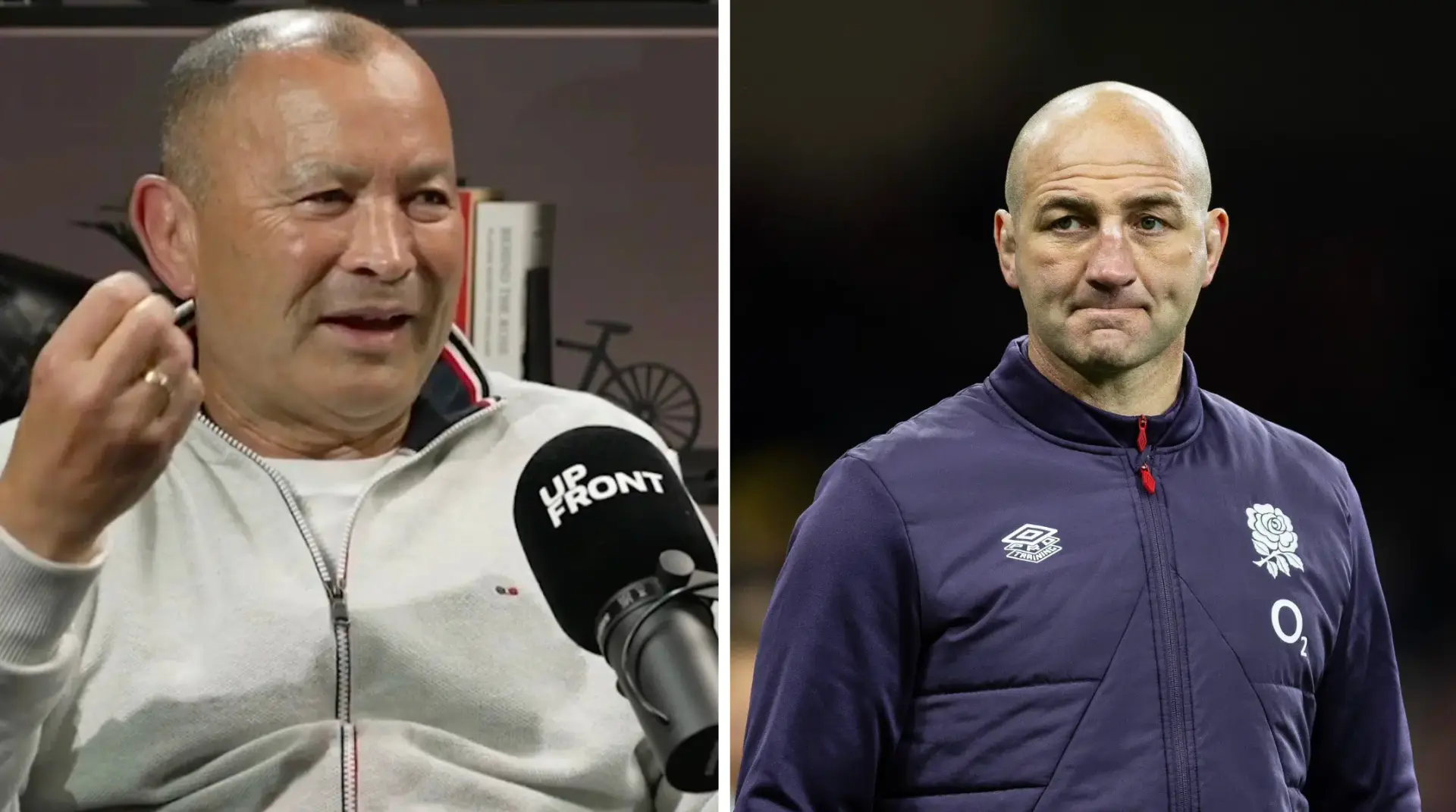

Eddie Jones has launched a stinging critique of England’s Six Nations campaign, suggesting that Steve Borthwick’s pre-tournament messaging and key selection decisions contributed to their downfall.
Watch the Guinness Six Nations at your local Greene King sports pub.
Speaking on the Rugby Unity podcast, the former England head coach pointed to comments made before the championship began, when Borthwick talked up the prospect of a potential title decider in Paris against France.
“I’ll go back to the start of the Six Nations,” Jones said. “I thought Steve made some very uncharacteristic comments about a title-decider against France and looking ahead.”
Jones, who coached England between 2015 and 2022, expressed surprise at the tone.
“Steve is the most pragmatic and intelligent coach you could meet,” he said. “But to look ahead for any team is fraught with danger. We all know that.”
According to Jones, even subtle shifts in focus at Test level can have lasting effects.
“All of that happens, right, and the slight psychological change you get in the team because of that, they start to look ahead,” he explained. “Instead of concentrating on what’s immediately in front of them, they’re thinking about what might be.”
Scotland defeat a turning point
England’s campaign quickly unravelled, with heavy back-to-back defeats leaving them fourth in the standings and out of the title race.
Jones believes the loss to Scotland proved especially damaging.
“When they lose the game like they did against Scotland – they got caught on the hop against Scotland – and I think the Scotland game against Wales shows that they were just caught on the hop,” he said.
Initially, he felt it could have been dismissed as a one-off.
“That was a one-off,” Jones added. “But now that one-off has crept into their psyche.”
The lingering impact, in his view, has been significant.
“They’re disappointed about where they are, they’re all feeling a bit threatened now and how do you change it around? It takes leadership on and off the field. That’s the only way to change it around.”
Poll:
Union pressure and public messaging
Jones also hinted that external influences may have shaped England’s bullish pre-tournament talk.
On the eve of the competition, Borthwick spoke about wanting English fans to “flood across the channel” for what was anticipated to be a blockbuster finale in France, referencing the 2016 Grand Slam in Paris and targeting a first title since 2020.
Jones suggested that kind of messaging may not have been entirely organic.
“Sometimes the pressure comes that the union wants to hear more, they want to entice the fans,” he said. “They’re all hungry for money so they want fan support.”
“Be a bit bold, come out and say something — someone’s told him to do that.”
He warned that in the modern game, players are hyper-aware of public narratives.
“The players read everything, the wives read everything, the girlfriends read everything, the boyfriends read everything,” Jones said. “They all read it. They hear it and they talk to them.”
Suddenly, the conversation shifts.
“They go, ‘We’ve got to get our tickets for France. Where are we staying?’ All of that happens, right? And the slight psychological change you get in the team because of that, they start to look ahead.”
Pollock comparison raises eyebrows
Jones also questioned Borthwick’s decision to start 21-year-old Henry Pollock against Ireland, likening the back-rower to former Springbok Bobby Skinstad.
“Steve will probably look back and think, ‘Maybe I didn’t get a few things right,’” he said.
“Starting Pollock — Pollock, to me, is like Bobby Skinstad. Good looking, always got a sun tan and can play.”
However, Jones believes Pollock’s strengths may be better suited to impact off the bench.
“He’s one of those blokes who plays for 20 minutes,” Jones said. “He’s one of those players who finds himself in the right position, but he’s not a grind player.”
And at Test level, especially in the back row, graft is non-negotiable.
“To play a full 80 in the back row, you’ve got to be prepared to grind,” he concluded. “And maybe that’s not the best job for him.”
With England now reflecting on a campaign that promised much but delivered little, Jones’ comments add further scrutiny to a side searching for consistency — and leadership — at the highest level.
LATEST RUGBY NEWS
- Ireland’s Tommy O’Brien amazed by Stuart McCloskey ‘NFL’ tackle on Marcus Smith
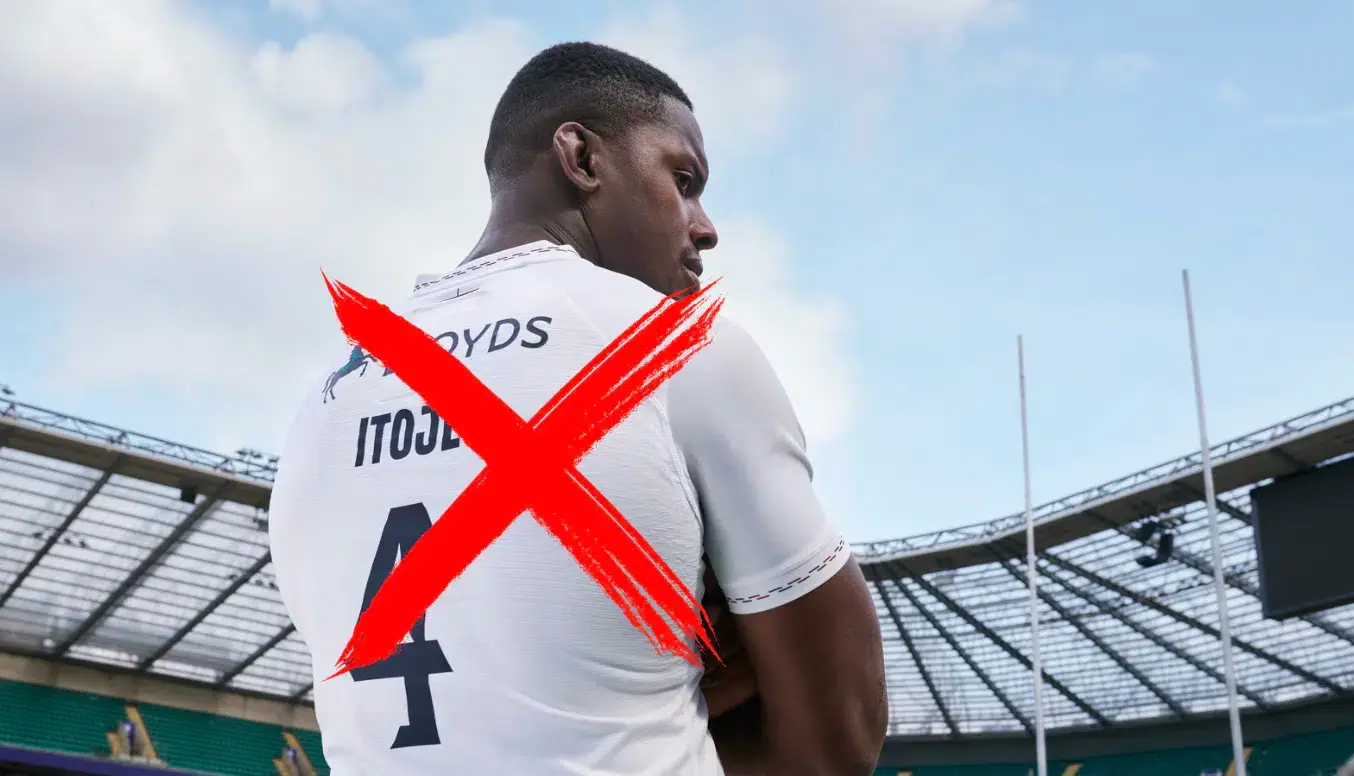
- “Disappointing” – Sam Underhill acknowledges England’s failure to give Maro Itoje a memorable 100th cap
- PREM Cup: Round 9 – Exeter top Pool A with derby win over Bath
- Ireland Squad Update: 11 Players Return to Provinces
- Super Rugby: Round 2 – Brumbies end 26-Year wait for win in Christchurch
Every England Six Nations player ranked form "Key Contributor" to "Must Drop"
Once tipped for a Grand Slam, Steve Borthwick’s side now have virtually no chance of lifting the title. Here, we rank every England player on their performances so far.
Key Contributors
- Ben Earl
- Joe Heyes
- Ellis Genge
England’s strongest returns so far have come from Ben Earl, Joe Heyes and Ellis Genge, each posting some of the best performances across the opening rounds. Earl’s relentless carrying, breakdown menace and defensive work-rate have made him England’s most influential back row, repeatedly dragging momentum back in tight passages.
In the front row, Heyes has quietly impressed with improved scrummaging solidity and greater confidence in open play, offering reliability in difficult fixtures. Genge, meanwhile, has combined abrasive ball-carrying with leadership presence, setting the physical tone even when results have wavered. While none have been flawless, all three have delivered performances that justify their selection, forming a dependable spine in an otherwise fluctuating campaign.
Solid
- Henry Pollock
- Bevan Rodd
- Alex Mitchell
- Alex Coles
There has been steady if unspectacular value from Henry Pollock, Alex Coles, Bevan Rodd and Alex Mitchell. Pollock’s athleticism and eagerness in contact have stood out, even if occasional discipline lapses, such as his yellow card against Ireland, have capped his overall impact. The impact that he has on the crowd is also a huge positive, as whenever he gets on the pitch, momentum lifts. Rodd has provided dependable set-piece work and industry around the field, rarely dominating but seldom letting standards slip.
At scrum-half, Mitchell’s tempo and sniping threat have added attacking spark, though his game management has sometimes been inconsistent under pressure. Across the championship so far, each has produced enough positive contributions to remain firmly in the “solid” bracket: reliable performers who strengthen the side without quite seizing matches by the scruff of the neck or commanding the standout scores reserved for the very best displays.
Mixed
- Ollie Chessum
- Tom Curry
- Guy Pepper
- Sam Underhill
- Fraser Dingwall
Inconsistency defines the tournaments of Ollie Chessum, Tom Curry, Guy Pepper, Sam Underhill and Fraser Dingwall. Chessum has offered lineout presence and physical carrying but mixed that with errors at key moments. Curry’s breakdown work remains industrious, yet he has not consistently imposed himself as he once did.
Pepper’s tackle count and effort are evident, though genuine game-shifting involvements have been scarce. Underhill has shown flashes of defensive bite without sustaining dominance across 80 minutes. Dingwall’s distribution and linking lines have been tidy, but he has struggled to stamp authority on major Tests. Collectively, their assessments reflect capable contributions interspersed with quieter spells, leaving a sense that more is still to come.
Underperforming
- Maro Itoje
- Jamie George
- George Ford
- Tom Roebuck
- Tommy Freeman
Expectations were higher for Maro Itoje, Jamie George, George Ford, Tom Roebuck and Tommy Freeman than what has materialised so far. Itoje’s usual disruptive authority has appeared only in patches, with fewer decisive turnovers or momentum-swinging interventions.
George’s leadership and set-piece throwing have been steady but lacking the dynamic edge once associated with his best form. Ford has alternated between composed control and phases of tactical drift, particularly when England have been chasing games. Out wide, Roebuck and Freeman have struggled for sustained influence, receiving modest match returns when attacking opportunities have dried up. None have been disastrous, yet by their own standards and reputations, this campaign has felt below par.
Hardly Featured
- Trevor Davison
- Marcus Smith
- Jack van Poortvliet
- Ollie Lawrence
- Fin Smith
- Ben Spencer
Limited minutes have shaped the Six Nations narratives of Trevor Davison, Marcus Smith, Jack van Poortvliet, Ollie Lawrence, Ben Spencer and Fin Smith. Davison has contributed in short stints, focusing on set-pieces without the platform to really post headline performances.
Marcus Smith has offered flashes of creativity from the bench but not enough sustained involvement to reshape games. Van Poortvliet’s appearances have been energetic yet brief, while Lawrence and Fin Smith have struggled to secure extended runs in the starting XV. With such restricted opportunities, assessments remain tentative; their modest overall impact reflects scarcity of action rather than outright poor performance.
Must Drop
- Henry Arundell
- Luke Cowan-Dickie
- Freddie Steward
Based on current output, pressure is mounting on Henry Arundell, Luke Cowan-Dickie and Freddie Steward. Arundell’s attacking threat has been muted, and defensive lapses have proven costly in tighter contests. His two yellow cards against Scotland were also poor to concede. Cowan-Dickie has struggled to reassert dominance at the set piece, with lineout inconsistencies undermining his broader contributions.
Steward, once valued for aerial security and counter-attacking presence, has found himself less influential both under the high ball and in broken play. While each possesses undeniable pedigree, the championship so far has highlighted sharper alternatives pushing for selection. If performances do not lift quickly, England’s coaching staff may feel compelled to make changes to reinvigorate momentum for the closing rounds.
TRENDING


LATEST NEWS
LATEST COMMENTS
Loading