“Drop Sacha” – Five huge Springboks changes Rassie Erasmus MUST make
Rugby NewsMonday, 07 September 2026 at 18:11
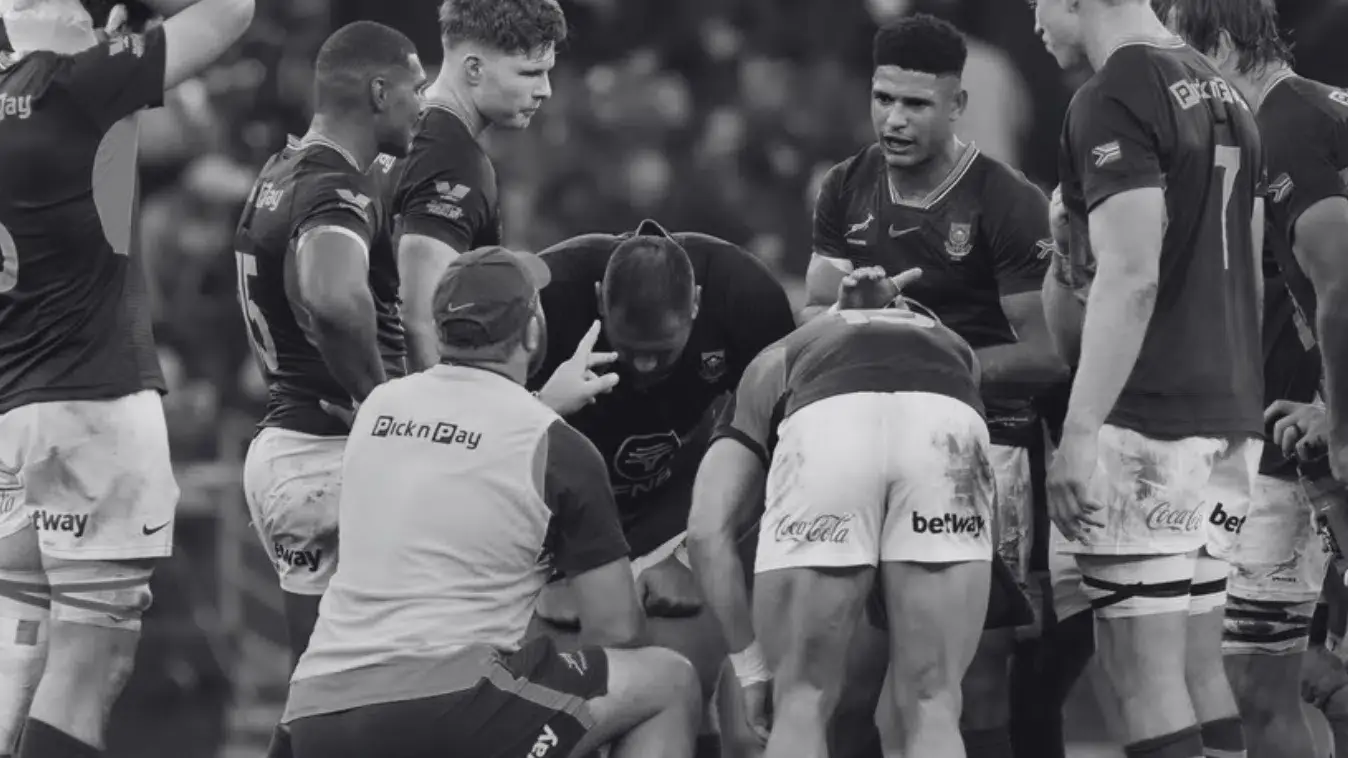

With the Springboks now leading the series by two victories to one, all eyes will be on M&T Bank Stadium in Baltimore for the final Test of the “Rugby’s Greatest Rivalry” series.
Rassie Erasmus will know that his side cannot lose the series from here. However, with New Zealand looking to end the tour on a high, he will also know it is still possible for the Springboks not to win it.
Injuries, returning stars and the need to manage his squad could all force the Springbok coach into some very difficult decisions.
Here are the five changes Erasmus should consider before the Springboks take on the All Blacks in the USA.
Have your say:
1. Bring Damian Willemse back at fullback
One of the biggest changes Erasmus needs to make is bringing Damian Willemse back into the starting line-up.
Willemse, who sustained a hamstring injury in the second Test in Cape Town, has since recovered and is expected to be available for selection for the final Test.
Willemse would give the Springboks a more natural No. 15 while also providing them with another attacking playmaker.
The All Blacks showed in the third Test that they want to move the ball quickly and attack the space out wide. Rassie himself stated that New Zealand’s ball-handling and attacking ability remain a huge threat to the men in green and gold.
Therefore, it is vital that the Springboks have a strong last line of defence should the All Blacks break the line. That last line should be Damian Willemse.
Willemse is the obvious choice to return at fullback. He can take the ball to the line, kick accurately from hand, beat defenders and cover several other positions should Erasmus require it.
His versatility could prove to be a huge advantage for the Springboks, which is exactly why his return should come sooner rather than later.
2. Start Handré Pollard
Handré Pollard missed the second Test after being ruled out through injury and was also unavailable for the third Test. However, his recovery brings him right back into contention to start in the No. 10 jersey for the final Test.
His rival for the jersey, Manie Libbok, was brilliant off the bench in Soweto. He immediately added something to the Springbok attack.
His ability to run, pass and attack created a sense of unpredictability for the Springboks with ball in hand. Several reports highlighted his performance after he replaced Sacha Feinberg-Mngomezulu at fly-half.
So, why replace him?
The final Test is going to be completely different from the previous three. The third Test was played in front of almost 86,000 spectators at one of South Africa’s most iconic venues.
The Springboks played those 80 minutes feeding off the intensity and magnitude of the occasion. The final Test is going to feel completely different.
The All Blacks will arrive in Baltimore knowing they have nothing to lose. After losing two games on the bounce, the men in black know they cannot win the series. However, their main objective will be to ensure the Springboks do not win it either.
Because of this, the Springboks will require a fly-half who can control the game, no matter what the All Blacks throw at them.
That man is Handré Pollard.
Pollard’s greatest strength is undoubtedly his ability to manage a game. He can control territory, kick accurately, take points when they are available and, most importantly, remain composed when the match becomes chaotic.
This will be vital if the Springboks wish to manage the game effectively.
3. Start Grant Williams at scrum-half
The Springboks have shown time and again that they can dominate the All Blacks physically.
However, the third Test once again highlighted that when the All Blacks are allowed to play quickly, they become extremely dangerous. This is where Grant Williams comes in.
Selecting Williams would allow the Springboks to control the tempo of the game. He can produce quick ball from the ruck and use it to put pressure on the All Blacks’ defence.
Williams’ speed at the breakdown would allow the Springboks to move the ball before New Zealand’s defensive line has time to organise itself, rather than repeatedly asking the forwards to carry directly into a set defence.
This could prove to be a huge advantage, especially if Pollard starts alongside him at fly-half.
The combination of Williams and Pollard would give the Springboks a balance between speed and control. Pollard can decide where the game is played, while Williams can increase the tempo when an opportunity appears.
Should the Springboks wish to maintain this high-speed style of rugby, the inclusion of Morné van den Berg on the bench could be crucial.
Van den Berg has shown that he can bring a sense of pace to the Springbok backline. Introducing him in the second half could be extremely useful in maintaining pressure on the All Blacks’ defence.
4. Keep Ethan Hooker on the wing and bring Canan Moodie into the matchday 23
One of the most important decisions Erasmus needs to make is what to do with Canan Moodie.
Moodie, who recently recovered from a hamstring injury, is now available for selection. However, bringing Moodie back should not mean taking Ethan Hooker out of the side.
Hooker was undoubtedly one of the standout players in the third Test in Soweto. He produced strong carries and tackles and was excellent under the high ball.
Additionally, Hooker showed that, even at his young age, he can handle the pressure of Test rugby against the All Blacks. That is exactly why he should keep his place in the starting XV.
Instead, Erasmus should bring Moodie into the matchday 23 as a versatile option from the bench.
Moodie would provide the Springboks with another powerful and adaptable player in the backline. He can cover both wing and centre, giving Erasmus another option should an injury occur.
He could also give the Springboks a fresh pair of legs during the final 20 minutes, when the game is likely to begin opening up.
5. Rotate one senior forward
The Springboks have relied heavily on their forward pack throughout the series.
Players such as Eben Etzebeth, Pieter-Steph du Toit and Jasper Wiese have all been involved in some extremely physical contests. Another demanding encounter in Baltimore would provide them with very little recovery time.
Therefore, this could be the perfect opportunity for Erasmus to rotate one of his senior forwards and give a younger player the chance to start.
The likes of Lood de Jager or Cameron Hanekom could provide the Springboks with fresh legs while maintaining the physicality that has been vital throughout the series.
The goal for Erasmus is to find the right balance.
The Springboks cannot afford to make too many changes, as that could result in a loss of the momentum they have built throughout the series.
However, giving a few players a rest could help keep the squad fresh while providing younger players with valuable Test experience.
With the Springboks now leading the series 2-1, this is arguably the perfect time to manage the squad without taking too many risks.
EDITORS PICKS:
- Three Springboks who flopped against All Blacks – and who could replace them
- All Blacks player ratings vs Springboks: Third Test scores revealed
- Springboks player ratings vs All Blacks: Third test scores revealed
- What Siya Kolisi said in response to Haka caught on camera
- Springboks vs All Blacks referee changed AGAIN for third Test
TRENDING




LATEST NEWS
LATEST COMMENTS
Loading