"Difficult" - Georgia star Davit Niniashvili on the frustration of being left out of the Six Nations
Rugby NewsTuesday, 27 January 2026 at 15:00
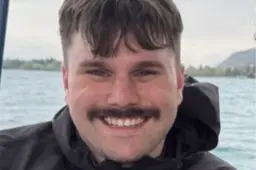
Georgian rugby has spent years knocking on Europe’s biggest doors, driven by a generation of players who have grown up believing they belong on the same stage as the sport’s traditional powers. Few embody that belief more clearly than Davit Niniashvili, whose rise from Tbilisi to the Top 14 mirrors the broader journey of the Lelos themselves.
⭐ Save us to your Google Favourites for nonstop RUCK content!
Now playing for Stade Rochelais, 23-year-old Niniashvili has already become one of Georgia’s most recognisable stars. His international story began in 2020 when he was named in the starting lineup for the first time during the Rugby Europe Championship against Russia. A year later he crossed for his first Test try, again against Russia, and his progress has rarely slowed since.
A move to Lyon in 2021 proved pivotal. Niniashvili made his Top 14 debut that September against Perpignan and soon became a key part of a side that went on to win the Challenge Cup, the first European trophy in the club’s history. His performances earned him a Barbarians call up to face England in 2022, remarkable given he had just 11 caps at the time. By the 2023 Rugby World Cup, he was an established figure, starting all four of Georgia’s matches and scoring against Wales.
That experience of playing elite opposition week in, week out shapes how Niniashvili views Georgia’s ongoing debate around the Six Nations. Recently sacked head coach and former England player Richard Cockerill has long argued that Georgia have earned the right to a play-off for a place in the championship, pointing to their dominance in the Rugby Europe Championship and Wales’ recent struggles.
It is a conversation that continues to rumble on, but Niniashvili keeps his focus firmly on the pitch.
“It’s not my business to talk about this because I’m on the field, I play rugby and I don’t know what’s happened outside the field or in the field federation of Georgia or Six Nations, I don’t know and I don’t touch them, I just play for Georgia, I love to play for Georgia and I keep calm and play rugby.”
There is, however, a quiet frustration beneath that calm. Georgia have spent years winning the Rugby Europe Championship only to return to the same opponents, while the gap to the very top remains difficult to bridge without regular exposure.
“Yes (it’s frustrating) but we respect the decision, we cannot change it and we play what we get and when we get the opportunities, we are ready for them.”
For Niniashvili, the challenge is not just about prestige but about development. Switching from high intensity Tests or World Cup matches to lower tier fixtures can be demanding, both physically and mentally.
“When you get the big matches, against Italy or big teams like South Africa, you see where you are. When you play against them it is difficult to move after the Six Nations B against Switzerland or Netherlands, it is difficult to switch and play Italy and South Africa but we are ready for everything and we get good matches in Top 14 and can bring this energy and our style in Georgia.”
France has become central to that energy. Georgian players are woven deeply into French rugby, drawn by an open eligibility system and a culture that values power, set piece strength and athleticism. For many young Georgians, the route to professionalism runs through Pro D2 and the Top 14.
“In France, they love the scrums, they love the speed, they love strong guys and they bring young Georgians to play in the Top 14. Top 14 and Pro D2 helps the Georgian national team because 60-70% of players play in France and it helps the Georgian national team, when we come together we are so happy to see each other and play together.”
That connection may grow even stronger under new national head coach Pierre-Henry Broncan. The Frenchman will formally take charge later this year, with Marco Bortolami acting as interim coach in the meantime. Niniashvili believes Broncan’s familiarity with French rugby could help unlock even more cohesion.
“Yes, it will be good because I think the new coach watches every Top 14, Pro D2, Nationale game and there’s so many players in these championships that he can bring and get us to cooperate, and for the players growing up with the cooperation, it will be good for the Georgian national team.”
While France remains the primary pathway, domestic ambition is also growing. Black Lion’s entry into the Challenge Cup in 2023 marked a historic step, and their win over Scarlets in December of that year showed what a Georgian franchise can achieve with exposure to elite competition.
“I always watch them and always support them because it’s our first time getting a franchise. I hope they will move into a good championship and get young players in there who are growing up and can help the Georgian national team and they have the potential to play in the big championships.”
Rumours of Black Lion joining the United Rugby Championship have followed, though uncertainty remains.
“It’s a very good thing but I don’t know (if it will happen). We will see if it will happen soon because they have been speaking about this too many times.”
Even if that step is taken, Niniashvili does not expect a mass exodus from France.
“For me, the Top 14 is the best championship in the world. I don’t think Georgians will move to the URC from the Top 14 because in the Top 14 everyone sees what happens in the league, there is 1/2 points difference so I don’t see why anyone would move.”
Whatever the future holds for Georgia, their star player is solely focusing on what he can do on the pitch, and hopes that matters off-field can sort themselves out.
EDITORS PICKS
- Fixtures & Venues confirmed for 2027 British & Irish Lions Women’s Tour of New Zealand
- “Furious” – Ospreys fans react to club’s upcoming collapse – Owners reported for Cardiff takeover
- “South Africa U20s star” – Who are the Seven newcomers to Scotland’s 2026 Six Nations camp?
- Gregor Townsend confirms Scotland squad for 2026 Six Nations
- “Doesn’t sit well with me” – Munster captain Tadhg Beirne disappointed by early Champions Cup exit
TRENDING

LATEST NEWS
LATEST COMMENTS
Loading