Bill Beaumont fires back at Sir Clive Woodward after harsh criticism
Rugby NewsTuesday, 21 April 2020 at 10:33
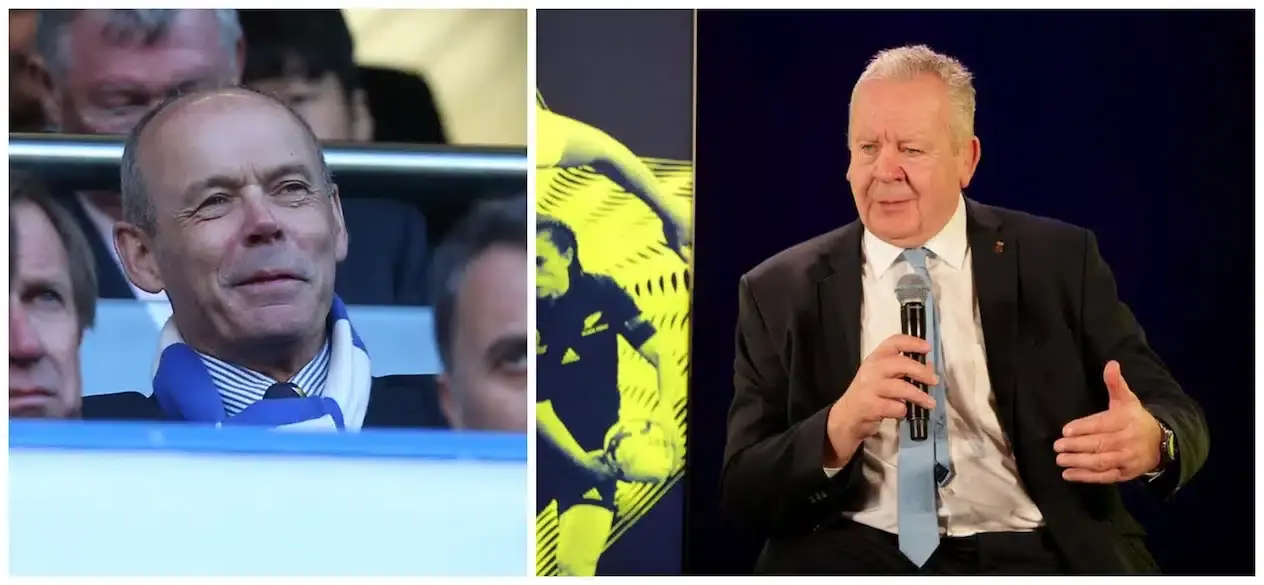

Bill Beaumont has responded after Sir Clive Woodward highlighted the 23-year age difference in his Sportsmail column backing Agustin Pichot's bid.
"Tell Clive I'm still alive and kicking," quipped the former England captain.
"I can't help the fact that I'm English, I can't help what age I am and I can't help that I played all my rugby during the amateur days,
"I make no apology for that, but one thing I will tell you is that no one has more passion or enthusiasm than me. I'm a proud Englishman but I have a global view of the game… not an English view of the game.'
SIR BILL BEAUMONT'S FIVE-POINT MANIFESTO
- Governance reform that is not seen to support the 'old guard', including a pledge to review 'regulation eight' which could allow the likes of England stars Manu Tuilagi and Billy Vunipola to represent Samoa and Tonga.
- A global season review, with proposals for a two-month Test window in September/October/November, shifting the Lions tour to later in the year.
- A financial policy review to help developed and developing nations, stating a long-term ideal of hosting a World Cup final at the Maracana Stadium in Brazil.
- An increased focus on player welfare, but also a desire to make the game more open by reducing the number of substitutes
- Development of women's rugby with a global season and more decision-making power.
LIST | 5 of the biggest scandals in rugby history!

Rugby Union has had its fair share of controversial moments down the years. Here we look at five of the most memorable...
1. KAMP STAALDRAAD
It was a military-style "boot camp" organized as a "team building" exercise for the South African national rugby union team, the Springboks (or Boks), during their preparation for the 2003 Rugby World Cup (RWC). Details of the camp emerged in the South African media, resulting in protest from the upper administrative levels of South African rugby.

- The team was ordered to climb into a foxhole naked and sing the national anthem while ice-cold water were being poured over their heads. During their time in the hole, recordings of God Save the Queen (used as England's national anthem) and the New Zealand All Blacks haka were played at full volume.
- It was confirmed that firearms were present at the camp, although reports varied as to whether they were ever pointed at anyone.
- The players were forced to crawl naked across gravel.
- They also were ordered to spend a night in the bush, during which they were to kill and cook chickens, but not eat them.
2. HARLEQUINS - BLOODGATE
During the quarter-final of the 2009 Heineken Cup against Leinster, Harlequins wing Tom Williams came off the field with what turned out to be a faked blood injury in order to facilitate a tactical substitution for Nick Evans to re-enter the field having gone off earlier injured.
An investigation by the ERC and the RFU revealed that blood injuries had also been faked by Harlequins to enable tactical substitutions on four previous occasions. These findings resulted in a twelve-month ban for Williams (reduced to 4 months on appeal), a three-year ban for former director of rugby Dean Richards and a two-year ban for physiotherapist Steph Brennan as well as a £260,000 fine for the club.
3 THE PLAYER AND THE PRINCESS
Former England captain Will Carling did little for both his clean cut image and the name of rugby when he hit the headlines in mid- 1990s after allegedly having a romantic relationship with Princess Diana. Divorce between Carling and his wife Julia followed and it wasn’t long before the tabloids were dubbing the ex-Harlequins man a love rat.

4. BRUISER BRENNAN BELTS A FAN
In 2007 Toulouse's Irish forward Trevor Brennan overstepped the mark in a classic case of the red mist during a Heineken Cup clash with Ulster. After some reported chanting that his pub in Toulouse, De Danu was ‘a load of rubbish’ from a contingent of Ulster fans, the fiery forward took it upon himself to interrupt his warm-up and enter the stand, where he rained a series of punches down on one supporter. Brennan was banned for life and fined £17,000 for the assault.

5. DALLAGLIO'S DRUGS STING
In 1999 Lawrence Dallaglio resigned the England captaincy following newspaper allegations that he had taken and dealt hard drugs. Dallaglio categorically denied the claims made in the News of the World. Dallaglio added: “The circumstances in which the supposed admissions were obtained amounted to an elaborate set-up.”
But editor Phil Hall said: “We stand by our story. Lawrence Dallaglio is damned in his own words and frankly, we are amazed at his denial.”
The RFU dropped drugs charges against Dallaglio after ‘new evidence’ emerged during an open hearing chaired by a high court judge who decided not to ban him but instead imposed a fine of £15,000 for bringing the game into disrepute.
TRENDING




LATEST NEWS
LATEST COMMENTS
Loading
