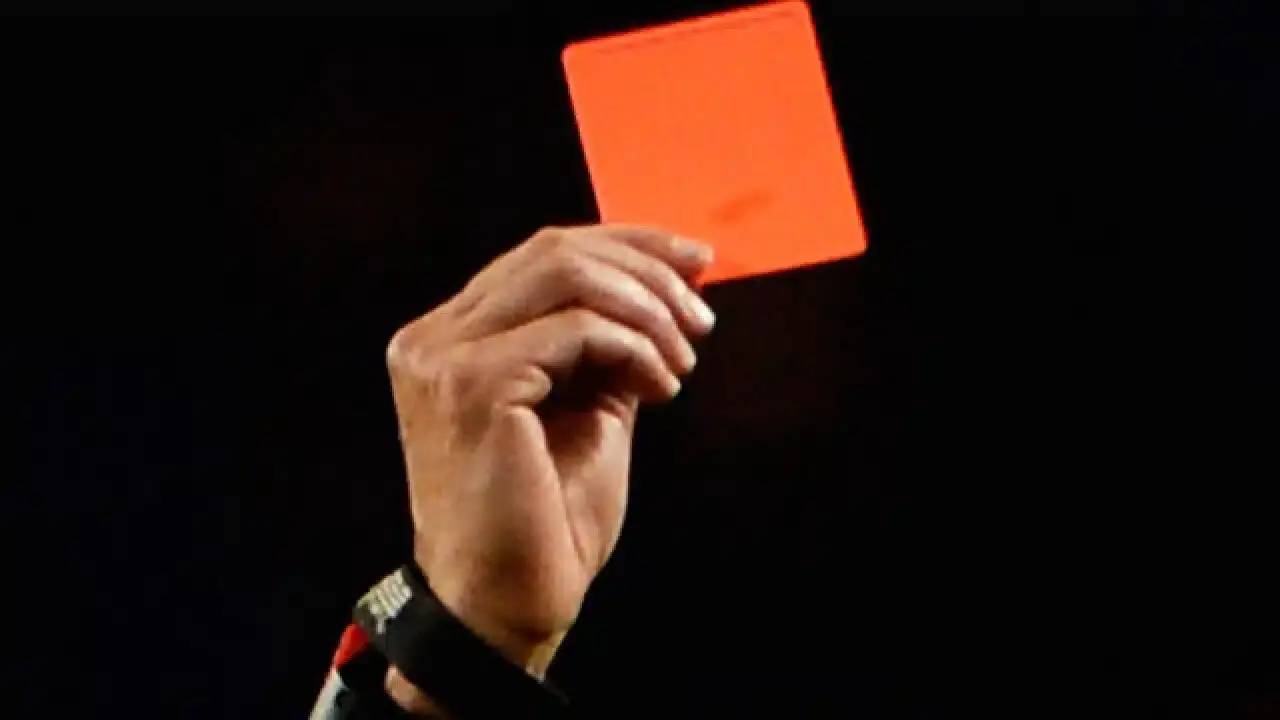
French rugby is doing things differently this season – and fans are taking notice.
Since the start of the campaign, referees across France have been using a brand-new orange card, signalling a 20-minute red, while ditching the bunker system entirely. The move keeps full authority in the hands of the referee, rather than passing decisions off to video officials.
At the same time, officials have been told to tighten up on maul defence, with a particular focus on stopping players from “swimming” around the outside.
Referees Told to Clamp Down on Maul ‘Swimming’
Top referee Mathieu Raynal has made it clear that defences need to stay honest around the maul.
Raynal explained:
“When the entry point is legal and a player swings around a maul, we think it should be a penalty,” Raynal said. “We decided collectively that it should be a penalty. It’s more accessible for the fan and it’s fairer for both teams. That’s rugby; to win the fight. When you swing around the maul, you disrupt it. We see players entering the maul legally and then swing around the opposite side. If they do not move, we penalise them.”
Referees will now blow straight away if a player ends up in an offside position, even if they remain bound in the contest.
Orange Card Keeps Power on the Pitch
France’s orange card initiative is designed to make things clearer for supporters and to keep the decision-making process firmly under the referee’s control.
“It is easier for the fans to understand what is going on,” Raynal said. “It is a different colour to red and yellow with a different outcome. It is important for fans in the stadium. With orange, everyone knows that it is 20 minutes off the field. The process that we use is that we do not have a bunker. With three sanctions – yellow, orange and red – we think that the referee is able to decide on his own, looking at the screen. They are more comfortable.”
‘Referees Should Be the Decision-Makers’
Raynal believes France’s approach is fairer, simpler, and more empowering for the officials on the field.
“World Rugby has the bunker so the referee cannot give a 20-minute red card on their own. They send it to the bunker. Then, the bunker cannot give a permanent red card. We think, for our sport, that it’s better to have a strong permanent red card, and we think the best people to make those decisions are those in the middle and not in the bunker because if the guy in the bunker was better than the guy in the middle then he would be in the middle.”
The message from France is clear: trust the referee, not the replay booth.
EDITORS PICKS:
“Goodbye, caterpillar ruck” – Five more rugby law changes for 2026
Rugby has always balanced its proud traditions with the need to evolve. Yet, as the modern game grows faster, stronger, and more strategic, some long-standing laws may no longer serve their original purpose as effectively.
World Rugby has shown a readiness to adapt in recent years—these ideas could mark the next step in that ongoing evolution.
Join RUCK’s Instagram broadcast channel and get the latest rugby news straight to your phone.
1. No more draws
Rugby is one of the most thrilling sports in the world, but draws often leave players and fans frustrated. After 80 minutes of hard-fought action, neither team winning can feel unsatisfying and anticlimactic. Introducing golden point—where the first score in extra time wins—would give matches a clear, decisive ending.
Golden point also encourages attacking rugby. Teams would be pushed to take risks, go for tries, or attempt drop goals rather than playing safe for a draw. Every possession would matter even more, and fans would be treated to the kind of high-stakes drama that other sports, like rugby league and AFL, have long enjoyed.
It would make competitions simpler and fairer too. League tables, knockout tournaments, and international fixtures often rely on tiebreakers to separate teams after draws. Golden point ensures there’s always a winner on the scoreboard, rewarding performance rather than chance or points difference.
Player welfare concerns can be managed by limiting extra time to short bursts—say two five-minute halves or a first-score-wins rule within 10 minutes—keeping the game exciting without overtaxing athletes.
Golden point wouldn’t just make rugby more exciting—it would make it fairer, more competitive, and in tune with the modern expectation that every game should have a winner. With more tight contests in both club and international rugby, there’s never been a better time to adopt it.
2. Fewer Substitutions
Rugby has changed significantly over the years, and one of the biggest shifts is how the bench is used. These days, teams often bring on almost an entirely new forward pack late in the game. Big, fresh players crash into tired defenders, making the final 20 minutes less about skill and endurance, and more about brute force. Many fans and former players feel this has turned rugby into a collision sport rather than a contest of stamina and intelligence.
Reducing the number of substitutions would encourage players to pace themselves. Space would open up in the second half, creating more opportunities for creative play rather than endless phases of pick-and-go. It would reward fitness, smart decision-making, and those capable of performing for the full 80 minutes.
Fewer substitutions wouldn’t just make the game more exciting—it would make it fairer, safer, and more in line with the spirit of what rugby has always been about.
With the rise of 6–2 and even 7–1 bench splits, pioneered by Rassie Erasmus, the trend seems to be heading in the opposite direction. That’s all the more reason to act now.
3. Scrap the Caterpillar Ruck
The caterpillar ruck is one of those tactics that, while legal, just doesn’t sit right with many who love the game. It involves players lining up behind a ruck in a queue, giving the scrum-half extra time and space to kick.
It slows the game to a crawl, gives the defence no real chance to compete, and often feels more like a way to kill momentum than build it.
It may be clever, but it’s not entertaining. Fans want to see fast, hard-fought rugby—not box-kick after box-kick with a queue of bodies shielding the kicker. Eliminating or limiting the caterpillar ruck would speed up the game and reintroduce unpredictability at the breakdown.
This isn’t about removing strategy. It’s about keeping the game flowing and true to what makes rugby exciting: dynamic, contested play.
Referees have improved at calling “use it” earlier, which helps speed things up, but more needs to be done. Getting rid of the caterpillar ruck would go a long way toward fixing the issue.
4. Remove the 20-Minute Red Card
The 20-minute red card was introduced as a middle ground—punishing dangerous play without completely ruining a match. But let’s be honest: it sends the wrong message. If a player commits a reckless or dangerous act, 20 minutes off the field doesn’t always feel like enough—especially for serious offenses, like a high tackle that could end an opponent’s game or season.
Rugby has made major strides in protecting players, especially around the head and neck. Keeping the full red card—where the offending team plays a man down for the rest of the match—reaffirms that commitment. It makes the consequences clear: cross the line, and your team suffers. That’s how you change behaviour.
Yes, it’s tough. Sometimes it may seem harsh. But safety must come first. It’s about respecting the game and the long-term health of every player on the field.
In many ways, the 20-minute red gives officials a cop-out. It’s often seen as the easy option to avoid controversy—even when a full red card is justified.
5. Outlaw the Lineout Maul
Few things in rugby divide opinion quite like the driving maul from a lineout. For some, it’s a show of power and coordination. But for many fans, it feels like a loophole — a near-guaranteed way to score that sucks the creativity and unpredictability out of the game.
A well-drilled pack can set up a maul five metres out, trundle forward almost unstoppably, and fall over the line for a try. Where’s the skill in that? It’s become rugby’s cheat code — more about physics and numbers than ingenuity or flair.
Outlawing the maul as a direct scoring weapon would open the game up. Instead of endless rolling rucks towards the try-line, teams would need to find inventive ways to use space, pass under pressure, or outsmart the defence. That’s what gets fans on their feet.
Defenders, too, would benefit. At the moment, they’re often left with little option but to illegally collapse a maul, leading to a penalty or yellow card. Take away the automatic try-machine, and we’d see fewer cynical infringements, less frustration, and a fairer contest.
The maul will always have a place as a tactical tool in the middle of the pitch — but when it’s allowed to dominate the scoreboard, it turns rugby into something it was never meant to be.
QUIZ: Can you name these 10 England one-cap wonders…
This quiz challenges you to identify 10 players who earned the rare distinction of making just one appearance for the England rugby team.
These "one-cap wonders" might have been on the brink of a promising international career, unlucky with competition in their position, or simply never got another chance after their debut.
Test your knowledge and see if you can remember these players who had their brief moment in the England jersey!