5 Harlequins Signings That Were Total Flops – Where Did It All Go Wrong?
HarlequinsFriday, 25 October 2024 at 09:31
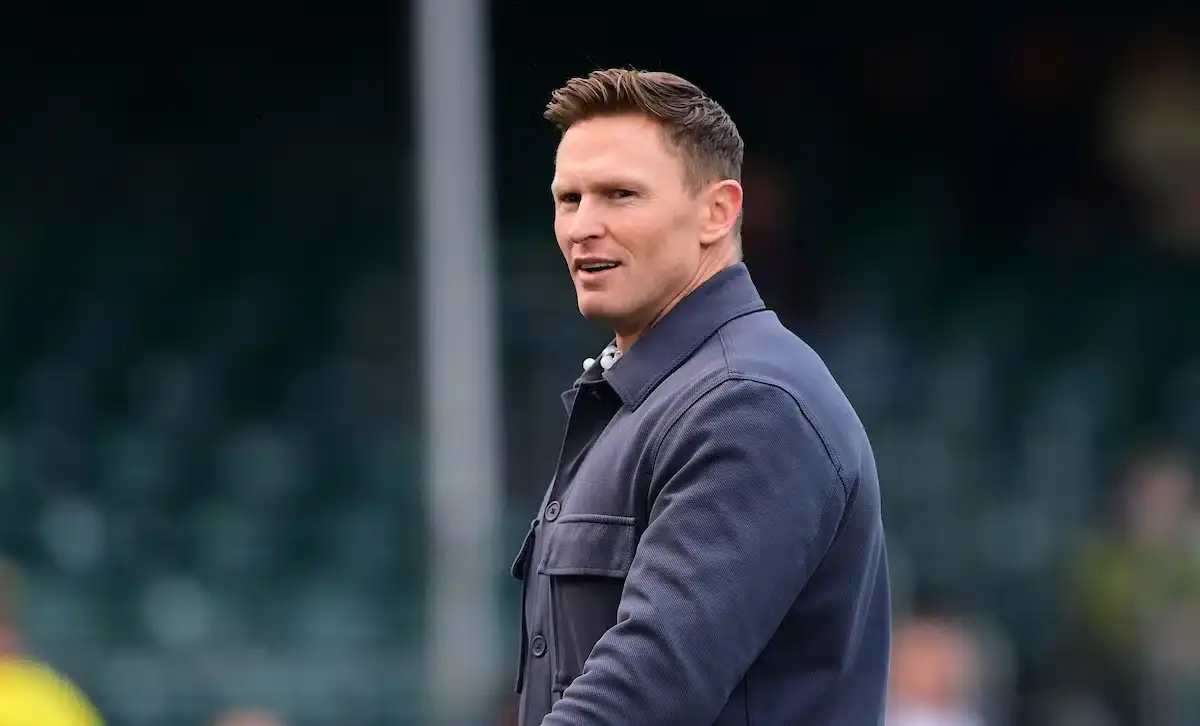

When it comes to building a team, Harlequins have had their share of brilliant signings – but they’ve also taken a few punts that didn’t pan out.
While the Stoop has been home to some iconic players, not every high-profile addition or promising newcomer lived up to expectations. Here’s a look at five signings that Harlequins hoped would make an impact but instead fell flat.
Join the RUCK’s WhatsApp community here and get the latest news sent straight to your messages.
1. Chris Ashton – A Brief and Uneventful Stay
Paul Gustard praised Ashton as "one of the most competitive, professional and dedicated athletes" upon signing him in March 2020. However, Ashton’s stint at Harlequins barely got off the ground, with sporadic appearances leading to an early release just 10 months later. Ashton reportedly didn't want to "waste the next six months" at Harlequins, making his departure as abrupt as his arrival.

2. Paul Doran-Jones – A Misfire in the Front Row
After joining from Northampton in 2013, hopes were high for Doran-Jones. Then-boss Conor O'Shea saw the prop as a rising star who would only improve. Sadly, after two seasons and only 19 appearances, his impact fell short, and he left to rejoin Gloucester, leaving Harlequins with more questions than answers in the scrum.
3. Demetri Catrakilis – The South African Struggles to Make an Impact
Heralded as a talented fly-half from South Africa, Catrakilis arrived in 2017 with a reputation that had Harlequins fans hopeful. But injuries plagued his time at the club, limiting him to just 13 appearances in two seasons.
He moved on to the Pro 14’s Izuzu Southern Kings, leaving a frustratingly unfulfilled promise at the Stoop.
4. Paul Sackey – An Unsuccessful Homecoming
After making waves in France with Toulon and Stade Francais, Sackey’s return to the English Premiership with Harlequins in the 2013/14 season sparked excitement.
However, the winger’s performance didn’t live up to expectations, with just two tries over the season. He decided to call it quits shortly after, ending his career on a disappointing note.

5. Niki Goneva – The Finisher That Couldn't Finish
Billed as a “real coup” and a “deadly finisher,” Goneva joined Harlequins from Newcastle Falcons in the 2019/20 season.
But at 35, Goneva’s prolific try-scoring days seemed behind him. Despite his reputation, he didn’t find the try line in any of his six appearances, capping a quiet end to his Premiership journey.

Harlequins’s greatest players: Is this Quins greatest all-time XV?
Fullback: MIKE BROWN
One of the Club’s most decorated and successful players, Mike Brown made his debut for the Club in the Championship against Doncaster Knights in October 2005 (a match in which he also scored his first try). A graduate of the Harlequins Academy, Brown has been an ever-present in the Club’s most successful period in the professional era.
He started in the 2011 Amlin Challenge Cup final win against Stade Francais and in the 2012 Aviva Premiership final win against Leicester Tigers; the culmination of a season that saw Brown score 12 tries. Brown’s standout year for the Club came in the 2013/14 season where he was named QBE Man of the Series, RBS Six Nations Player of the Championship, Supporters’ Player of the Year, Premiership Player of the Year and the RPA’s England Player of the Year.

LONDON, ENGLAND - DECEMBER 27: Mike Brown of Harlequins kicks the ball upfield during the Aviva Premiership match between Harlequins and Northampton Saints at Twickenham Stadium on December 27, 2014 in London, England. (Photo by David Rogers/Getty Images)
Winger: UGO MONYE
Monye was a one-club man during his playing career, representing Quins with distinction for 13 years before hanging up his boots in 2015. He won the Aviva Premiership title in 2012 with the London outfit, as well as the Challenge Cup twice (2004 and 2011) and the Anglo-Welsh Cup (2013).
Monye was also the British and Irish Lions' top try scorer on their 2009 tour of South Africa, going over five times in total, including one in the 28-9 final Test win in Johannesburg.

PIC FROM CATERS NEWS - (PICTURED SEPTEMBER 09: Quilter Kids First Champions Canvey Island RFC. The club was visited by Ugo Monye and Danielle Nolli Waterman.) PR SHOOT FOR ESSENTIALLY / George Maclachlan
Centre: WILL CARLING
Carling joined Quins from Rosslyn Park in 1987, and just one year later he became England captain at the age of 22. During his time as skipper he led England to back-to-back Five Nations Grand Slam victories (1991, 1992) and another Grand Slam in 1995, scoring six tries from outside centre in the Championship, and several more in other matches.
Centre: WILL GREENWOOD
Having played for Harlequins alongside his day job, he committed full time to rugby as soon as it went professional in 1996. After a spell at Leicester, where he helped to bring home two Premiership titles, he re-signed for Harlequins in 2000 and played a key role in taking them to victory twice in the European Shield.
He was also an integral part of England’s victorious World Cup campaign of 2003, a character and leader in one of the most successful team dynamics seen in recent times

Aviva Live Room, Will Greenwood speaks during the Aviva Premiership Final between Exeter Chiefs and Saracens at Twickenham Stadium, Twickenham, London on May 26. - PHOTO: Tom Sandberg/PPAUK/Aviva
Winger: TOM WILLIAMS
Overlooking the infamous bloodgate scandal (He remains the only one to apologise for this scandal), Williams was one of the finest players to come through the Quins ranks since the millennium.
He started and scored a try for Harlequins in their 2011–12 Premiership final victory over Leicester Tigers and is a member of the “200 Club” having represented Harlequins for over 200 first team games.
Fly-half: NICK EVANS
The New Zealander retired from playing at the end of the 2016/17 season after becoming Quins' record points scorer in his nine years at The Stoop.
Evans won 16 caps for New Zealand and was one of the most successful overseas imports to the Premiership, winning the title with Quins in 2012.
The fly-half scored 2,249 points in his 208 senior appearances.

Scrum-half: DANNY CARE
Since joining from Leeds Tykes in 2006 Danny Care has made more than 250 appearances for his adopted club, firmly establishing himself as a fan favourite. Care epitomises Harlequins' high tempo style of play with his quick tap penalties and fast passes and he was a key figure in both the Amlin Challenge Cup victory in 2011 and the famous win in the Premiership final the following year.

BATH, ENGLAND - OCTOBER 31: Danny Care of Harlequins scores a try during the Aviva Premiership Match between Bath Rugby and Harlequins at The Recreation Ground on October 31, 2015 in Bath, England. (Photo by Julian Herbert/Getty Images)
Prop: JASON LEONARD
His lengthy career straddled both the amateur and professional eras and he had a job as a carpenter. He began playing for his home club, Barking and his school teams as a youth, and as his playing talents became recognised, interest was shown by London club Saracens, where he moved in 1989. Following a year at Saracens, he moved to Harlequins.
Leonard stayed at the Stoop until his professional retirement in May 2004, making a total of 144 appearances and ending on a winning note as his team won the European Parker Pen Challenge Cup.
There is not doubt that he would have made a far greater number of club appearances if it had not been for the constant international demands of England and the British and Irish Lions.
Hooker: BRIAN MOORE
He was the epitome of aggression in rugby, the Harlequins hooker played each game with the same fearlessness, and because of it, he cements himself as one of the greatest. After starting his career with Nottingham, in 1990 he moved to London to train as a solicitor, and as a result, joined Quins.
Moore’s fiery intensity is renowned – his Pitbull nickname was never more apropiate – and he was one of the fittest players ever to play for England or Harlequins. His sprint times over 30m and 60m were, in fact, quicker than several England backs.
Prop: ADAM JONES
Winning 95 caps for Wales between 2003 and 2014, the popular tighthead joined Harlequins towards the end of his career but still made quite the impression during his three seasons. Now on the coaching staff at the club, Jones remains a firm fan favourite. He also toured with the British & Irish Lions in 2009 and 2013 and is one of a small group of Welsh players to have won three Grand Slams.
Lock: OLLY KOHN
Wales international Kohn scored four tries in 139 appearances for Quins after joining from Bristol in 2006. He was a key part of the Harlequins squad that won the Amlin Challenge Cup in 2011 and the Aviva Premiership in 2012.
Lock: GEORGE ROBSON
The powerhouse second-row spent 11 seasons at The Stoop after progressing through the academy, making almost 200 appearances. He was a key part of the Harlequins side which won the European Challenge Cup in 2011 and the Premiership title a year later. Robson has also represented England Saxons and captained the England senior midweek side on the tour of South Africa in 2012.
Flanker: CHRIS ROBSHAW
After developing through the Harlequins Academy, Robshaw made his first club appearance in 2005 and has made more than 250 appearances in the Harlequins jersey.
In 2010, the flanker was named skipper of Harlequins and two years later was named the captain of his country for the 2012 Six Nations in just his second Test (one which came two and a half years after his International debut).
The flanker captained England to their historic victory over the All Blacks in December 2012 as well as the 2015 Rugby World Cup in England. As Quins captain, he led the side to both the Amlin Challenge Cup title in 2011 as well as the Premiership title the following season.

Chris Robshaw of Harlequins shakes hands with Christian Judge of Saracens during the Gallagher Premiership match between Harlequins and Saracens on 6th October 2018 at Twickenham Stoop, Twickenham, London - PHOTO: James Judge/PPAUK
Flanker: PETER WINTERBOTTOM
Harlequins legend Winterbottom was known for his work rate, durability, hard tackling and courage. He was selected on two British and Irish Lions tours in 1983 and 1993, both to New Zealand, where he impressed the locals with his fine play, albeit on losing sides. He was the second England player to reach 50 caps, after Rory Underwood, and was inducted onto the Twickenham "Wall of Fame" in November 2005.
Number 8: ZINZAN BROOKE
After finishing a stellar career with the All Blacks, winning 58 caps, rugby legend Brooke arrived at Quins in 1987 and stayed at the club for four years before later coaching them.
Harlequins v Benetton Rugby, Saturday 15th December (kick-off 14:00). Tickets available online
TRENDING

LATEST NEWS
LATEST COMMENTS
Loading